


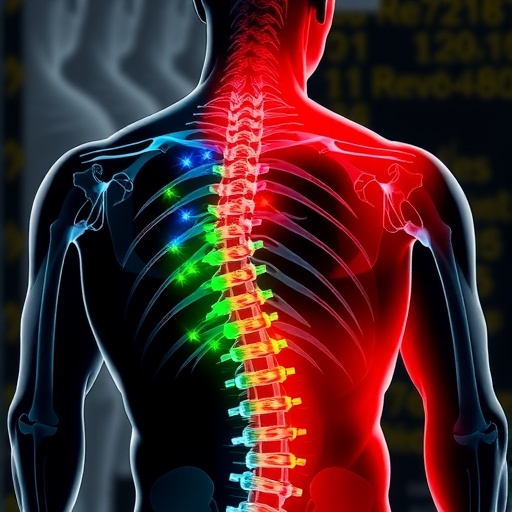
Spinal cord injury is one of the most life-altering events in medicine, and for decades the clinical conversation around it has been shaped by an uncomfortable assumption: that very old patients have little to gain from intensive, specialized rehabilitation. A new retrospective cohort study from Germany challenges that assumption with hard data. Researchers at the BG Trauma Center Frankfurt, working with colleagues at Agaplesion Markus Krankenhaus, examined the functional outcomes and discharge destinations of 160 patients aged 60 and older who completed inpatient rehabilitation for spinal cord injury between 2010 and 2025. Their findings, published in European Geriatric Medicine, show that while patients over the age of 75 made smaller functional gains than their younger counterparts, the overwhelming majority still returned home after rehabilitation rather than being sent to nursing homes or other institutions.
The study comes at a time when the epidemiology of spinal cord injury is shifting in a striking demographic direction. Historically dominated by young men injured in traffic accidents, falls from height, or sports, the spinal cord injury population in high-income countries is now aging in parallel with the general population. Studies from Japan, Scotland, Korea, and Norway have documented a rising proportion of injuries occurring in elderly people, most often caused by low-energy falls rather than high-velocity trauma. A classic study of Finnish registries showed a continuously increasing incidence of fall-induced, fracture-associated spinal cord injuries among older adults, and more recent single-center series from Japan have confirmed the same trend in an aging society. The clinical implication is profound: the “typical” spinal cord injury patient of the coming decades will be an 80-year-old who slipped in the bathroom, not a 25-year-old motorcyclist.
This demographic shift matters because older patients present unique challenges to the rehabilitation team. Sarcopenia, the age-related loss of skeletal muscle mass and function, reduces the physiological reserve available for retraining. Research on muscle protein metabolism in the elderly has described an “anabolic resistance” that blunts the response of aging muscle to exercise and nutrition, slowing the recovery of strength. Animal studies have further demonstrated an age-dependent decline in axon regeneration in the adult mammalian central nervous system, suggesting that the biological substrate for neurological recovery itself is diminished with age. Add to this the higher rates of comorbidities, polypharmacy, pressure injuries, respiratory complications, and delirium documented in geriatric spinal cord injury cohorts, and the skepticism about rehabilitation in the very old becomes understandable.
Yet skepticism is not evidence, and the Frankfurt team set out to quantify what actually happens when patients over 75 are given the same specialized inpatient rehabilitation offered to those aged 60 to 75. The study was conducted at the specialized spinal cord injury unit of the BG Trauma Center Frankfurt and approved by the Ethics Committee of the State Medical Association under reference number 2024-3839-evBO, with all procedures conducted in accordance with the Declaration of Helsinki. Because the design was retrospective and relied on anonymized clinical data, individual informed consent was not required. The cohort comprised 160 patients aged 60 or older who completed their inpatient rehabilitation between 2010 and 2025. Patients were divided into two groups: those aged 60 to 75 years, with a mean age of 67 plus or minus 5 years, and those over 75, with a mean age of 80 plus or minus 4 years. The majority of patients in both groups were male, at 75.0 percent in the younger group and 64.1 percent in the older one.
The central outcome measure was the Spinal Cord Independence Measure, or SCIM, a functional rating scale designed specifically for patients with spinal cord lesions. Unlike generic disability scales, SCIM evaluates the tasks that matter most to independence after cord damage: self-care such as feeding, grooming, and dressing; respiration and sphincter management, including bladder emptying and bowel care; and mobility within the room, within the home, and outdoors, with separate scoring for wheelchair use and, where relevant, walking. The instrument has been psychometrically validated across multiple international studies, from the multi-center reliability study of version III to the more recent Rasch validation of version IV, and it is widely regarded as the most sensitive tool for tracking functional change in this population. In the Frankfurt study, SCIM was scored at admission and again at discharge, and the difference between the two values, known as the functional gain or delta-SCIM, served as the primary indicator of rehabilitation benefit.
The results told a nuanced story. At discharge, mean SCIM scores were significantly lower in the over-75 group, at 27 plus or minus 18 points, compared with 40 plus or minus 24 points in the 60-to-75 group, a difference that reached statistical significance at p = 0.003. Functional gains were likewise smaller in the older patients, with a mean delta-SCIM of 12 plus or minus 13 points versus 20 plus or minus 19 points in the younger group, p = 0.004. In other words, the oldest patients left rehabilitation measurably more dependent and had improved less during their stay. Notably, however, the baseline neurological status of the two groups did not differ significantly, meaning the gap in outcomes was not simply explained by the older patients arriving with worse injuries.
The discharge data, however, upended the conventional pessimism. Among patients over 75, 68.8 percent were discharged home, compared with 81.3 percent of those aged 60 to 75. That figure stands in stark contrast to the widespread expectation that very old patients with spinal cord injury inevitably end up in institutional care. The nuance lies in the details: only 7.8 percent of the over-75 patients were discharged home without any nursing support, indicating that while community discharge was the norm, most of the oldest patients required some form of organized care at home. The study also examined safety, and here the age groups proved more similar than different. In-hospital mortality was 6.3 percent in the over-75 group versus 4.2 percent in the younger group, a difference that was not statistically significant at p = 0.554. Rates of in-hospital complications likewise did not differ significantly between the groups, undermining the assumption that the very old are simply too fragile to tolerate an intensive rehabilitation program.
The authors’ conclusions carry direct implications for health policy and clinical practice. Advanced age alone, they argue, should not be considered a barrier to specialized inpatient rehabilitation. The fact that most patients over 75 went home, despite smaller functional gains, demonstrates that chronological age is a poor proxy for rehabilitation potential in a cohort already selected for treatment. What the data do highlight is the critical importance of what happens after discharge. With fewer than one in ten of the oldest patients able to go home without nursing support, early discharge planning and adequate post-acute support emerge as the decisive factors that determine whether community discharge succeeds or the patient ends up institutionalized anyway. This aligns with the broader movement in geriatric medicine toward structured discharge planning and coordinated community care, including the global initiative reflected in the World Guidelines for Falls Prevention and Management for Older Adults.
The study’s findings also echo and extend earlier work in the field. A 2011 study by Gulati and colleagues in the United Kingdom examined functional outcome and discharge destination in elderly patients with spinal cord injuries and reached broadly compatible conclusions, finding that a substantial proportion of elderly patients could be discharged home after rehabilitation. The Frankfurt dataset, spanning 15 years and a much larger sample of patients over 75, adds statistical weight to that message and situates it within the modern era of aging spinal cord injury demographics. Earlier studies that reported high mortality in geriatric spinal cord injury patients, such as analyses of in-hospital deaths in patients over 60, tended to focus on the acute phase, whereas the new study deliberately examined patients who had survived to complete a full rehabilitation program, offering a more optimistic and arguably more representative picture of what rehabilitation can achieve.
The investigators are careful about the limits of their design. As a single-center retrospective cohort, the study reflects the outcomes of patients who were referred to and completed a specialized rehabilitation program, a selection process that may exclude the frailest individuals who never made it to rehabilitation at all or died in acute care. The lack of a significant difference in complications and mortality between age groups may partly reflect this selection. Nevertheless, within this rehabilitation-selected cohort, the message is unambiguous: patients in their late seventies and eighties can and do benefit from specialized spinal cord injury rehabilitation, and most of them go home.
As populations across Europe, North America, and East Asia continue to age, the number of elderly patients presenting with spinal cord injury will only grow. Health systems that ration specialized rehabilitation by chronological age, the authors suggest, would be making a decision unsupported by outcome data. The better target, their study implies, is not the age of the patient but the quality of the transition from hospital to home, ensuring that the nearly seven in ten very old patients who leave rehabilitation for their own houses and apartments arrive there with the nursing support, equipment, and follow-up care they need to stay there.
Cite Scienmag News
Cassandra Pierce. (September 5, 2026). Older spinal cord injury patients show variable recovery and discharge outcomes. Scienmag. https://scienmag.com/older-spinal-cord-injury-patients-show-variable-recovery-and-discharge-outcomes/
Cassandra Pierce. "Older spinal cord injury patients show variable recovery and discharge outcomes." Scienmag, 5 September 2026, https://scienmag.com/older-spinal-cord-injury-patients-show-variable-recovery-and-discharge-outcomes/. Accessed 5 September 2026.
Cassandra Pierce. "Older spinal cord injury patients show variable recovery and discharge outcomes." Scienmag. September 5, 2026. https://scienmag.com/older-spinal-cord-injury-patients-show-variable-recovery-and-discharge-outcomes/


