


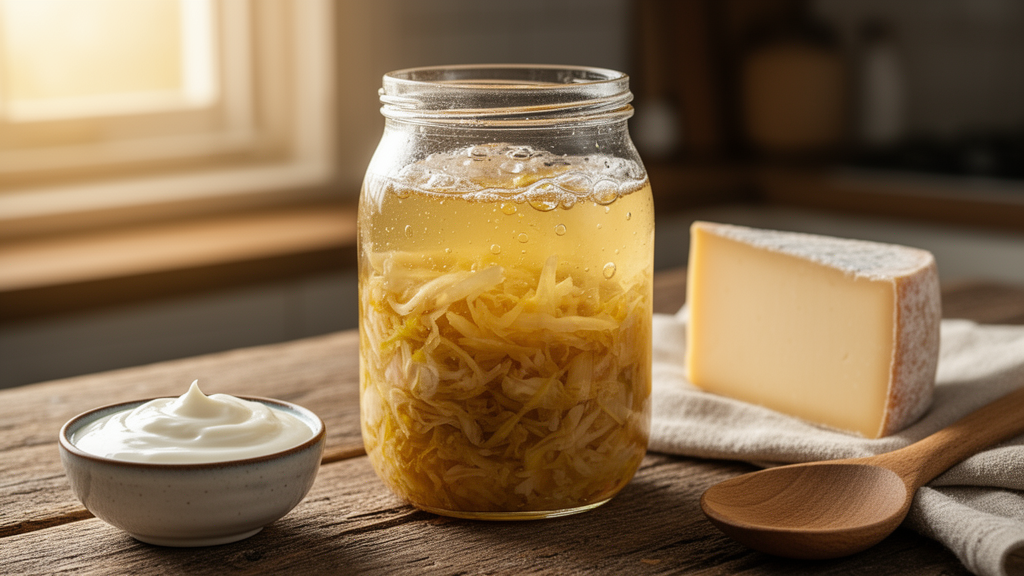
The tang of a well-aged sourdough loaf, the sharp complexity of artisanal cheese, and the aromatic depth of a traditional kimchi all trace back to a remarkable group of microscopic workhorses: lactic acid bacteria. A comprehensive review published in Frontiers in Industrial Microbiology synthesizes decades of research on how these microorganisms generate the volatile and non-volatile compounds that define the sensory character of fermented foods, and it maps out how this knowledge could transform the design of starter cultures for a more sustainable food industry. The work, led by researchers compiling evidence across biochemistry, microbiology, and food technology, positions lactic acid bacteria not merely as preservative agents but as precision flavor engineers whose metabolic outputs can be understood, predicted, and ultimately directed.
Lactic acid bacteria constitute a cornerstone of flavor development in fermented products because of their extensive metabolic versatility. Unlike many spoilage organisms, these bacteria convert the raw materials of food—carbohydrates, proteins, and lipids—into an astonishingly diverse chemical palette. Organic acids provide the characteristic sourness of yogurt and sauerkraut. Esters contribute fruity notes to aged cheeses. Aldehydes, alcohols, ketones, and sulfur-containing compounds each add their own signature to the aroma profiles of bread, fermented milks, meats, and vegetables. The review emphasizes that no single pathway accounts for this richness; rather, it emerges from the interplay of multiple metabolic routes operating simultaneously within and across microbial communities.
Carbohydrate fermentation represents the most fundamental of these routes. Through glycolysis and associated pathways, lactic acid bacteria convert sugars into lactic acid, the compound responsible for the clean acidity that defines products like yogurt and pickled vegetables. But the chemistry does not stop there. Depending on the strain and the conditions, side reactions generate diacetyl, the buttery compound prized in cultured butter and certain cheeses, as well as acetaldehyde, which lends the green-apple note characteristic of some fermented dairy products. The balance between these endpoints is strain-specific, which explains why two bacterial cultures grown on identical substrates can produce strikingly different flavor outcomes.
Protein metabolism offers a second, equally important avenue for flavor generation. Lactic acid bacteria possess proteolytic systems that break down milk or meat proteins into peptides and free amino acids. These amino acids then undergo catabolism through enzymatic reactions involving aminotransferases, lyases, and other catalysts, yielding branched-chain aldehydes, alcohols, and acids that carry malty, cheesy, or roasted notes. Sulfur-containing amino acids such as methionine give rise to sulfur derivatives—compounds that, even at trace concentrations, exert outsized influence on aroma, contributing everything from the pleasant pungency of aged Gouda to the off-notes that signal quality defects. The review highlights that the enzymatic machinery driving these transformations varies dramatically between strains, making strain selection a critical lever for flavor control.
Lipid transformation completes the triad of major flavor-generating metabolic routes. Lactic acid bacteria produce esterases and lipases that hydrolyze fats into free fatty acids, which can then be further converted into methyl ketones, alcohols, and esters. These reactions are particularly important in cheese ripening, where the gradual breakdown of milk fat over weeks or months generates the complex aroma spectrum that distinguishes a mild fresh cheese from a pungent blue variety. The review notes that the specificity of bacterial esterases—determining which esters are formed and in what proportions—remains an active area of investigation with direct implications for accelerating or redirecting ripening processes.
Beyond the biochemical pathways themselves, the review examines the technological determinants that govern flavor biosynthesis in practice. Substrate composition dictates which precursors are available to the bacteria. Temperature influences both the rate of metabolic activity and the relative activity of competing enzymatic systems. Salt concentration shapes not only the selection of which microbes survive but also the expression of specific genes involved in aroma formation. Microbial interactions add a further layer of complexity: in traditional fermentations, consortia of bacteria, yeasts, and fungi exchange metabolites, inhibit competitors, and create conditions that no single species could generate alone. The review identifies these interactions as a current gap in understanding, noting that the mechanistic basis of cross-species flavor modulation remains largely unexplored despite its evident importance in artisanal products.
Recent advances in omics and meta-omics technologies have begun to close this knowledge gap. Genomics reveals the strain-level diversity hidden within what were once considered homogeneous bacterial species. Transcriptomics shows which flavor-relevant genes are actually expressed under fermentation conditions. Metabolomics captures the full chemical output of microbial communities in real time. By integrating these molecular data with sensory analysis and metabolomic profiling, researchers can now connect specific bacterial genes to specific aroma compounds with unprecedented precision. The review underscores that this integration represents a paradigm shift: flavor formation is no longer treated as a black box but as a system whose inputs and outputs can be measured, modeled, and manipulated.
One of the most exciting frontiers highlighted in the review involves the largely unexplored aroma-forming potential of lactic acid bacteria isolated from traditional fermented foods. Around the world, countless communities have maintained fermentation practices for generations, producing foods with distinctive flavors shaped by local microbial ecology. These traditional ecosystems harbor bacterial strains whose enzymatic repertoires have never been systematically catalogued. The review argues that mining this diversity—identifying strains with novel or enhanced flavor-generating capabilities—offers a sustainable alternative to synthetic flavor additives and provides a bioprospecting opportunity rooted in culinary heritage rather than laboratory synthesis.
The technological applications flowing from this synthesis are considerable. Optimized starter cultures—carefully selected combinations of bacterial strains—could be designed to produce consistent, desirable flavor profiles while reducing reliance on lengthy ripening periods or chemical additives. Strain-level enzymatic diversity could be harnessed to generate specific target compounds, from buttery diacetyl to fruity esters, with controlled precision. The review also points toward opportunities for using lactic acid bacteria to enhance the sensory quality of plant-based fermented products, an area of growing commercial interest as consumers seek sustainable alternatives to animal-derived foods. In each case, the underlying principle is the same: flavor engineering grounded in biochemical understanding rather than trial and error.
What distinguishes this review from previous surveys of the field, according to the authors, is its unique integration of biochemical pathways, strain-specific enzymatic diversity, and technological determinants within a single framework. Rather than treating these as separate domains of inquiry, the review shows how they interact: how substrate composition shapes which metabolic routes dominate, how temperature and salt modulate enzymatic activity, and how microbial community structure determines the collective flavor output. Understanding the biochemical and technological bases of lactic acid bacteria-driven flavor formation is therefore essential, the review concludes, for advancing innovation in food fermentation and improving the sensory quality of modern fermented products. As the global food industry confronts pressures toward sustainability, transparency, and clean-label production, the microscopic bacteria that have flavored human diets for millennia may prove to be the most sophisticated flavor engineers of all.
Subject of Research: Biochemical routes and technological applications of lactic acid bacteria in fermented food flavor formation
Article Title: Sustainable flavor engineering in fermented foods: biochemical routes and technological applications of lactic acid bacteria
Article References: Borthakur, D., Sharma, B. K., & Duncan, T. (2026). Sustainable flavor engineering in fermented foods: biochemical routes and technological applications of lactic acid bacteria. Frontiers in Industrial Microbiology, 4, Article 1834783. https://doi.org/10.3389/finmi.2026.1834783
Image Credits: AI Generated
DOI: 10.3389/finmi.2026.1834783
Keywords: lactic acid bacteria, fermented foods, flavor engineering, food microbiology, starter cultures, food biotechnology, sustainable food, aroma compounds, Sustainable, flavor, engineering, fermented
Cite Scienmag News
Morgan Morrow. (October 17, 2026). How Lactic Acid Bacteria Engineer the Flavors of Fermented Foods. Scienmag. https://scienmag.com/how-lactic-acid-bacteria-engineer-the-flavors-of-fermented-foods/
Morgan Morrow. "How Lactic Acid Bacteria Engineer the Flavors of Fermented Foods." Scienmag, 17 October 2026, https://scienmag.com/how-lactic-acid-bacteria-engineer-the-flavors-of-fermented-foods/. Accessed 17 October 2026.
Morgan Morrow. "How Lactic Acid Bacteria Engineer the Flavors of Fermented Foods." Scienmag. October 17, 2026. https://scienmag.com/how-lactic-acid-bacteria-engineer-the-flavors-of-fermented-foods/


