


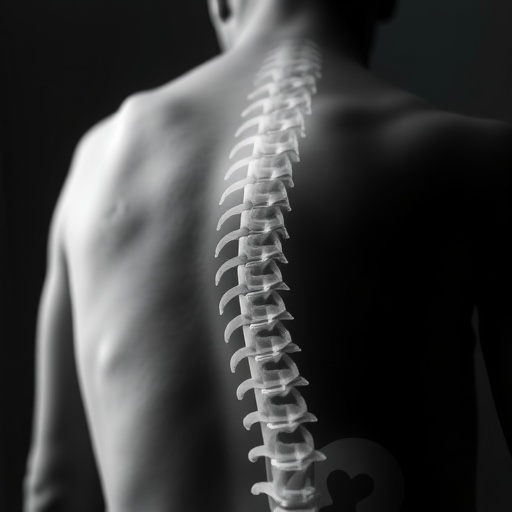
Open spina bifida, a congenital neural tube defect characterized by the incomplete closure of the spinal column, exposes the spinal cord and nerves, often resulting in severe neurological impairments. Despite advances in medical care improving early survival, comprehensive, long-term data on life expectancy stratified by functional ability, age, and sex have remained scarce. A new pivotal study, recently published in the esteemed journal Developmental Medicine & Child Neurology, sheds light on these survival trajectories, offering data essential for clinicians, patients, and caregivers in optimizing management strategies.
Spanning over three decades, from 1986 to 2019, the study meticulously tracked 1,659 individuals diagnosed with open spina bifida who were supported by the California Department of Developmental Services. By utilizing detailed functional assessments—such as ambulatory capabilities, feeding independence, and bowel and bladder continence—the researchers were able to classify patients into cohorts reflecting varying degrees of impairment. These classifications, in turn, elucidate the nuanced prognostic differences within this heterogeneous population.
Remarkably, the findings indicate that life expectancy diverges dramatically based on functional status. For instance, male patients who were non-ambulatory, requiring assistance for feeding and dependent on bowel/bladder management, had a projected life expectancy at age five of just 27 additional years. Conversely, those demonstrating minimal impairment in these domains were anticipated to survive up to 65 more years—a figure that approaches the normative life expectancy of approximately 70 years seen in the general population. Such disparities underscore the profound impact of neurological and functional severity on survival outcomes.
The study further delineated survival probabilities across different age brackets, revealing that life expectancy diminishes progressively with increasing age in all groups. This trend reflects the compounded effects of medical complications and age-related vulnerabilities inherent to individuals living with complex congenital conditions. Intriguingly, sex-based differences emerged as well, with females exhibiting modestly longer life expectancies than males across comparable impairment levels. While the underlying biological or social determinants of this disparity warrant further exploration, they align with broader demographic patterns observed in survival studies.
By integrating survival estimates with detailed clinical profiles, this research marks the first of its kind to provide long-term life expectancy data stratified by age, sex, and severity of functional limitations in spina bifida patients. These insights are poised to revolutionize patient counseling, resource allocation, and individualized care planning. Clinicians can now offer more precise prognostic guidance, while families and caregivers are better equipped to anticipate the challenges and needs across the lifespan of those affected.
Importantly, the methodology employed robust statistical techniques to accommodate competing risks and potential confounders, ensuring that the survival probabilities presented are both reliable and clinically meaningful. The longitudinal nature of the cohort, coupled with the breadth of functional assessments, enhances the generalizability of these findings to other populations managing open spina bifida. Furthermore, the research illuminates avenues for targeted interventions aimed at improving mobility, nutritional autonomy, and continence, which in turn could extend longevity.
The implications of this study extend beyond prognosis; they invite a reevaluation of therapeutic priorities focusing on enhancing quality of life and functional independence. Given that even modest improvements in walking ability, feeding, and continence substantially influence survival, interdisciplinary strategies encompassing neurosurgical, rehabilitative, and psychosocial supports are paramount. Moreover, these findings galvanize advocacy for resource allocation that supports lifelong care for individuals living with spina bifida, addressing not only medical but also social determinants of health.
This comprehensive survival analysis also informs ongoing debates regarding the ethical frameworks guiding treatment decisions in severe congenital conditions. By providing nuanced data on expected lifespans matched to functional status, families and health professionals can engage in shared decision-making processes grounded in empirical evidence rather than anecdote or assumption. As such, this research embodies a crucial step towards personalized medicine within pediatric neurology and disability care.
Beyond spina bifida, the study’s methodology serves as a template for investigating survival in other chronic pediatric-onset neurodisabilities. The approach of coupling registry data with functional impairment metrics can be harnessed to forecast outcomes, tailor interventions, and allocate healthcare resources across numerous disabling conditions. This cross-applicability enhances the broader significance of the work for the scientific and medical communities.
In summary, the pioneering work presented in Developmental Medicine & Child Neurology delivers the most comprehensive survival estimates to date for individuals with open spina bifida. By stratifying life expectancy according to age, sex, and severity of functional impairments, the study offers an indispensable resource for clinicians and caregivers alike. These revelations promise to reshape clinical practice, patient education, and policy formulation, ultimately striving to improve both the longevity and the lived experience of those affected by this complex congenital disorder.
News Publication Date: 11-Feb-2026
Web References: http://dx.doi.org/10.1111/dmcn.70185
Cite Scienmag News
Ophelia Keating. (February 11, 2026). How Do Certain Factors Influence Life Expectancy in Individuals with Spina Bifida? Scienmag. https://scienmag.com/how-do-certain-factors-influence-life-expectancy-in-individuals-with-spina-bifida/
Ophelia Keating. "How Do Certain Factors Influence Life Expectancy in Individuals with Spina Bifida?" Scienmag, 11 February 2026, https://scienmag.com/how-do-certain-factors-influence-life-expectancy-in-individuals-with-spina-bifida/. Accessed 4 September 2026.
Ophelia Keating. "How Do Certain Factors Influence Life Expectancy in Individuals with Spina Bifida?" Scienmag. February 11, 2026. https://scienmag.com/how-do-certain-factors-influence-life-expectancy-in-individuals-with-spina-bifida/


