


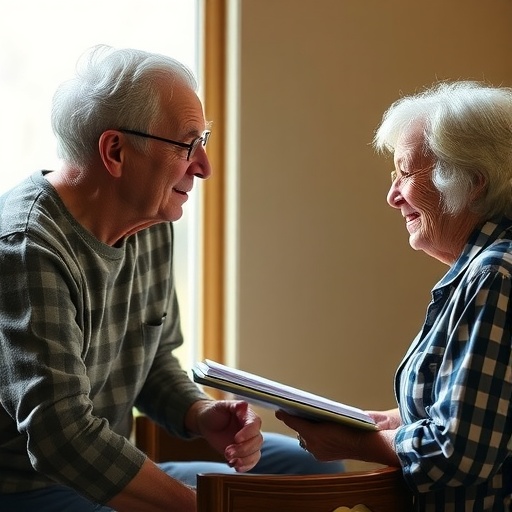
As populations age, the ability to understand, evaluate, and use health information is becoming an increasingly important determinant of everyday wellbeing. A new study by Cevik, Simsek, Kayabek and colleagues examines how health literacy is associated with selected lifestyle behaviors among older adults living independently in their communities. Published in BMC Geriatrics, the research focuses on a population whose health decisions are often shaped not only by medical advice, but also by access to understandable information, confidence in navigating healthcare systems, and the practical realities of daily life.
Health literacy is more complex than simply being able to read a doctor’s instructions. It includes the capacity to find relevant information, comprehend medical terminology, judge whether health claims are trustworthy, and apply recommendations to real-world decisions. For older adults, these abilities may influence whether they recognize symptoms, follow medication schedules, attend preventive appointments, select nutritious foods, remain physically active, or respond appropriately to information encountered online and in the media.
The study’s focus on community-dwelling older adults is particularly significant. Unlike residents of hospitals or long-term care facilities, community-dwelling adults generally manage much of their health independently. They may organize their medications, prepare meals, arrange transportation, communicate with healthcare professionals, and decide when symptoms require attention. These responsibilities make health literacy a potentially important link between available health information and actual behavior.
Lifestyle behaviors are among the most powerful modifiable factors affecting health in later life. Regular physical activity can help preserve muscle strength, balance, cardiovascular function, and cognitive health. Dietary choices influence blood pressure, blood glucose, body weight, and inflammation. Smoking, alcohol consumption, sleep patterns, and participation in preventive care can also alter the risk of chronic disease and disability. By examining health literacy alongside these behaviors, the researchers address a central question in public health: does understanding health information translate into healthier routines?
The scientific importance of this question lies in the difference between information exposure and information use. People may receive the same advice about exercise or nutrition but interpret it differently depending on education, language, previous experience, digital skills, and trust in healthcare institutions. Health literacy research therefore considers both individual abilities and the accessibility of the systems providing information. A recommendation can be medically accurate yet ineffective if it is written in unfamiliar language, presented without practical examples, or disconnected from a person’s financial and social circumstances.
Associations identified in studies of this type must be interpreted carefully. An association means that two characteristics occur together more often than would be expected by chance; it does not automatically demonstrate that one causes the other. Higher health literacy could encourage healthier behavior, but the relationship may also work in both directions. People who are already physically active or engaged with preventive care may have more opportunities to obtain health information. Other factors—including income, education, social support, mobility, chronic illness, access to healthcare, and cognitive function—could influence both health literacy and lifestyle choices.
That distinction is essential for designing effective interventions. If limited health literacy contributes to unhealthy behavior, broad public-health messages alone may not be enough. Programs may need to use plain language, visual explanations, repetition, culturally appropriate examples, and opportunities for older adults to ask questions. Healthcare professionals can improve understanding by asking patients to explain instructions in their own words, a communication technique often known as the teach-back method. Community centers, pharmacies, libraries, and senior organizations could also become important sites for delivering practical and trustworthy health information.
The research arrives as digital health communication expands rapidly. Older adults are increasingly exposed to online medical advice, social-media claims, wearable-device data, and remote healthcare platforms. These technologies can improve access, but they also introduce new challenges. Evaluating whether a website is credible, distinguishing scientific evidence from advertising, and understanding risk statistics require a form of digital and numerical literacy. Misleading claims about supplements, diets, rapid weight loss, or “natural” treatments can spread widely when users lack the tools to assess evidence quality.
The broader message of the study is that healthy aging is not determined solely by personal motivation or medical treatment. It is also shaped by whether people can access information, understand its meaning, and convert it into feasible action. By investigating the relationship between health literacy and lifestyle behaviors in older adults living in the community, the researchers contribute to a growing effort to make health communication more effective, equitable, and usable. The findings may help guide future prevention strategies that treat clear communication not as an optional service, but as a core component of healthcare.
Cite Scienmag News
Ophelia Keating. (August 1, 2026). Health Literacy Linked to Lifestyle Behaviors in Community-Dwelling Older Adults. Scienmag. https://scienmag.com/health-literacy-linked-to-lifestyle-behaviors-in-community-dwelling-older-adults/
Ophelia Keating. "Health Literacy Linked to Lifestyle Behaviors in Community-Dwelling Older Adults." Scienmag, 1 August 2026, https://scienmag.com/health-literacy-linked-to-lifestyle-behaviors-in-community-dwelling-older-adults/. Accessed 4 September 2026.
Ophelia Keating. "Health Literacy Linked to Lifestyle Behaviors in Community-Dwelling Older Adults." Scienmag. August 1, 2026. https://scienmag.com/health-literacy-linked-to-lifestyle-behaviors-in-community-dwelling-older-adults/


