


A cutting-edge study reveals that inoculating arbuscular mycorrhizal fungi (AMF) into acidic soils significantly bolsters soybean growth, particularly in plants with enhanced phosphorus efficiency. This eco-friendly method outperforms traditional phosphorus fertilization, offering a promising strategy for sustainable agriculture in nutrient-scarce environments.
Acidic soils, characterized by low pH and poor phosphorus availability, pose significant challenges to leguminous plant growth and productivity. Traditional methods to improve soil phosphorus involve chemical fertilization, which can have environmental drawbacks. Mycorrhizal fungi offer a promising alternative by enhancing nutrient uptake and soil health. Based on these challenges, there is a need to conduct in-depth research on sustainable agricultural practices that leverage microbial inoculants to improve crop productivity.
Researchers from Nanjing Agricultural University have made a significant stride in agricultural science, with their findings (DOI: 10.1093/hr/uhae067) published in the prestigious journal Horticulture Research on March 2, 2024. The study delves into the effects of arbuscular mycorrhizal fungi (AMF) inoculation versus traditional phosphorus fertilization on soybean growth.
The study compared the effects of AMF inoculation and P-fertilization on soybean growth, focusing on plant biomass and the composition of the rhizosphere microbiome. Results showed that the biomass of higher P-efficiency soybean PT6 increased by 46.74%–65.22% with AMF inoculation, whereas P-fertilization alone did not significantly enhance growth. The PT6 variety demonstrated a growth advantage in acidic soils when inoculated with AMF, highlighting the symbiotic relationship between the plant and fungi. The analysis revealed that AMF inoculation altered the microbial community composition in the soybean rhizosphere, enriching beneficial nitrogen-fixing and phosphate-solubilizing bacteria. These microbial changes were correlated with improved nutrient uptake and plant growth. Additionally, the study found that AMF inoculation increased the abundance of beneficial fungi, which further supported plant health and productivity.
Dr. Guihua Lu, a lead researcher in the study, stated, “Our findings demonstrate the significant potential of AMF in enhancing soybean growth in phosphorus-deficient acidic soils. This sustainable approach not only improves plant productivity but also contributes to soil health, offering a viable alternative to traditional fertilization methods.”
The implications of this study are far-reaching for sustainable agriculture. The use of AMF inoculation in acidic soils can significantly enhance soybean growth and productivity, reducing the need for chemical fertilizers. This approach promotes environmental sustainability by improving soil health and reducing agricultural runoff. Future research could expand the application of microbial inoculants to other crops and soil types, further supporting the development of sustainable farming practices that leverage natural plant-microbe interactions for improved agricultural outcomes.

Credit: Horticulture Research
A cutting-edge study reveals that inoculating arbuscular mycorrhizal fungi (AMF) into acidic soils significantly bolsters soybean growth, particularly in plants with enhanced phosphorus efficiency. This eco-friendly method outperforms traditional phosphorus fertilization, offering a promising strategy for sustainable agriculture in nutrient-scarce environments.
Acidic soils, characterized by low pH and poor phosphorus availability, pose significant challenges to leguminous plant growth and productivity. Traditional methods to improve soil phosphorus involve chemical fertilization, which can have environmental drawbacks. Mycorrhizal fungi offer a promising alternative by enhancing nutrient uptake and soil health. Based on these challenges, there is a need to conduct in-depth research on sustainable agricultural practices that leverage microbial inoculants to improve crop productivity.
Researchers from Nanjing Agricultural University have made a significant stride in agricultural science, with their findings (DOI: 10.1093/hr/uhae067) published in the prestigious journal Horticulture Research on March 2, 2024. The study delves into the effects of arbuscular mycorrhizal fungi (AMF) inoculation versus traditional phosphorus fertilization on soybean growth.
The study compared the effects of AMF inoculation and P-fertilization on soybean growth, focusing on plant biomass and the composition of the rhizosphere microbiome. Results showed that the biomass of higher P-efficiency soybean PT6 increased by 46.74%–65.22% with AMF inoculation, whereas P-fertilization alone did not significantly enhance growth. The PT6 variety demonstrated a growth advantage in acidic soils when inoculated with AMF, highlighting the symbiotic relationship between the plant and fungi. The analysis revealed that AMF inoculation altered the microbial community composition in the soybean rhizosphere, enriching beneficial nitrogen-fixing and phosphate-solubilizing bacteria. These microbial changes were correlated with improved nutrient uptake and plant growth. Additionally, the study found that AMF inoculation increased the abundance of beneficial fungi, which further supported plant health and productivity.
Dr. Guihua Lu, a lead researcher in the study, stated, “Our findings demonstrate the significant potential of AMF in enhancing soybean growth in phosphorus-deficient acidic soils. This sustainable approach not only improves plant productivity but also contributes to soil health, offering a viable alternative to traditional fertilization methods.”
The implications of this study are far-reaching for sustainable agriculture. The use of AMF inoculation in acidic soils can significantly enhance soybean growth and productivity, reducing the need for chemical fertilizers. This approach promotes environmental sustainability by improving soil health and reducing agricultural runoff. Future research could expand the application of microbial inoculants to other crops and soil types, further supporting the development of sustainable farming practices that leverage natural plant-microbe interactions for improved agricultural outcomes.
###
References
Original Source URL
Funding information
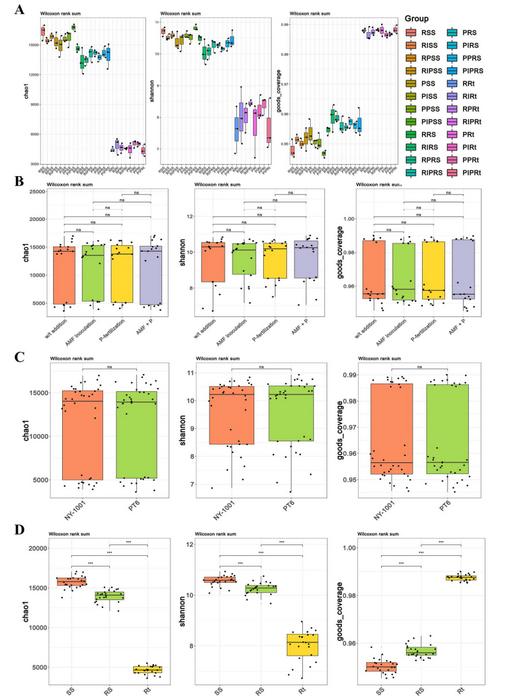
The boxplot of alpha diversity of root-associated bacterial community.
About Horticulture Research
Horticulture Research is an open access journal of Nanjing Agricultural University and ranked number one in the Horticulture category of the Journal Citation Reports ™ from Clarivate, 2022. The journal is committed to publishing original research articles, reviews, perspectives, comments, correspondence articles and letters to the editor related to all major horticultural plants and disciplines, including biotechnology, breeding, cellular and molecular biology, evolution, genetics, inter-species interactions, physiology, and the origination and domestication of crops.
Journal
Horticulture Research
Subject of Research
Not applicable
Article Title
Harnessing the power of microbes: Enhancing soybean growth in an acidic soil through AMF inoculation rather than P-fertilization
Article Publication Date
2-Mar-2024
COI Statement
The authors declare that they have no competing interests.
Cite Scienmag News
Alan Morgan. (June 25, 2024). Harvesting microbes for growth: a soybean success story in acidic soils. Scienmag. https://scienmag.com/harvesting-microbes-for-growth-a-soybean-success-story-in-acidic-soils/
Alan Morgan. "Harvesting microbes for growth: a soybean success story in acidic soils." Scienmag, 25 June 2024, https://scienmag.com/harvesting-microbes-for-growth-a-soybean-success-story-in-acidic-soils/. Accessed 3 September 2026.
Alan Morgan. "Harvesting microbes for growth: a soybean success story in acidic soils." Scienmag. June 25, 2024. https://scienmag.com/harvesting-microbes-for-growth-a-soybean-success-story-in-acidic-soils/

