

Saturday, October 24, 2026
Science
No Result
View All Result
  • Login
  • HOME
  • SCIENCE NEWS
  • CONTACT US
  • HOME
  • SCIENCE NEWS
  • CONTACT US
No Result
View All Result
Scienmag
No Result
View All Result
Home Science News Athmospheric

Habitat Quality Outweighs Climate in Shifting Finnish Species Communities

October 24, 2026
in Athmospheric
Margaret Porter
By Margaret Porter Scienmag Editorial Profile - Biodiversity Science
Reading Time: 3 mins read
0
Habitat Quality Outweighs Climate in Shifting Finnish Species Communities

Habitat Quality Outweighs Climate in Shifting Finnish Species Communities

65
SHARES
587
VIEWS
Share on FacebookShare on Twitter
ADVERTISEMENT

Habitat composition explains the occurrence and abundance of most animal groups in Finland better than climate does, according to a study published in Nature Communications by researchers at the University of Helsinki. The finding runs counter to the researchers’ own expectations and suggests that habitat degradation threatens Finnish biodiversity more than public discourse centred on climate change might indicate. The conclusion points to land-use planning as a central tool for safeguarding the country’s species.

The study covered 503 terrestrial animal species and tracked changes in their occurrence over 20 years, drawing on data from the whole of Finland and all of its climatic zones. Analysing more than three million observations required advanced statistical methods. The researchers set out to determine which factor dominates species occurrence and abundance: climate, or habitat-related variables such as the natural state of an area and the share of land shaped by human activity. Because solutions to mitigate biodiversity loss depend on the answer, the stakes of the comparison are high.

The results split along spatial and temporal scales. Climate was the best explanation for variation in species communities from year to year and between extensive geographical areas such as Southern and Northern Finland, meaning that tackling climate change remains essential for retaining the distinctive characteristics of northern and southern fauna. In contrast, the importance of habitats increased when biodiversity was examined locally and regionally. Forested areas accommodate different species communities than agricultural environments or wetlands, and species are lost when their habitats are altered, so land-use decisions strongly shape where species communities occur.

The balance also differed among taxonomic groups. Habitat proved especially important for butterflies, birds and small mammals, while for large mammals and moths the relative importance of habitat and climate was equal, according to lead author Emy Guilbault, a Humboldt Foundation Research Fellow. The team additionally examined how species’ functional traits, such as body size, reproductive cycle rate and degree of specialisation, influenced the results. In almost all taxonomic groups, species with slow reproductive cycles were more sensitive to climatic conditions than faster-reproducing species. Small mammals that prefer a specific habitat or food depended on the climate, whereas habitat mattered more for larger, less specialised mammalian species. For birds, butterflies and moths, body size and degree of specialisation had no effect on which factor dominated.

The researchers conclude that biodiversity loss in Finland cannot be attributed to climate change alone. “In many cases, land use can have an even more decisive impact on species, especially locally and regionally. At the same time, climate change and habitats cannot be completely separated from each other, because it is together that they will determine the state of our species communities in the coming decades,” Guilbault said. Climate and habitats also have significant combined effects, as species must simultaneously adapt to a changing climate and to habitat degradation.

Professor Jarno Vanhatalo of the University of Helsinki argued that conservation should put greater effort into protecting and restoring remaining habitats. Maintaining habitat diversity, he noted, is an action that also helps species cope with climate change, and conservation efforts should take species characteristics, regional differences and temporal variation into account. The researchers draw some comfort from the fact that land use and habitat protection can be addressed more effectively locally than climate change can be tackled globally. In their view, the means to protect Finland’s species exist, and the most effective of them are in the country’s own hands.

Subject of Research: Animals

Article Title: Habitat quality accounts for shifts in Finnish species more than the climate

Article References: Habitat quality accounts for shifts in Finnish species more than the climate. Original publication (Bibliographic details unavailable.)

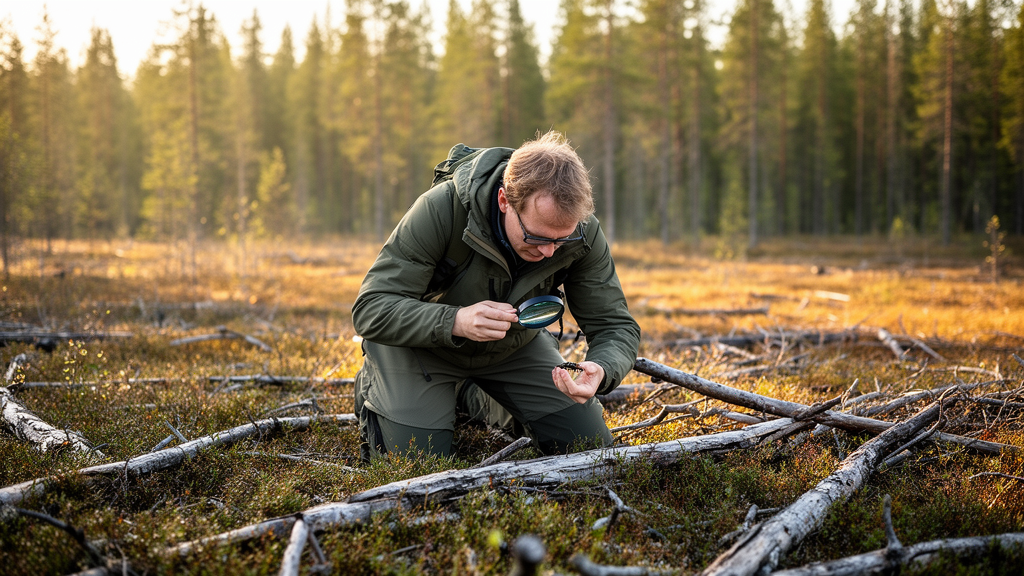
Image Credits: AI Generated

DOI: Not provided

Keywords: biodiversity, habitat quality, climate change, Finland, land use, species communities, Nature Communications, conservation, functional traits, terrestrial animals, Habitat, quality

Cite Scienmag News

Margaret Porter. (October 24, 2026). Habitat Quality Outweighs Climate in Shifting Finnish Species Communities. Scienmag. https://scienmag.com/habitat-quality-outweighs-climate-in-shifting-finnish-species-communities/

Margaret Porter. "Habitat Quality Outweighs Climate in Shifting Finnish Species Communities." Scienmag, 24 October 2026, https://scienmag.com/habitat-quality-outweighs-climate-in-shifting-finnish-species-communities/. Accessed 24 October 2026.

Margaret Porter. "Habitat Quality Outweighs Climate in Shifting Finnish Species Communities." Scienmag. October 24, 2026. https://scienmag.com/habitat-quality-outweighs-climate-in-shifting-finnish-species-communities/


Tags: advanced statistical analysis in ecological studiesbiodiversityclimate changeclimate vs habitat influence on wildlifeconservationeffect of habitat composition on species abundanceFinlandFinnish biodiversity conservationFinnish species community shiftsfunctional traitshabitathabitat degradation impact on specieshabitat qualityland management and biodiversity preservationland useland-use planning for species protectionlong-term biodiversity monitoringNature Communications.public perception of climate change and habitat threatsqualityspatial and temporal biodiversity variationspecies communitiesterrestrial animal species in Finlandterrestrial animals
Share26Tweet16
Previous Post

Mosquito Aggregation and Host Clustering Reshape Zoonotic Virus Transmission Risk

Next Post

Trichosporon asahii Dominates Clinical Isolates in South China, With Voriconazole the Most Active Drug

Related Posts

Traffic Emissions in Helsinki Reveal Hidden Inverse and Indirect Impacts on Urban Air
Athmospheric

Traffic Emissions in Helsinki Reveal Hidden Inverse and Indirect Impacts on Urban Air

October 24, 2026
Fourteen Winters of Alaskan Data Reveal How Sea Ice Openings Feed Arctic Wintertime Clouds
Athmospheric

Fourteen Winters of Alaskan Data Reveal How Sea Ice Openings Feed Arctic Wintertime Clouds

October 24, 2026
China’s clean air drive quietly dimmed a hidden climate-warming aerosol
Athmospheric

China’s clean air drive quietly dimmed a hidden climate-warming aerosol

October 24, 2026
Arctic split into three aerosol regimes with contrasting cloud-forming futures
Athmospheric

Arctic split into three aerosol regimes with contrasting cloud-forming futures

October 24, 2026
Giant Sea Spray Particles Found to Accelerate Warm Rain in Marine Clouds
Athmospheric

Giant Sea Spray Particles Found to Accelerate Warm Rain in Marine Clouds

October 23, 2026
Reddit community r/heat_prep reveals gaps in official heat-health guidance
Athmospheric

Reddit community r/heat_prep reveals gaps in official heat-health guidance

October 23, 2026
Next Post
Trichosporon asahii Dominates Clinical Isolates in South China, With Voriconazole the Most Active Drug

Trichosporon asahii Dominates Clinical Isolates in South China, With Voriconazole the Most Active Drug

  • Mothers who receive childcare support from maternal grandparents show more optimized

    Mothers who receive childcare support from maternal grandparents show more parental warmth, finds NTU Singapore study

    27656 shares
    Share 11059 Tweet 6912
  • University of Seville Breaks 120-Year-Old Mystery, Revises a Key Einstein Concept

    1061 shares
    Share 424 Tweet 265
  • Bee body mass, pathogens and local climate influence heat tolerance

    682 shares
    Share 273 Tweet 171
  • Researchers record first-ever images and data of a shark experiencing a boat strike

    546 shares
    Share 218 Tweet 137
  • Groundbreaking Clinical Trial Reveals Lubiprostone Enhances Kidney Function

    531 shares
    Share 212 Tweet 133
Science

Embark on a thrilling journey of discovery with Scienmag.com—your ultimate source for cutting-edge breakthroughs. Immerse yourself in a world where curiosity knows no limits and tomorrow’s possibilities become today’s reality!

RECENT NEWS

  • Trichosporon asahii Dominates Clinical Isolates in South China, With Voriconazole the Most Active Drug
  • Habitat Quality Outweighs Climate in Shifting Finnish Species Communities
  • Mosquito Aggregation and Host Clustering Reshape Zoonotic Virus Transmission Risk
  • Swapping One Element Decides Whether Mixed High-Entropy Alloys Turn Glassy

Categories

  • Agriculture
  • Anthropology
  • Archaeology
  • Athmospheric
  • Biology
  • Biotechnology
  • Blog
  • Bussines
  • Cancer
  • Chemistry
  • Climate
  • Earth Science
  • Editorial Policy
  • Marine
  • Mathematics
  • Medicine
  • Pediatry
  • Policy
  • Psychology & Psychiatry
  • Science Education
  • Science News
  • Social Science
  • Space
  • Technology and Engineering

Subscribe to Blog via Email

Enter your email address to subscribe to this blog and receive notifications of new posts by email.

Join 5,152 other subscribers

© 2025 Scienmag - Science Magazine

Welcome Back!

Login to your account below

Forgotten Password?

Retrieve your password

Please enter your username or email address to reset your password.

Log In
No Result
View All Result
  • HOME
  • SCIENCE NEWS
  • CONTACT US

© 2025 Scienmag - Science Magazine

Discover more from Science

Subscribe now to keep reading and get access to the full archive.

Continue reading