


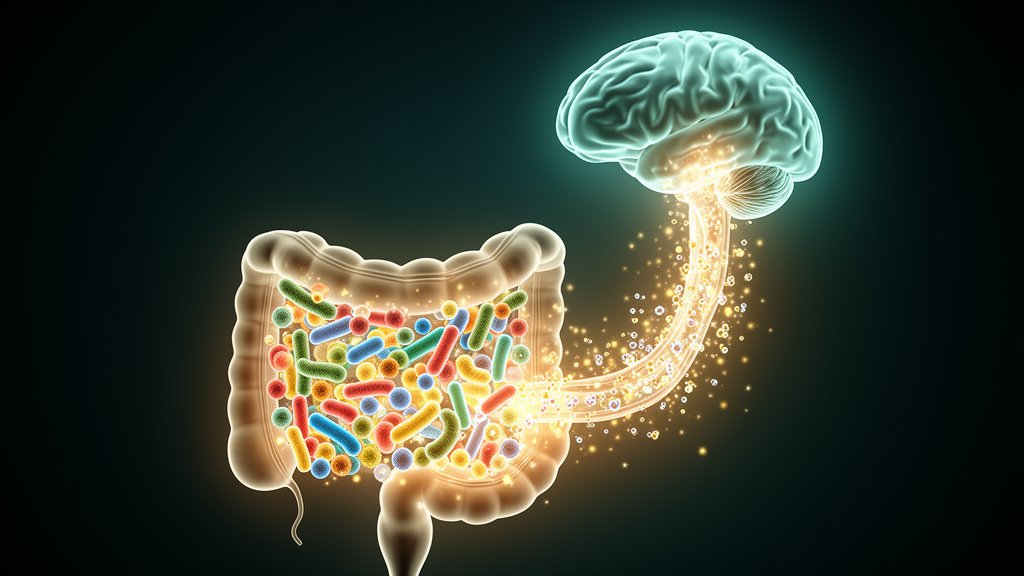
For millions of people, a migraine is not just a headache. It is a full-body storm of throbbing pain, nausea, and blinding sensitivity to light and sound that can derail an entire day. For decades, researchers have chased the disorder through the brain’s own circuitry, mapping trigeminovascular pathways, cortical spreading depolarization, and the rise and fall of CGRP, the peptide now targeted by a new generation of drugs. But a sweeping new review published in Frontiers in Medicine argues that part of the answer may lie far from the skull, in an unexpected organ: the gut. The work, led by Yadi Shi and colleagues at Jining Medical University in China, assembles the growing evidence that the trillions of microbes living in our intestines, and the chemicals they manufacture, may help set the stage for migraine attacks.
The idea rests on the gut-brain axis, the bidirectional communication network that links the digestive tract and the central nervous system through the vagus nerve, immune signaling, hormones, and a constant river of circulating metabolites. The gut microbiota can shape the integrity of the intestinal barrier, tune inflammatory signaling, and alter the availability of neurotransmitter precursors. In return, the brain influences the gut through the autonomic nervous system and the hypothalamic-pituitary-adrenal axis. When this dialogue goes wrong, the review suggests, the result may be amplified neuroinflammation, central sensitization, and a trigeminovascular system primed to fire. It is an appealing framework, and one that fits a long-observed clinical curiosity: people with migraine report gastrointestinal complaints at strikingly high rates.
The human evidence begins with patterns rather than mechanisms. Across pediatric cohorts, adults, and older women, researchers have reported differences in gut microbial composition between people with migraine and healthy controls. Children with migraine show shifts in taxa including Bacteroides, Parabacteroides, and Ruminococcaceae. In elderly women, migraine was associated with lower abundance of Faecalibacterium prausnitzii, a major butyrate-producing bacterium with anti-inflammatory and barrier-supporting functions. Patients with chronic migraine and medication-overuse headache show altered microbial profiles that track with circulating inflammatory markers. Even an early 2014 meta-analysis found a higher prevalence of Helicobacter pylori infection among migraine patients in some Asian populations, hinting that gastrointestinal microbes and headache have been entangled in the literature for over a decade.
But the review is refreshingly blunt about the limits of these findings. Most human microbiome studies are cross-sectional snapshots, which cannot tell us whether microbial changes precede migraine, result from migraine-related dietary restrictions and medication use, or simply reflect shared environmental factors. And here lies a crucial technical caveat that the authors hammer repeatedly: taxonomy is not chemistry. A drop in putative butyrate-producing bacteria suggests a reduced community capacity for short-chain fatty acid production, but it does not prove that actual fecal or blood levels of these molecules have fallen. Diet, age, sex, geography, sequencing platforms, and bioinformatic pipelines all inject noise. Without direct metabolomic measurements, the microbial signatures of migraine remain correlations in search of a mechanism.
The strongest mechanistic story centers on short-chain fatty acids, the acetate, propionate, and butyrate molecules that gut bacteria ferment from dietary fiber. These are not passive waste products. Acetate has been shown in non-migraine models to sustain the metabolic fitness of microglia, the brain’s resident immune cells. Propionate and butyrate bind the receptors FFAR2 and FFAR3 on epithelial and immune cells, shaping barrier function and inflammatory tone. In nitroglycerin-induced mouse models of migraine, the workhorse of the field, treatment with propionate and butyrate attenuated migraine-like responses, reduced inflammatory mediators in the trigeminal nucleus, and repaired intestinal mucosal injury. Most strikingly, in one recent experiment, antibiotic disruption of the microbiome prolonged migraine-like pain in mice, while supplementation restored intestinal acetate and propionate levels and FFAR2 signaling. In mice engineered to lack FFAR2, that protective effect vanished entirely, a rare causal demonstration inside an experimental model.
Tryptophan metabolism tells a subtler tale, because the three branches of this pathway differ in how much microbes actually own them. Gut bacteria directly convert tryptophan into indole derivatives such as indole-3-propionic acid and tryptamine, which activate the aryl hydrocarbon receptor and can modulate astrocyte activity, mucosal immunity, and barrier integrity. The kynurenine pathway, by contrast, is a host route that microbes can only nudge indirectly, yet its products are deeply relevant to headache biology: kynurenic acid dampens glutamatergic and NMDA receptor signaling, while 3-hydroxykynurenine is a redox-active compound tied to oxidative stress. In nitroglycerin models, a kynurenic acid analog attenuated hyperalgesia and altered CGRP-related signaling. Serotonin sits on the third branch, produced mainly by host enterochromaffin cells, and its centrality to migraine is beyond doubt, since triptans and lasmiditan both act on 5-HT receptors. But the authors caution that the clinical success of serotonergic drugs does not prove that microbiota-driven changes in serotonin metabolism cause migraine.
Perhaps the most provocative chapter involves nitric oxide, a molecule with a split identity. Host nitric oxide synthases are major NO producers, and the pharmacology is unambiguous: nitroglycerin, an NO donor, reliably provokes delayed migraine attacks in susceptible people, which is precisely why it became the field’s standard provocation paradigm. Independent labs have traced the downstream cascade through protein kinase C delta, CGRP antagonism, IL-17-driven neuroinflammation, and the interplay of all three NOS isoforms with peroxynitrite and soluble guanylate cyclase. Yet microbes hold a piece of this puzzle too. Oral bacteria reduce dietary nitrate to nitrite, feeding systemic NO production, and human studies show that periodontitis impairs this capacity while dietary nitrate reshapes the oral microbiome. In the American Gut Project cohort, people with migraine carried higher levels of nitrate- and nitrite-reducing oral microbes, and a 2025 case-control study linked several nitrate-reducing oral genera to headache day counts. Functional potential, the review stresses, is not metabolite flux, and no study has yet shown that microbe-derived NO reaches the trigeminovascular system in attack-relevant concentrations.
Beyond these three headline pathways, the review surveys a frontier of emerging suspects. Certain bacteria carry histidine decarboxylase and manufacture histamine, a molecule that can provoke headache in susceptible individuals and cross-talk with CGRP. Barrier markers like zonulin, which are host-derived rather than microbial, have been reported at altered levels in children with migraine alongside dysbiosis. The endocannabinoidome, the expanded family of lipid mediators involved in pain signaling, engages in bidirectional commerce with the microbiota. And the estrobolome, the collection of gut microbial beta-glucuronidases that deconjugate and reactivate estrogens, offers a plausible route by which microbial enzymes could influence menstrual and hormone-related migraine susceptibility, though direct evidence in migraine patients remains essentially absent.
What about treatment? The translational record is humbling. Randomized trials of probiotics and synbiotics have produced genuinely mixed results, with some reporting fewer attack days, reduced analgesic use, and lower inflammatory markers, and other placebo-controlled studies finding no significant benefit on primary outcomes. Meta-analyses describe a literature that is small, heterogeneous, and methodologically uneven. Fecal microbiota transplantation remains firmly experimental. Dietary interventions are attractive because food simultaneously shapes migraine triggers, microbial community structure, and the substrate supply for microbial metabolism, but observational associations between gut-friendly diets and headache severity cannot establish causation. Even the tantalizing question of whether microbiome profiles could predict response to CGRP monoclonal antibodies remains entirely open.
The verdict of the review is neither hype nor dismissal, but a disciplined call for better experiments. The microbiota-gut-brain axis offers a coherent framework in which microbial chemistry could plausibly modulate barrier integrity, neuroimmune signaling, and trigeminovascular nociception, and animal models now provide genuine causal footholds, particularly for the SCFA-FFAR2 axis. What is missing is the human bridge: longitudinal studies that pair standardized migraine phenotyping with metagenomics, direct measurement of fecal and circulating metabolites, dietary and medication data, and inflammatory biomarkers. Until such studies land, the authors conclude, microbiota-related metabolites should be treated as promising mechanistic and biomarker candidates rather than proven therapeutic targets. For a disorder that affects roughly one in seven people and resists many existing treatments, even a promising candidate is worth the follow-up. The next chapter of migraine research, it turns out, may be written partly in the language of bacterial chemistry, and partly in the fiber on our plates.
Subject of Research: The role of gut microbiota-derived metabolites in migraine pathogenesis via the gut-brain axis
Article Title: Roles of gut microbiota metabolites in the pathogenesis of migraine
Article References: Shi, Y., Cao, Y., Zhang, Z., Li, R., Zhou, G., & Xu, P. (2026). Roles of gut microbiota metabolites in the pathogenesis of migraine. Frontiers in Medicine, 13, Article 1949484. https://doi.org/10.3389/fmed.2026.1949484
Image Credits: AI Generated
DOI: 10.3389/fmed.2026.1949484
Keywords: migraine, gut microbiota, gut-brain axis, short-chain fatty acids, tryptophan metabolism, nitric oxide, CGRP, neuroinflammation, probiotics, intestinal barrier, kynurenine pathway, microbiome
Cite Scienmag News
Morgan Morrow. (October 18, 2026). Gut Microbes May Whisper to Migraine Brains Through Their Chemistry. Scienmag. https://scienmag.com/gut-microbes-may-whisper-to-migraine-brains-through-their-chemistry/
Morgan Morrow. "Gut Microbes May Whisper to Migraine Brains Through Their Chemistry." Scienmag, 18 October 2026, https://scienmag.com/gut-microbes-may-whisper-to-migraine-brains-through-their-chemistry/. Accessed 18 October 2026.
Morgan Morrow. "Gut Microbes May Whisper to Migraine Brains Through Their Chemistry." Scienmag. October 18, 2026. https://scienmag.com/gut-microbes-may-whisper-to-migraine-brains-through-their-chemistry/


