


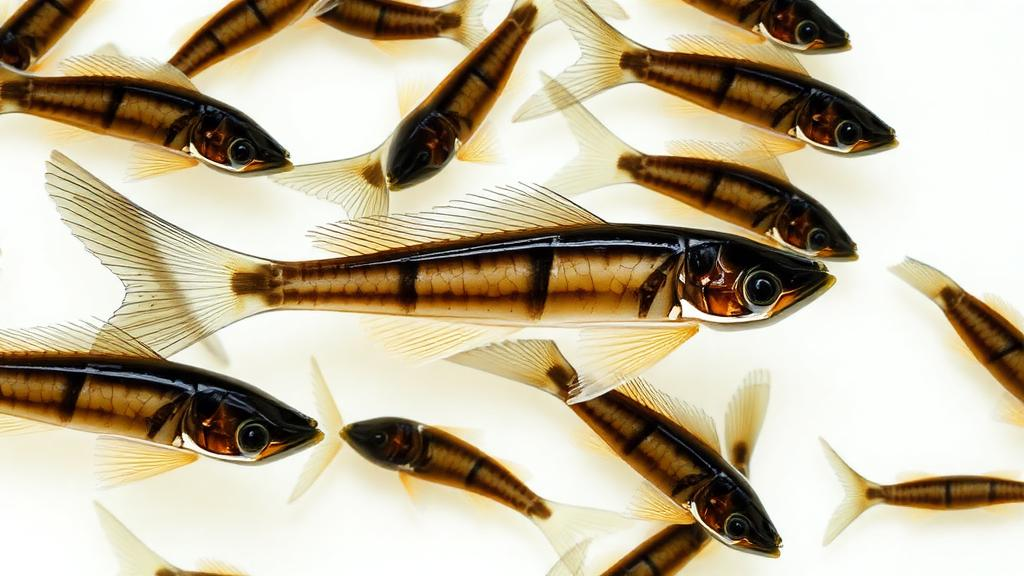
On the Pacific coast of Ecuador, inside a hatchery at the National Centre for Aquaculture and Marine Research, a fish that most consumers know only as a prized catch is being coaxed into a life it has never led: one spent entirely in captivity. The black snook, Centropomus nigrescens, is a euryhaline carnivore native to the Eastern Tropical Pacific, valued for its fast growth and firm, high-quality flesh. A team there has now reported the first pilot-scale effort to rear this species from fertilized egg to juvenile, a milestone that could reshape aquaculture in a region where marine fish farming remains stubbornly narrow.
The stakes are larger than one species. South American marine aquaculture produced roughly 1.56 million tonnes in 2022, but that output is concentrated almost entirely in salmonids, anadromous fish whose monoculture exposes the industry to disease, market shocks, and infrastructure underuse. Diversification is the watchword, and black snook has emerged as a leading candidate. The new study, published in Acta Ichthyologica et Piscatoria, documents two larval rearing trials that together yielded 17,898 juveniles, a modest number by industrial standards but a genuine proof of concept for a species whose larviculture protocols did not previously exist.
The road to those juveniles began four years earlier, when wild snook juveniles weighing between 0.13 and 0.49 kilograms were collected from a shrimp farm reservoir in the Palmar Estuary of Santa Elena Province. Held under natural photothermal conditions and fed frozen herring, mackerel, and squid supplemented with vitamins and minerals, the fish matured in captivity. When the time came, researchers induced spawning with intramuscular injections of human chorionic gonadotropin, a hormone widely used to trigger final oocyte maturation and ovulation in marine teleosts. Dosages of 880 to 1000 IU per kilogram of body weight proved sufficient in females carrying oocytes larger than 450 micrometers.
The resulting eggs were strikingly uniform in their biology. Pelagic, transparent, and spherical, each carried a single oil globule, and mean diameter across both spawnings was 0.732 millimeters. Hatching occurred roughly 24 to 25 hours after fertilization, but the two spawning events diverged sharply in efficiency. In the first trial, ER1, conducted at 24.4 degrees Celsius, hatching reached only 1.24 percent. In the second, ER2, at 27.9 degrees Celsius, hatching jumped to 36.36 percent, producing over 700,000 larvae compared with just over 20,000 in the cooler trial. Temperature, it would turn out, was the hidden variable shaping everything that followed.
Larvae were stocked at 10 per liter in ER1 and 60 per liter in ER2, then reared using a pseudo-green water technique, a method that adds microalgae of the species Tetraselmis maculata at concentrations of 100,000 cells per milliliter alongside live zooplankton. The algae improve visual contrast in the water column, making it easier for larvae to detect and capture prey. Enriched rotifers were supplied at 20 to 40 individuals per milliliter, followed by Artemia nauplii and then enriched Artemia metanauplii, all boosted with a commercial enrichment product before administration. From 25 days post hatch, larvae were co-fed a commercial microdiet, with complete weaning achieved by 60 days in ER1 and 40 days in ER2.
Growth followed an exponential model, and here the thermal difference between trials became unmistakable. Larvae in ER2, held at 26.85 degrees Celsius, grew 42.9 percent faster than those in ER1 at 24.29 degrees Celsius, a statistically significant gap. Notochord flexion, a key ontogenetic milestone marking the beginning of fin formation, appeared at 11 days post hatch in ER2 but not until 15 days in ER1. Post-flexion larvae, characterized by completed fin development, arrived at 25 days in the warmer trial versus 42 days in the cooler one. The nearly twofold acceleration in developmental rate at the higher temperature underscores how narrow the optimal thermal window is for this species and how critical precise temperature control will be in any commercial hatchery.
Survival, however, told a different story. Mean survival at the end of the trials was 7.42 percent in ER1 and 6.84 percent in ER2, with no statistically significant difference between them. These figures sit within the range reported for other centropomids reared under experimental conditions, where survival from hatching to over 40 days post hatch has ranged from 1 to 7 percent in related species, with exceptional trials reaching 17.7 and 25.5 percent. The researchers attribute the losses to three main bottlenecks: intracohort cannibalism, parasitic infections, and skeletal anomalies, each of which left visible evidence in the tanks.
Cannibalism was the most dramatic. Larger larvae were found with distended digestive tracts, the result of head-first ingestion of smaller cohort members, while victims showed fin damage and emaciation. This behavior, well documented in other larviculture studies, is thought to arise from feeding hierarchies or asynchronous growth within a population, where size heterogeneity creates opportunities for predation. Management responses included regular size grading and the transfer of juveniles into separate tanks by size class, a practice the researchers recommend as routine. Parasitic outbreaks caused by the ectoparasitic dinoflagellate Amyloodinium were confirmed microscopically on the gills, skin, and fins of affected juveniles and managed with repeated copper sulphate treatments over up to seven consecutive days.
Skeletal deformities posed the third and perhaps most troubling challenge. By 110 days post hatch, when juveniles in ER2 had reached a mean total length of 92.8 millimeters, 51.9 percent exhibited skeletal abnormalities, most commonly lordosis, an abnormal spinal curvature, with jaw anomalies appearing less frequently. Comparable rates in related snook species have ranged from under 2 percent to 18 percent, making the Ecuadorian figures notably high. The causative factors were not within the scope of this study, but existing literature points to unfavorable abiotic conditions, inadequate nutrition, pathogens, and genetic factors. Lordosis in particular has been linked to impaired swim bladder inflation, and the researchers recommend early monitoring of swim bladder function alongside dietary optimization and strict environmental control as priorities for reducing deformity incidence.
What emerges from these trials is a species with genuine commercial promise and a set of biological constraints that are now, for the first time, precisely identified. Black snook can be reared from induced spawning to juvenile under hatchery conditions, and the thermal sensitivity of its larvae offers an immediate lever for improving growth. Survival near 7 percent is low but consistent with early-stage larviculture in related centropomids, and the main mortality drivers are actionable through size grading, density management, prophylaxis, and swim bladder monitoring. As aquaculture in South America seeks to broaden beyond salmon, these nearly 18,000 juveniles represent more than a hatchery tally; they are the opening chapter of a domestication effort that could bring a new farmed fish to tables across the Eastern Tropical Pacific.
Subject of Research: Pilot-scale larviculture of black snook Centropomus nigrescens in Ecuador
Article Title: Early-stage growth and survival of Centropomus nigrescens larvae ( Actinopterygii , Carangaria incertae sedis, Centropomidae ) reared under pilot-scale hatchery conditions
Article References: Reinoso, S., Bohórquez-Cruz, M., Rodríguez, S., Sonnenholzner, S., & Argüello-Guevara, W. (2025). Early-stage growth and survival of Centropomus nigrescens larvae (Actinopterygii, Carangaria incertae sedis, Centropomidae) reared under pilot-scale hatchery conditions. Acta Ichthyologica et Piscatoria, 55, 349-355. https://doi.org/10.3897/aiep.55.163198
Image Credits: AI Generated
Keywords: black snook, Centropomus nigrescens, aquaculture, larviculture, hatchery, Ecuador, cannibalism, Amyloodinium, skeletal deformities, Eastern Tropical Pacific, CENAIM, fish farming
Cite Scienmag News
Alan Morgan. (October 18, 2026). Black snook larvae offer a first test of hatchery farming in the Eastern Tropical Pacific. Scienmag. https://scienmag.com/black-snook-larvae-offer-a-first-test-of-hatchery-farming-in-the-eastern-tropical-pacific/
Alan Morgan. "Black snook larvae offer a first test of hatchery farming in the Eastern Tropical Pacific." Scienmag, 18 October 2026, https://scienmag.com/black-snook-larvae-offer-a-first-test-of-hatchery-farming-in-the-eastern-tropical-pacific/. Accessed 18 October 2026.
Alan Morgan. "Black snook larvae offer a first test of hatchery farming in the Eastern Tropical Pacific." Scienmag. October 18, 2026. https://scienmag.com/black-snook-larvae-offer-a-first-test-of-hatchery-farming-in-the-eastern-tropical-pacific/


