


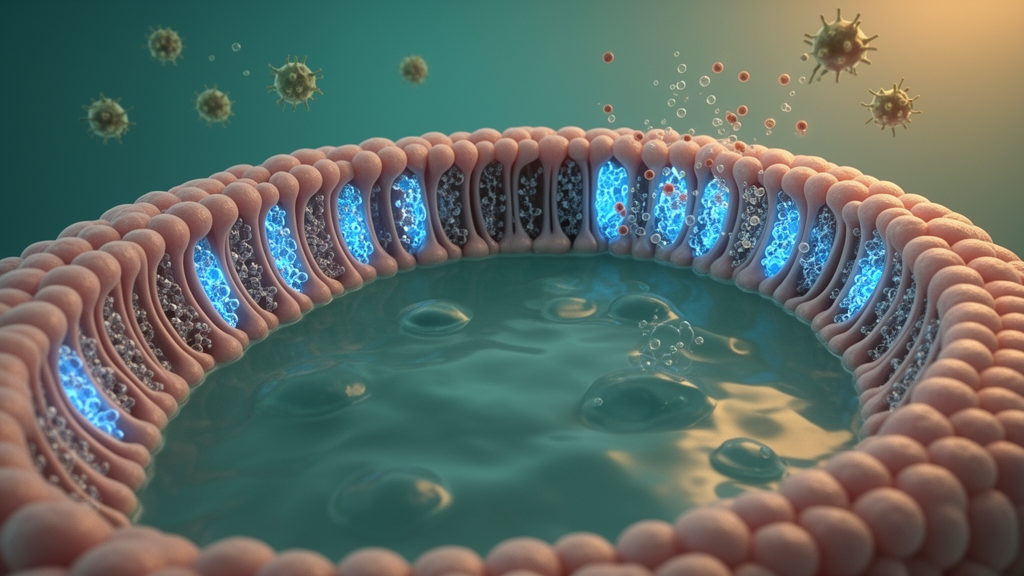
Acute respiratory distress syndrome, or ARDS, remains one of the most lethal conditions in intensive care medicine, with hospital mortality rates stubbornly fixed between 30 and 40 percent over the past decade. The syndrome arises when pathogens or injuries inflict diffuse damage on the alveolar-capillary barrier, flooding the airspaces with protein-rich edema and starving the blood of oxygen. Despite decades of clinical trials testing glucocorticoids, surfactants, free radical scavengers, and beta-agonists, no therapy has yet succeeded in reducing ARDS mortality in randomized controlled trials. Now a research team at Chongqing Medical University has identified a molecular chain of events that explains why one particular risk factor, chronic alcohol consumption, makes this already deadly syndrome even worse, and their findings point to sodium channels in the alveolar epithelium as a crucial and previously underappreciated battleground.
The clinical stakes are enormous. Chronic alcohol abuse is a major risk factor for ARDS development, and clinical studies show that alcohol consumers who develop ARDS face a three- to four-fold higher incidence and mortality rate compared to non-drinkers. Nearly half of all ARDS cases are associated with chronic alcohol use, a condition researchers have termed the alcoholic lung. Alcohol abuse even worsens ARDS outcomes in COVID-19 patients. Yet the mechanisms by which alcohol increases ARDS susceptibility have remained largely unknown. Potential explanations include structural damage to alveolar epithelial cells, increased reactive oxygen species production, breakdown of the epithelial barrier, and impaired alveolar fluid reabsorption, but the precise signaling pathways connecting these observations have been elusive.
At the heart of the new study, published in Frontiers in Pharmacology, is a biological process called alveolar fluid clearance, or AFC. Efficient clearance of edema fluid from the airspaces is essential for restoring gas exchange and correcting hypoxemia in ARDS, making it a key therapeutic goal. Alveolar epithelial cells maintain the alveolar barrier and fluid balance through transport channels such as aquaporins, chloride channels, and potassium channels, but it is the directional transport of sodium ions that critically determines pulmonary edema resolution. Two major sodium transporters dominate this process: the epithelial sodium channel, ENaC, which sits on the apical membrane and pulls sodium from the airspaces into the epithelial cells, and Na+,K+-ATPase, which occupies the basolateral membrane and actively pumps sodium out of the cells into the interstitial space. Together these channels keep the alveolar environment relatively dry, and genetic deletion of ENaC in alveolar epithelial cells significantly impairs fluid clearance and increases lung water content.
Previous work had already hinted that alcohol targets this machinery. Chronic alcohol use upregulates integrin αvβ6, an adhesion molecule specifically expressed in epithelial cells that serves as a key activator of latent transforming growth factor beta 1, or TGF-β1. In the lung, TGF-β1 activation weakens barrier integrity and increases susceptibility to injury, partly by promoting oxidative stress through glutathione depletion in alveolar epithelial cells and impairing surfactant function. In vitro studies have shown that TGF-β1 accumulation in the alveoli disrupts epithelial barrier function, and renal epithelial cell experiments demonstrated that TGF-β1 activation inhibits ENaC expression. TGF-β1, in turn, is a key activator of Smad4, a central mediator of the TGF-β1 signaling pathway that network pharmacology and in vivo studies have identified as a potential therapeutic target for ARDS. In renal collecting duct cells, TGF-β1 suppresses ENaC expression via Smad4. Whether this same axis regulated pulmonary sodium channels during alcohol-induced ARDS, however, was previously unknown.
To answer that question, the team led by Xue Dai and corresponding author Wang Deng established chronic alcohol exposure models in both mice and MLE-12 cells, a line of type II alveolar epithelial cells, and then induced ARDS with intratracheal lipopolysaccharide, or LPS. In mice, the alcohol concentration in drinking water was gradually increased from 5 to 20 percent over the first week and maintained at 20 percent for six weeks, achieving mean blood alcohol concentrations of 150 to 200 milligrams per deciliter or higher. In vitro, the researchers screened alcohol concentrations from 20 to 120 millimolar and exposure durations from 12 to 72 hours, identifying 60 millimolar alcohol for 48 hours as the optimal condition that simulated chronic exposure while minimizing excessive cellular damage. The team then selectively inhibited the pathway at two points: GSK3008348, a selective integrin αvβ6 inhibitor, was administered intranasally, while SB431542, a selective TGF-β1 inhibitor, was injected intraperitoneally. Vehicle controls confirmed that neither the DMSO carrier nor the drugs themselves altered alveolar architecture, TGF-β1 protein levels, or cell viability, validating the experimental system.
The results were striking. Semi-quantitative histological scoring of hematoxylin and eosin-stained lung sections revealed that chronic alcohol-induced ARDS produced significantly more severe tissue injury than ARDS alone, and inhibition of the integrin αvβ6/TGF-β1/Smad4 pathway significantly alleviated the damage. Seven-day survival rates told the same story: mice with chronic alcohol-induced ARDS had significantly lower survival than those with ARDS alone, while pathway inhibition resulted in significantly increased survival. Vascular permeability and pulmonary edema, assessed by Evans blue dye extravasation, lung wet-to-dry weight ratio, and bronchoalveolar lavage fluid total protein content, all worsened dramatically with chronic alcohol exposure and improved when either integrin αvβ6 or TGF-β1 was blocked. Inflammatory cytokines TNF-α and IL-6, measured by ELISA in both bronchoalveolar lavage fluid and serum, were significantly elevated in chronic alcohol-induced ARDS and reversed by pathway inhibition, as were total cell counts in the lavage fluid.
In vitro experiments added cellular resolution to the picture. MLE-12 cells pretreated with alcohol and then exposed to LPS showed significantly higher cytotoxicity than cells treated with LPS alone, an effect ameliorated by pathway inhibition. Scratch assays revealed that chronic alcohol-induced ARDS conditions significantly suppressed alveolar epithelial cell migration, a measure of barrier repair capacity, and targeted pathway intervention effectively restored it. Western blot analysis demonstrated that chronic alcohol exposure activated the entire signaling cascade, increasing expression of integrin β6, TGF-β1, and Smad4 in both lung tissue and cultured cells. Critically, the upstream-downstream relationships held: blocking integrin αvβ6 prevented the alcohol-driven elevation of TGF-β1, while blocking TGF-β1 diminished the role of integrin αvβ6 in pathway activation. However, TGF-β1 inhibition did not alter integrin αvβ6 levels, confirming that TGF-β1 functions downstream of integrin αvβ6 in this cascade.
The pivotal experiment concerned Smad4 and the sodium transporters themselves. After confirming effective Smad4 knockdown with small interfering RNA, the researchers found that silencing Smad4 attenuated the alcohol-induced suppression of ENaC-α and Na+,K+-ATPase α1 expression in alveolar epithelial cells pretreated with alcohol and exposed to LPS. Western blot analysis in both in vivo and in vitro models revealed that the alcohol-induced ARDS group showed significant decreases in all three ENaC subunits, α, β, and γ, and in both Na+,K+-ATPase subunits, α1 and β1, compared to the ARDS group without alcohol. Inhibition of the integrin αvβ6/TGF-β1 pathway restored their expression levels. Immunofluorescence microscopy confirmed these findings visually, showing that chronic alcohol exposure significantly reduced the fluorescence signal intensity of ENaC and Na+,K+-ATPase, whereas pathway inhibition markedly restored the signals. Functional assays demonstrated that chronic alcohol consumption inhibited Na+,K+-ATPase activity, and suppression of the integrin αvβ6/TGF-β1 pathway resulted in partial recovery of pump function.
These findings clarify the regulatory mechanisms of sodium channels in ARDS associated with chronic alcohol consumption and identify the integrin αvβ6/TGF-β1/Smad4 axis as a key mediator of the alcoholic lung. The work builds on earlier observations that Smad4 regulates sodium transporters in the kidney and heart, extending this regulatory principle to the pulmonary epithelium during alcohol-induced ARDS. Smad4 appears to act as a negative regulator of these transporters, contributing to edema accumulation when the pathway is activated by chronic alcohol exposure. The authors acknowledge several limitations: the study focused primarily on Smad4 as the downstream effector of TGF-β1, leaving other downstream targets unexplored; the findings relied on MLE-12 cells without validation in primary alveolar epithelial cells; and the results are based on murine models and in vitro experiments whose relevance to human physiology requires further investigation. The team also notes that quantitative analysis was confined to ENaC protein expression levels, and direct functional evidence of ENaC activity would provide more compelling support for the regulatory mechanism.
Nevertheless, the translational implications are considerable. Inhaled small-molecule integrin αvβ6 inhibitors are already being developed for idiopathic pulmonary fibrosis, and the new study suggests that similar pharmacological strategies could protect the alveolar epithelium’s sodium transport machinery in patients with chronic alcohol exposure who develop ARDS. By revealing that chronic alcohol exacerbates pulmonary edema through suppression of ENaC and Na+,K+-ATPase via a defined signaling cascade, the research offers novel molecular insights into ARDS pathogenesis and identifies integrin αvβ6, TGF-β1, and Smad4 as potential therapeutic targets for a patient population that has long faced disproportionately poor outcomes. For the roughly half of ARDS cases linked to chronic alcohol use, this discovery transforms the alcoholic lung from a clinical observation into a mechanistic roadmap, one that may finally guide the development of targeted therapies for a syndrome that has resisted every pharmacological intervention tried so far.
Subject of Research: Cell Biology
Article Title: The integrin αvβ6/TGF-β1/Smad4 signaling pathway regulates ENaC in alcohol induced ARDS
Article References: Dai, X., Liu, X.-L., Liu, M.-J., Li, T., Wang, D.-X., & Deng, W. (2026). The integrin αvβ6/TGF-β1/Smad4 signaling pathway regulates ENaC in alcohol induced ARDS. Frontiers in Pharmacology, 17, Article 1931568. https://doi.org/10.3389/fphar.2026.1931568
Image Credits: AI Generated
DOI: 10.3389/fphar.2026.1931568
Keywords: ARDS, alcohol, ENaC, TGF-beta, Smad4, integrin alpha v beta 6, alveolar fluid clearance, pulmonary edema, lung injury, sodium channels, integrin, TGF-
Cite Scienmag News
Ophelia Keating. (October 18, 2026). How Chronic Alcohol Disables the Lung’s Sodium Pumps and Worsens ARDS. Scienmag. https://scienmag.com/how-chronic-alcohol-disables-the-lungs-sodium-pumps-and-worsens-ards/
Ophelia Keating. "How Chronic Alcohol Disables the Lung’s Sodium Pumps and Worsens ARDS." Scienmag, 18 October 2026, https://scienmag.com/how-chronic-alcohol-disables-the-lungs-sodium-pumps-and-worsens-ards/. Accessed 18 October 2026.
Ophelia Keating. "How Chronic Alcohol Disables the Lung’s Sodium Pumps and Worsens ARDS." Scienmag. October 18, 2026. https://scienmag.com/how-chronic-alcohol-disables-the-lungs-sodium-pumps-and-worsens-ards/


