


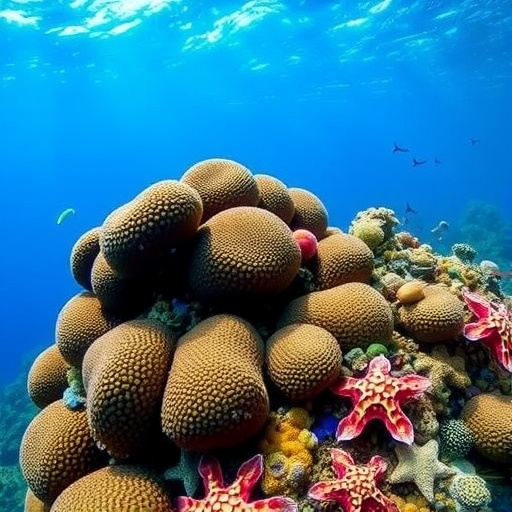
The Great Barrier Reef is not only a habitat for corals and fish—it also harbors a vast, invisible microbial community that underpins reef health. Using advanced DNA sequencing, researchers can now track how thousands of distinct microbes respond to environmental pressures that already threaten the ecosystem.
In a new study published in Nature (https://www.nature.com/articles/s41586-026-10778-z), an international team reports a comprehensive survey of planktonic life in the Reef’s open waters. The researchers generated over 800,000 microbial genomes, uncovering more than 500 previously unreported bacterial species and hundreds of thousands of distinct viruses.
To achieve this, they analyzed DNA extracted from seawater samples collected across 48 reefs. The work was led by The University of Queensland and the Australian Institute of Marine Science (AIMS), with contributions from additional Australian research institutions. Their approach targets the reef microbiome as a dynamic system rather than a set of isolated organisms.
A key technical hurdle in ocean microbiology is complexity: a single drop of seawater can contain thousands of closely related microbes. Many marine organisms also have low GC content in their DNA, which can complicate genome assembly with older sequencing methods. The team used new long-read sequencing technologies designed to overcome these limitations, improving the ability to reconstruct complete genomes.
The results highlight both biodiversity and novelty. The team identified 5,283 bacterial and archaeal genomes, representing 876 distinct species, with two-thirds not previously available in public databases. They also detected 362,802 viral types, including Crassvirales—a bacterial virus previously linked to human gut microbiota, now shown to be present in open ocean waters as well.
Beyond bacteria and viruses, the study recovered complete chromosomes directly from dominant microalgae genera, Bathycoccus and Ostreococcus. These microalgae are central to marine food webs and produce much of the oxygen supporting life in ocean ecosystems.
The scientists argue that this dataset enables a new era of microbiome-focused reef monitoring. Because microbial communities can shift in response to bleaching, storms, sediment, fishing pressure, and other stresses, the researchers expect their findings to complement long-term observations already conducted by AIMS over the past four decades.
To make the research usable for the wider community, the team created the Great Barrier Reef Microbial Genomes Database, supported through the Integrated Marine Observing System (IMOS). With this resource, reef researchers can investigate what constitutes a “healthy” microbial signature and how it changes during disturbance events.
Cite Scienmag News
Morgan Morrow. (July 27, 2026). Great Barrier Reef Hosts Its Own Diverse Microbiome. Scienmag. https://scienmag.com/great-barrier-reef-hosts-its-own-diverse-microbiome/
Morgan Morrow. "Great Barrier Reef Hosts Its Own Diverse Microbiome." Scienmag, 27 July 2026, https://scienmag.com/great-barrier-reef-hosts-its-own-diverse-microbiome/. Accessed 4 September 2026.
Morgan Morrow. "Great Barrier Reef Hosts Its Own Diverse Microbiome." Scienmag. July 27, 2026. https://scienmag.com/great-barrier-reef-hosts-its-own-diverse-microbiome/


