The initiatives also operated through hybrid systems combining local agency with varying forms of external donor and institutional support, researchers report. The study examines how bottom-up responses to prolonged political, economic and infrastructural constraints can support sustainable development under occupation. The authors describe a context in which decades of Israeli occupation limit access to essential resources, restrict movement and undermine local institutional capacities.
These conditions can hinder economic growth, social development and environmental protection, making conventional approaches to regional and local development less effective. Rather than offering a general test of grassroots innovation, the research provides a context-specific interpretation of sustainable development in Nablus and links local innovation to resilience theory. To investigate these dynamics, the researchers used qualitative methods that included document analysis, technical reports, semi-structured interviews, focus group discussions and field observations.
Together, these sources were used to examine grassroots initiatives in the governorate and their relationship to community needs, local solidarity and wider support structures. The reported findings indicate that grassroots responses did more than meet urgent practical requirements: they also reinforced social cohesion, empowered marginalized groups and enhanced adaptive capacity in places where external pressures severely constrained development opportunities. The research characterizes these relationships as hybrid systems, showing that grassroots innovation within Nablus was linked to external assistance rather than developing wholly apart from it.
The initiatives therefore appear as part of a broader support arrangement for sustainable development under occupation. The researchers also emphasize that grassroots innovation should not be treated as inherently effective. As a qualitative study centered on Nablus, the evidence provides an interpretation of community experiences and institutional relationships rather than a quantified assessment of long-term development outcomes.
Its findings identify reported associations between grassroots initiatives and stronger cohesion, solidarity, empowerment and adaptive capacity, while also underscoring the structural constraints faced by communities in the conflict-affected governorate.
Subject of Research: Grassroots innovation, territorial resilience and sustainable development in conflict-affected Nablus, Palestine
Article Title: Investigating the role of grassroots innovation in fostering territorial resilience and sustainable development in the conflict-affected Nablus Governorate of Palestine
Article References: Aburaida, L., & Nunes, F. (2026). Investigating the role of grassroots innovation in fostering territorial resilience and sustainable development in the conflict-affected Nablus Governorate of Palestine. Discover Sustainability. https://doi.org/10.1007/s43621-026-04467-0
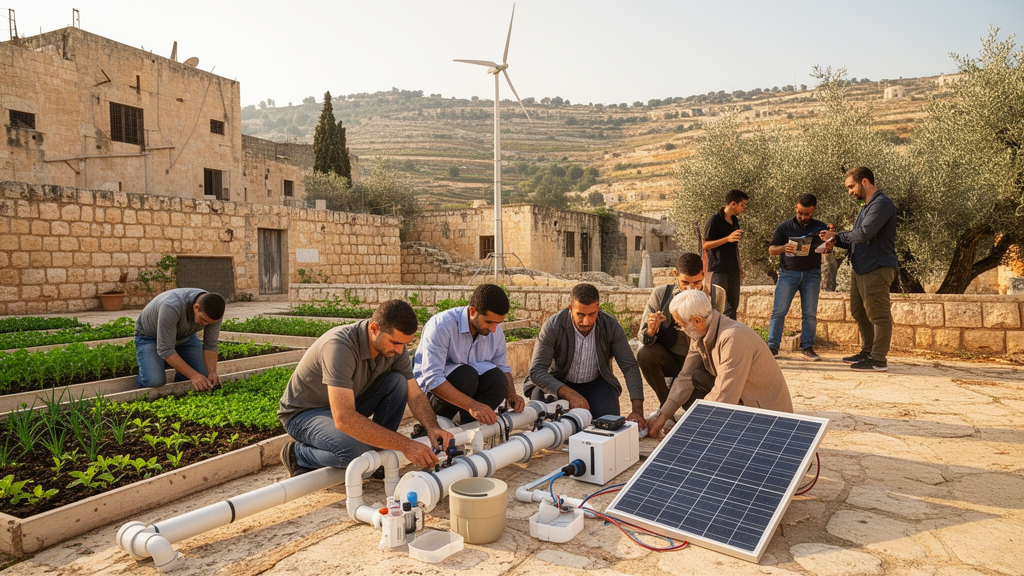
Image Credits: AI Generated
DOI: 10.1007/s43621-026-04467-0
Keywords: grassroots innovation, territorial resilience, sustainable development, Nablus Governorate, Palestine, conflict-affected communities, social cohesion, local solidarity, adaptive capacity, qualitative research, Investigating, role
Cite Scienmag News
Violet Maxwell. (October 22, 2026). Grassroots innovation supports resilience in conflict-affected Nablus, qualitative study finds. Scienmag. https://scienmag.com/grassroots-innovation-supports-resilience-in-conflict-affected-nablus-qualitative-study-finds/
Violet Maxwell. "Grassroots innovation supports resilience in conflict-affected Nablus, qualitative study finds." Scienmag, 22 October 2026, https://scienmag.com/grassroots-innovation-supports-resilience-in-conflict-affected-nablus-qualitative-study-finds/. Accessed 22 October 2026.
Violet Maxwell. "Grassroots innovation supports resilience in conflict-affected Nablus, qualitative study finds." Scienmag. October 22, 2026. https://scienmag.com/grassroots-innovation-supports-resilience-in-conflict-affected-nablus-qualitative-study-finds/