

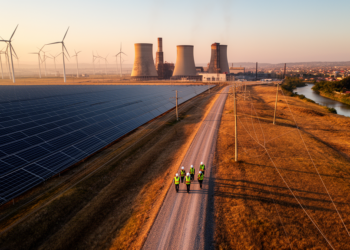
Why Low-Carbon Transitions Fail Without Justice, Institutions and Finance
A Frontiers editorial collection argues that decarbonization succeeds only when climate policy is matched with institutional capacity, financial reform, ecological ...
A Frontiers editorial collection argues that decarbonization succeeds only when climate policy is matched with institutional capacity, financial reform, ecological ...

A new qualitative study of 114 interviews in the Chico Mendes Extractive Reserve reveals how state institutions, market forces, and ...
When China and Pakistan launched the China–Pakistan Economic Corridor in 2015, the promise was sweeping: a $62 billion network of ...
Research from the 2025 Pan African City Symposium links decentralized solar power, waste-to-energy, flood resilience, and housing reform into a ...
A new SWOT-based study argues that Tunisia's dromedary camel value chains, despite low productivity and informal markets, could attract investment ...
Brazil's draft National Culture Plan for 2025–2035 embeds the Indigenous concept of Bem Viver into cultural policy, making traditional knowledge ...
A new study reveals stark regional imbalances between agricultural carbon emission equity and economic integration across China's grain functional zones, ...
A global analysis finds that 34 percent of current mining land overlaps with post-2020 conservation priority zones, threatening more than ...
A new survey of the indigenous community of Wakapoa, Guyana, finds that reliable round-the-clock electricity could unlock millions of dollars ...
A grid-based spatial analysis of 976 intangible cultural heritage items in China's Pearl River Basin reveals strong geographic clustering shaped ...

Embark on a thrilling journey of discovery with Scienmag.com—your ultimate source for cutting-edge breakthroughs. Immerse yourself in a world where curiosity knows no limits and tomorrow’s possibilities become today’s reality!