

Thursday, October 22, 2026
Science
No Result
View All Result
  • Login
  • HOME
  • SCIENCE NEWS
  • CONTACT US
  • HOME
  • SCIENCE NEWS
  • CONTACT US
No Result
View All Result
Scienmag
No Result
View All Result
Home Science News Medicine

Danish Twin Study Links Rotator Cuff Tear Liability to Genetics

October 22, 2026
in Medicine
Juliet Wilcox
By Juliet Wilcox Scienmag Editorial Profile - Human Genetics
Reading Time: 2 mins read
0
Danish Twin Study Links Rotator Cuff Tear Liability to Genetics

Danish Twin Study Links Rotator Cuff Tear Liability to Genetics

65
SHARES
587
VIEWS
Share on FacebookShare on Twitter
ADVERTISEMENT

A nationwide Danish twin study estimates that additive genetic effects account for about half of the variation in liability to clinically diagnosed rotator cuff tear. Among monozygotic and dizygotic twin pairs born from 1940 to 1980 and alive on January 1, 1980, researchers found evidence of familial aggregation consistent with genetic effects. The disorder was also diagnosed more frequently in men than women, although genetic estimates were less precise among women.

The population-based investigation linked the Danish Twin Registry with the Danish National Patient Registry. Investigators used relevant ICD-8 and ICD-10 codes to identify rotator cuff tear diagnoses recorded between 1994 and 2014. They then estimated cumulative incidence and assessed whether a rotator cuff tear diagnosis in one twin was associated with the same diagnosis in the co-twin.

By age 70, the estimated cumulative incidence of receiving a rotator cuff tear diagnosis was 6.5% in men, with a 95% confidence interval of 6.0% to 7.2%. Among women, the corresponding estimate was 3.8%, with a 95% confidence interval of 3.4% to 4.3%. These estimates concern recorded diagnoses, which may not capture every rotator cuff tear that was present but never entered into the medical record.

For twins in which one member had received a rotator cuff tear diagnosis, the risk of the same diagnosis in the co-twin was generally higher for monozygotic than dizygotic twins. The difference was clearest among men. The preferred biometric twin model, known as the AE model, attributed 49% of the variance in liability to rotator cuff tear to additive genetic effects, with a 95% confidence interval of 27% to 70%.

Unique environmental effects accounted for the remaining 51% of the modeled variance, with a 95% confidence interval of 30% to 73%. Sex-stratified results suggested a stronger genetic contribution among men, while estimates among women were less precise. The authors characterized clinically diagnosed rotator cuff tear as a common, partially heritable musculoskeletal disorder.

Their results support considering inherited susceptibility alongside occupational and environmental exposures when assessing population-level risk and clinical management. Because the analysis was based on nationwide clinical registries rather than direct examination of every participant, it characterizes variation in liability to a recorded clinical diagnosis rather than proving that genes alone cause an individual tear.

Subject of Research: Genetic and environmental contributions to clinically diagnosed rotator cuff tears in a nationwide Danish twin cohort.

Article Title: Genetic and environmental influences on rotator cuff tears: a population-based twin study

Article References: Jørgensen, C. D., von Bornemann Hjelmborg, J., Lindahl-Jacobsen, R., & Frich, L. H. (2026). Genetic and environmental influences on rotator cuff tears: a population-based twin study. BMC Medicine. https://doi.org/10.1186/s12916-026-05284-y

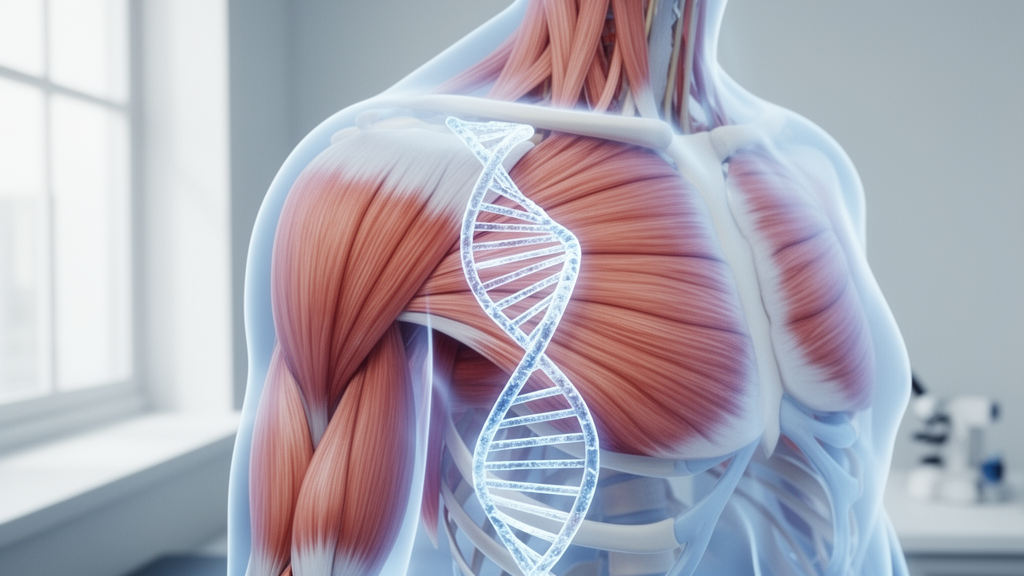
Image Credits: AI Generated

DOI: 10.1186/s12916-026-05284-y

Keywords: rotator cuff tears, twin study, heritability, Danish registries, genetic susceptibility, environmental effects, shoulder disorders, population-based research, clinical diagnoses, Genetic, environmental, influences

Cite Scienmag News

Juliet Wilcox. (October 22, 2026). Danish Twin Study Links Rotator Cuff Tear Liability to Genetics. Scienmag. https://scienmag.com/danish-twin-study-links-rotator-cuff-tear-liability-to-genetics/

Juliet Wilcox. "Danish Twin Study Links Rotator Cuff Tear Liability to Genetics." Scienmag, 22 October 2026, https://scienmag.com/danish-twin-study-links-rotator-cuff-tear-liability-to-genetics/. Accessed 22 October 2026.

Juliet Wilcox. "Danish Twin Study Links Rotator Cuff Tear Liability to Genetics." Scienmag. October 22, 2026. https://scienmag.com/danish-twin-study-links-rotator-cuff-tear-liability-to-genetics/


Tags: clinical diagnosesDanish registriesDanish twin registry health researchenvironmentalenvironmental effectsepidemiology of rotator cuff injuriesfamilial aggregation of shoulder injuriesgender differences in rotator cuff tear prevalencegeneticgenetic factors in rotator cuff injury riskgenetic influence on musculoskeletal conditionsgenetic susceptibilitygenetics of rotator cuff tearsheritabilityheritability of rotator cuff tearsimpact of genetics on shoulder injury susceptibilityinfluencespopulation-based genetic studies of rotator cuff tearspopulation-based researchrotator cuff tearsshoulder disorderstwin studies on musculoskeletal disorderstwin studytwin-based genetic estimates in orthopedic disorders
Share26Tweet16
Previous Post

Nickel-Doped MoS2 Nanoparticles Improve Supercapacitor Electrode Performance

Next Post

Apical3DTip enables standardized 3D analysis of living plant cells

Related Posts

Case report: uncertain crying episodes during infant SARS-CoV-2 infection
Medicine

Case report: uncertain crying episodes during infant SARS-CoV-2 infection

October 22, 2026
Commentary maps India’s effort to move health technology assessments into state action
Medicine

Commentary maps India’s effort to move health technology assessments into state action

October 22, 2026
Epinephrine boosts thioredoxin expression and strengthens chlorpromazine liver protection in mice
Medicine

Epinephrine boosts thioredoxin expression and strengthens chlorpromazine liver protection in mice

October 22, 2026
LSD Extends Lifespan in C. elegans in a Context-Dependent, Serotonin-Associated Response
Medicine

LSD Extends Lifespan in C. elegans in a Context-Dependent, Serotonin-Associated Response

October 22, 2026
Staff identify practical barriers before measurement-based care rollout in Alberta youth mental health
Medicine

Staff identify practical barriers before measurement-based care rollout in Alberta youth mental health

October 22, 2026
Scoping review finds mixed links between workplace violence, harassment and hypertension
Medicine

Scoping review finds mixed links between workplace violence, harassment and hypertension

October 22, 2026
Next Post
Apical3DTip enables standardized 3D analysis of living plant cells

Apical3DTip enables standardized 3D analysis of living plant cells

  • Mothers who receive childcare support from maternal grandparents show more optimized

    Mothers who receive childcare support from maternal grandparents show more parental warmth, finds NTU Singapore study

    27656 shares
    Share 11059 Tweet 6912
  • University of Seville Breaks 120-Year-Old Mystery, Revises a Key Einstein Concept

    1061 shares
    Share 424 Tweet 265
  • Bee body mass, pathogens and local climate influence heat tolerance

    682 shares
    Share 273 Tweet 171
  • Researchers record first-ever images and data of a shark experiencing a boat strike

    546 shares
    Share 218 Tweet 137
  • Groundbreaking Clinical Trial Reveals Lubiprostone Enhances Kidney Function

    531 shares
    Share 212 Tweet 133
Science

Embark on a thrilling journey of discovery with Scienmag.com—your ultimate source for cutting-edge breakthroughs. Immerse yourself in a world where curiosity knows no limits and tomorrow’s possibilities become today’s reality!

RECENT NEWS

  • Apical3DTip enables standardized 3D analysis of living plant cells
  • Danish Twin Study Links Rotator Cuff Tear Liability to Genetics
  • Nickel-Doped MoS2 Nanoparticles Improve Supercapacitor Electrode Performance
  • Case report: uncertain crying episodes during infant SARS-CoV-2 infection

Categories

  • Agriculture
  • Anthropology
  • Archaeology
  • Athmospheric
  • Biology
  • Biotechnology
  • Blog
  • Bussines
  • Cancer
  • Chemistry
  • Climate
  • Earth Science
  • Editorial Policy
  • Marine
  • Mathematics
  • Medicine
  • Pediatry
  • Policy
  • Psychology & Psychiatry
  • Science Education
  • Science News
  • Social Science
  • Space
  • Technology and Engineering

Subscribe to Blog via Email

Enter your email address to subscribe to this blog and receive notifications of new posts by email.

Join 5,151 other subscribers

© 2025 Scienmag - Science Magazine

Welcome Back!

Login to your account below

Forgotten Password?

Retrieve your password

Please enter your username or email address to reset your password.

Log In
No Result
View All Result
  • HOME
  • SCIENCE NEWS
  • CONTACT US

© 2025 Scienmag - Science Magazine

Discover more from Science

Subscribe now to keep reading and get access to the full archive.

Continue reading