

Thursday, October 22, 2026
Science
No Result
View All Result
  • Login
  • HOME
  • SCIENCE NEWS
  • CONTACT US
  • HOME
  • SCIENCE NEWS
  • CONTACT US
No Result
View All Result
Scienmag
No Result
View All Result
Home Science News Medicine

Epinephrine boosts thioredoxin expression and strengthens chlorpromazine liver protection in mice

October 22, 2026
in Medicine
Ophelia Keating
By Ophelia Keating Scienmag Editorial Profile - Health Services Research
Reading Time: 3 mins read
0
Epinephrine boosts thioredoxin expression and strengthens chlorpromazine liver protection in mice

Epinephrine boosts thioredoxin expression and strengthens chlorpromazine liver protection in mice

65
SHARES
587
VIEWS
Share on FacebookShare on Twitter
ADVERTISEMENT

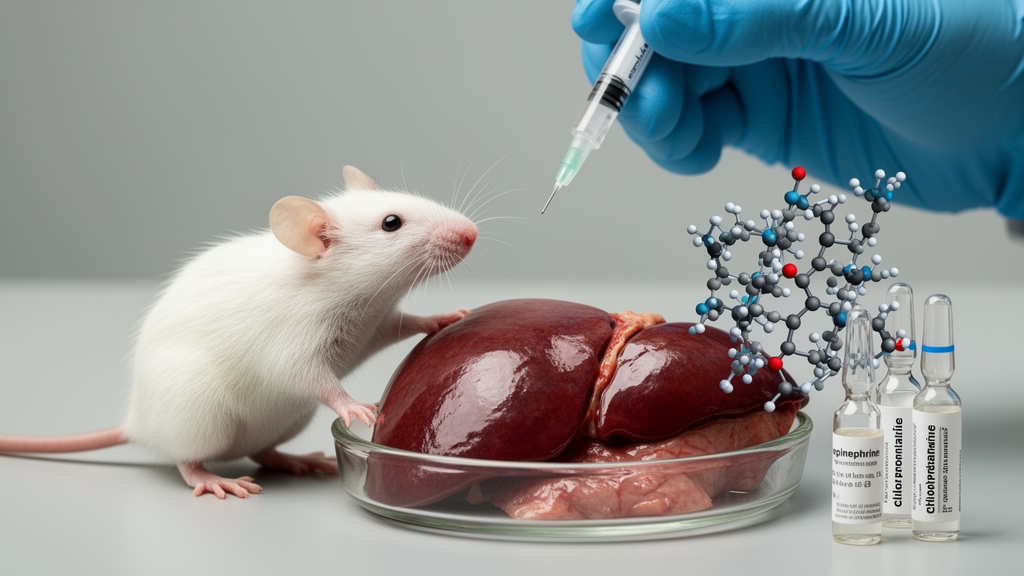
Epinephrine increased the expression of several components of the liver’s thioredoxin system and strengthened chlorpromazine’s protection against drug-induced acute liver injury in mice, according to a preclinical study in BMC Pharmacology and Toxicology . The researchers administered a low dose of epinephrine to C57BL/6 mice before inducing acute liver injury with N-acetyl-para-aminophenol, or APAP, and giving the animals a subtoxic dose of chlorpromazine. They found that epinephrine enhanced the expression of thioredoxin-1, thioredoxin-like protein 1 and thioredoxin reductase 1 in the liver.

The combination reduced liver injury and enhanced chlorpromazine’s protective effect, improving liver biomarkers, resolving inflammation, attenuating oxidative stress and restoring hepatic tissue architecture. Acute liver injury is characterized by rapid hepatic necrosis and compromised liver function. In drug-induced injury, depletion of glutathione and excessive production of reactive oxygen species can disturb the liver’s redox homeostasis.

The thioredoxin system, which comprises thioredoxin, thioredoxin reductase and NADPH, contributes to preserving that balance. The study tested the hypothesis that epinephrine-mediated boosting of this system could provide sufficient protection when combined with chlorpromazine in an experimental model of drug-induced acute liver injury. The animal experiments therefore focused on a biological mechanism: whether increasing expression of selected thioredoxin-system components before APAP exposure could improve the tissue response and augment the effect of chlorpromazine.

Parallel experiments in hepatoma cell lines examined the subcellular and molecular changes associated with epinephrine and chlorpromazine treatment. Epinephrine increased thioredoxin reductase 1 expression in those cells, while activation of the thioredoxin system was associated with overexpression of beta-arrestin 1, thioredoxin-like protein 1 and cAMP-response element-binding protein 1. The researchers described these changes as mirroring their involvement in thioredoxin-mediated protection.

Taken together, the mouse and cell experiments indicate that sensitization of the cytosolic thioredoxin system was associated with improved outcomes in the APAP injury model and with molecular changes consistent with the proposed protective pathway. The study reported significant improvement in liver biomarkers, resolution of inflammation, reduced oxidative stress and restoration of hepatic histological architecture in the treated mice. These findings link the molecular changes in the thioredoxin system with both biochemical measures of injury and the microscopic preservation of liver structure.

The results are preclinical and do not establish a treatment for human acute liver injury. Chlorpromazine was not evaluated here as a human therapy, and the findings do not show that epinephrine or the same drug combination should be used to prevent or treat toxic liver injury in people. The experiments also do not establish that a comparable dosing schedule would be safe or effective outside the mouse and hepatoma-cell models.

Rather, the study provides experimental evidence that epinephrine-enhanced expression of the cytosolic thioredoxin system strengthened chlorpromazine protection against APAP-induced hepatotoxicity under the conditions tested.

Subject of Research: Preclinical enhancement of thioredoxin-system expression in drug-induced acute liver injury

Article Title: Epinephrine-mediated sensitization of thioredoxin 1 enhances chlorpromazine protection against acute hepatotoxicity

Article References: Hessien, M., Donia, T., Khedr, S., Salim, E. I., Shamaa, M. M., Ismail, D. F., Hammady, M., Thirunavukkarasu, M., Watters, A., Taylor, N., Tabll, A., Hassan, M. H., & Maulik, N. (2026). Epinephrine-mediated sensitization of thioredoxin 1 enhances chlorpromazine protection against acute hepatotoxicity. BMC Pharmacology and Toxicology. https://doi.org/10.1186/s40360-026-01225-w

Image Credits: AI Generated

DOI: 10.1186/s40360-026-01225-w

Keywords: epinephrine, thioredoxin-1, thioredoxin reductase 1, chlorpromazine, acute liver injury, drug-induced hepatotoxicity, oxidative stress, acetaminophen injury, mouse model, hepatoma cells, Epinephrine-mediated, sensitization

Cite Scienmag News

Ophelia Keating. (October 22, 2026). Epinephrine boosts thioredoxin expression and strengthens chlorpromazine liver protection in mice. Scienmag. https://scienmag.com/epinephrine-boosts-thioredoxin-expression-and-strengthens-chlorpromazine-liver-protection-in-mice/


Ophelia Keating. "Epinephrine boosts thioredoxin expression and strengthens chlorpromazine liver protection in mice." Scienmag, 22 October 2026, https://scienmag.com/epinephrine-boosts-thioredoxin-expression-and-strengthens-chlorpromazine-liver-protection-in-mice/. Accessed 22 October 2026.

Ophelia Keating. "Epinephrine boosts thioredoxin expression and strengthens chlorpromazine liver protection in mice." Scienmag. October 22, 2026. https://scienmag.com/epinephrine-boosts-thioredoxin-expression-and-strengthens-chlorpromazine-liver-protection-in-mice/

Tags: acetaminophen injuryacute liver injuryantioxidant system in liver damagechlorpromazinechlorpromazine liver protection in micecombined epinephrine and chlorpromazine therapydrug-induced acute liver injurydrug-induced hepatotoxicityepinephrineEpinephrine-induced thioredoxin system enhancementEpinephrine-mediatedhepatoma cellshepatoprotection mechanismsinflammation resolution in liver injuryliver biomarker improvementmouse modelOxidative stressoxidative stress reductionpreclinical liver injury modelredox homeostasis in liversensitizationthioredoxin reductase 1thioredoxin-1thioredoxin-1 and reductase expression
Share26Tweet16
Previous Post

LSD Extends Lifespan in C. elegans in a Context-Dependent, Serotonin-Associated Response

Next Post

China drought study maps water-use efficiency across response phases

Related Posts

LSD Extends Lifespan in C. elegans in a Context-Dependent, Serotonin-Associated Response
Medicine

LSD Extends Lifespan in C. elegans in a Context-Dependent, Serotonin-Associated Response

October 22, 2026
Staff identify practical barriers before measurement-based care rollout in Alberta youth mental health
Medicine

Staff identify practical barriers before measurement-based care rollout in Alberta youth mental health

October 22, 2026
Scoping review finds mixed links between workplace violence, harassment and hypertension
Medicine

Scoping review finds mixed links between workplace violence, harassment and hypertension

October 22, 2026
Nurse-led coaching linked to lower pain and anxiety after knee replacement
Medicine

Nurse-led coaching linked to lower pain and anxiety after knee replacement

October 22, 2026
Prenatal weight overestimate linked to cesarean risk in first-time term births
Medicine

Prenatal weight overestimate linked to cesarean risk in first-time term births

October 22, 2026
Research report: U-M-led consortium to receive up to $52 million in NIH funding to study why viral respiratory infections affect children differently
Medicine

Research report: U-M-led consortium to receive up to $52 million in NIH funding to study why viral respiratory infections affect children differently

October 22, 2026
Next Post
China drought study maps water-use efficiency across response phases

China drought study maps water-use efficiency across response phases

  • Mothers who receive childcare support from maternal grandparents show more optimized

    Mothers who receive childcare support from maternal grandparents show more parental warmth, finds NTU Singapore study

    27656 shares
    Share 11059 Tweet 6912
  • University of Seville Breaks 120-Year-Old Mystery, Revises a Key Einstein Concept

    1061 shares
    Share 424 Tweet 265
  • Bee body mass, pathogens and local climate influence heat tolerance

    682 shares
    Share 273 Tweet 171
  • Researchers record first-ever images and data of a shark experiencing a boat strike

    546 shares
    Share 218 Tweet 137
  • Groundbreaking Clinical Trial Reveals Lubiprostone Enhances Kidney Function

    531 shares
    Share 212 Tweet 133
Science

Embark on a thrilling journey of discovery with Scienmag.com—your ultimate source for cutting-edge breakthroughs. Immerse yourself in a world where curiosity knows no limits and tomorrow’s possibilities become today’s reality!

RECENT NEWS

  • China drought study maps water-use efficiency across response phases
  • Epinephrine boosts thioredoxin expression and strengthens chlorpromazine liver protection in mice
  • LSD Extends Lifespan in C. elegans in a Context-Dependent, Serotonin-Associated Response
  • New metric speeds RNA alignment across arbitrary pseudoknots

Categories

  • Agriculture
  • Anthropology
  • Archaeology
  • Athmospheric
  • Biology
  • Biotechnology
  • Blog
  • Bussines
  • Cancer
  • Chemistry
  • Climate
  • Earth Science
  • Editorial Policy
  • Marine
  • Mathematics
  • Medicine
  • Pediatry
  • Policy
  • Psychology & Psychiatry
  • Science Education
  • Science News
  • Social Science
  • Space
  • Technology and Engineering

Subscribe to Blog via Email

Enter your email address to subscribe to this blog and receive notifications of new posts by email.

Join 5,151 other subscribers

© 2025 Scienmag - Science Magazine

Welcome Back!

Login to your account below

Forgotten Password?

Retrieve your password

Please enter your username or email address to reset your password.

Log In
No Result
View All Result
  • HOME
  • SCIENCE NEWS
  • CONTACT US

© 2025 Scienmag - Science Magazine

Discover more from Science

Subscribe now to keep reading and get access to the full archive.

Continue reading