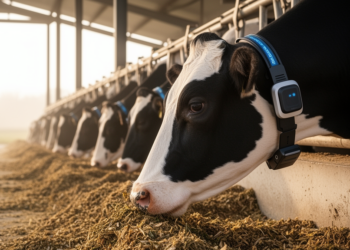
In the bustling markets of Parakou and the smaller town of Ndali in northern Benin, a quiet experiment in food system transformation has been unfolding for more than a decade. Dairy goats, including Saanen breeds crossed with the locally adapted Red Maradi goat, have been producing milk that is processed into fresh milk, yogurt, and cheese and sold through local channels. The technical side of this emerging dairy goat sector has made real progress. Yet consumer uptake has lagged behind, and a new study published in Pastoralism offers a strikingly clear diagnosis of why: the problem is not that people dislike goat milk, but that too many people simply cannot find it, afford it, or learn enough about it to try.
The research, conducted by a team at the University of Parakou’s Laboratory of Ecology, Health and Animal Production, surveyed 236 people between July and November 2025 in the Borgou department, the heart of Benin’s nascent goat dairy industry. What sets the study apart is its three-way segmentation of respondents. Rather than lumping everyone into a single category of consumer or non-consumer, the researchers divided participants into three distinct groups: 81 people who knew and had consumed goat milk or its derived products, 77 who knew of the products but had never tried them, and 78 who had no prior knowledge of goat milk at all. This tripartite design allowed the team to test a crucial assumption, namely that the barriers to adoption are unlikely to be uniform across the full spectrum of potential consumers.
The statistical architecture of the study was correspondingly careful. Data were collected through structured face-to-face questionnaires containing 31 substantive items across four modules, pre-tested on 30 individuals before deployment. Because the three groups differed in how they were recruited, consumers and knowledgeable non-consumers were identified at production farms and sales points, while non-knowledgeable individuals were randomly selected in urban centers, the researchers used Chi-square tests to compare categorical variables and Welch’s one-way analysis of variance, robust to unequal variances, for age comparisons, followed by Games-Howell post-hoc tests. Levene’s test confirmed that variances were indeed unequal, justifying the choice of the Welch approach. A significance threshold of p less than 0.05 was applied throughout.
The sociodemographic results were revealing in their asymmetry. Consumers of goat milk products were significantly younger, averaging 30.04 years, compared with 36.09 years for knowledgeable non-consumers and 39.28 years for those with no prior knowledge, a difference that was highly significant. Yet gender and education level, factors often assumed to shape food choices, showed no significant influence whatsoever. Instead, religion and profession emerged as powerful discriminators, both with p values below 0.001. Merchants made up 92.6 percent of the consumer group, while students dominated the knowledgeable non-consumer group at 93.5 percent and civil servants the non-knowledgeable group at 97.4 percent. The pattern points to a sector whose growth is currently governed less by individual preference than by proximity to commercial circuits.
Among actual consumers, the picture was one of an early-stage market still finding its footing. The duration of consumption was almost perfectly evenly distributed across four time categories, from less than six months to more than three years, suggesting the product attracts newcomers while retaining long-term users. Motivations for first consumption were similarly balanced: curiosity accounted for 25.9 percent, recommendations from close people 24.7 percent, and perceived health benefits 24.7 percent. Discovery channels were likewise scattered across word of mouth, advertising, markets, and social media. This diversity challenges the common assumption that health messaging is the primary engine of alternative dairy adoption; in northern Benin, social influence and simple exploratory behavior appear equally decisive.
But the consumer group also exposed the sector’s structural weaknesses with unusual clarity. While 54.3 percent of consumers found the price acceptable, 25.9 percent considered it too high. Accessibility was rated as very good by only 40.7 percent, with nearly 60 percent reporting at least occasional difficulty obtaining the products. Most striking of all, 82.7 percent of consumers judged the promotion of goat milk products to be insufficient, a result that was highly significant. Even people who already buy and enjoy the products feel the sector is nearly invisible, a communication gap that the authors identify as a major constraint on market development.
The knowledgeable non-consumers told perhaps the most important story of the study. Their reasons for not consuming goat milk were spread almost evenly across product unavailability, unappealing taste, uncertain quality, high price, and preference for cow milk, with no single factor dominating. Their perceptions of the benefits were similarly uncertain: 25.97 percent believed goat milk was worse than cow milk, 24.68 percent were unsure, only 23.38 percent considered it beneficial, and 25.97 percent had no opinion. Familiarity with a product, in other words, does not automatically translate into knowledge of its properties. Yet this group was far from hostile. Cheese and yogurt each attracted the interest of 33.77 percent of respondents as products they might try, slightly ahead of fresh milk, hinting that processed forms, in which the characteristic goat flavor is attenuated, could serve as entry points for hesitant buyers.
The third group, people with no prior knowledge of goat milk, delivered the most optimistic findings. Half said they would try the products if given the opportunity, and another 25.64 percent would do so if provided with more information. Two-thirds, 66.67 percent, said they could potentially consider goat milk as an alternative to cow milk, and the same proportion indicated they would consume goat milk if it were locally produced. When asked which product they would most like to try, goat milk itself led at 46.15 percent, ahead of cheese at 28.21 percent and yogurt at 25.64 percent. The conditions these respondents attached to trying the products, including price reductions, better availability, recommendations from relatives, and proof of benefits, mirror the barriers reported by the other groups, reinforcing the conclusion that the obstacles are informational and economic rather than sensory or cultural.
The authors are careful to acknowledge the limits of their work. The survey covered only two localities, so the findings cannot be generalized to all of Benin’s ecological and cultural regions. The study did not systematically examine sensory dimensions such as taste and smell, which previous research has shown can be decisive for acceptance or rejection, nor did it explore in depth the cultural and traditional beliefs that shape deeply rooted eating behaviors. Because the data are cross-sectional, collected over a limited period, they capture a snapshot rather than a trajectory; perceptions may well evolve as availability improves and awareness campaigns take hold, suggesting a need for longitudinal follow-up.
Even with those caveats, the implications are substantial for anyone invested in West African food security and smallholder livelihoods. Goats are among the most widespread livestock species in Benin, valued for their adaptability and low production costs, yet their contribution to national milk production remains marginal because systems are oriented toward meat. Goat milk itself is nutritionally compelling, with high digestibility, a fatty acid profile rich in short- and medium-chain fatty acids, and substantial calcium and phosphorus, properties of particular relevance for children, the elderly, and people with cow milk intolerance. The new evidence suggests that unlocking this potential requires no single magic bullet but rather group-specific strategies: awareness campaigns on nutritional and health benefits aimed at the uninformed, improved availability, affordability, and quality assurance for the hesitant, and stronger distribution networks and marketing for everyone. The barrier, the study concludes, is not the product. It is the pipeline that connects it to the people who, by all indications, are ready to drink it.
Subject of Research: Consumer perceptions and acceptance of goat milk and its derived products in northern Benin
Article Title: Perceptions and attitudes of consumers and non-consumers towards goat milk and its derived products in northern Benin
Article References: Offoumon, O. T. L. F., Assani, A., Sanni Worogo, H. S., Okambawa, T., Zorobouragui, L., Adambi Boukari, Z. F., Alabi, C. A. D., Idrissou, Y., Attakpa, E. Y., & T. Alkoiret, I. (2026). Perceptions and attitudes of consumers and non-consumers towards goat milk and its derived products in northern Benin. Pastoralism: Research, Policy and Practice, 16, Article 16705. https://doi.org/10.3389/past.2026.16705
Image Credits: AI Generated
Keywords: goat milk, dairy products, consumer behavior, Benin, West Africa, food security, smallholder farmers, dairy value chain, consumer perceptions, market access, nutrition, livestock
Cite Scienmag News
William Thompson. (October 16, 2026). Goat Milk’s Biggest Obstacle in West Africa Is Not Taste, Study Finds. Scienmag. https://scienmag.com/goat-milks-biggest-obstacle-in-west-africa-is-not-taste-study-finds/
William Thompson. "Goat Milk’s Biggest Obstacle in West Africa Is Not Taste, Study Finds." Scienmag, 16 October 2026, https://scienmag.com/goat-milks-biggest-obstacle-in-west-africa-is-not-taste-study-finds/. Accessed 16 October 2026.
William Thompson. "Goat Milk’s Biggest Obstacle in West Africa Is Not Taste, Study Finds." Scienmag. October 16, 2026. https://scienmag.com/goat-milks-biggest-obstacle-in-west-africa-is-not-taste-study-finds/