


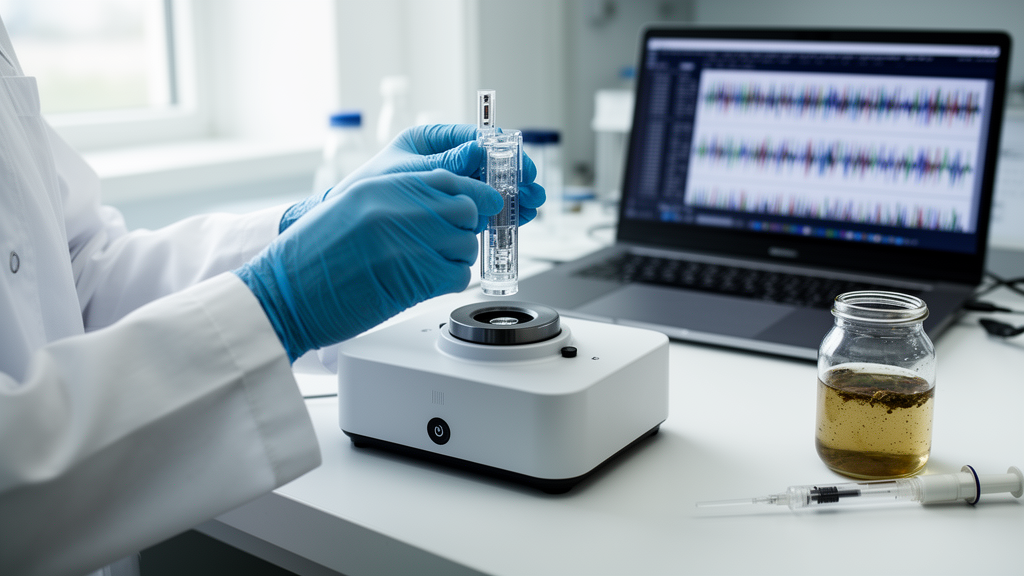
Environmental DNA has transformed the way scientists survey life in rivers, lakes and oceans. By simply filtering a litre of water, researchers can detect which species are present without ever laying eyes on them. Yet for all its power, conventional eDNA analysis has long suffered from a frustrating blind spot: it can tell you that a species exists, but it struggles to reveal the genetic diversity within that species. The short DNA fragments that survive in water, typically less than 400 base pairs long, simply do not carry enough information to resolve fine-scale population structure. A new study published in Metabarcoding and Metagenomics now demonstrates a remarkably simple and inexpensive way around this bottleneck, sequencing fragments of roughly 1,000 base pairs from environmental samples at a cost of about 30 US dollars per sample.
The research team, working across 52 river sites on the northern Japanese island of Hokkaido, targeted the Siberian stone loach, Barbatula oreas, a small freshwater fish that completes its entire life cycle in streams and rivers. This species was an ideal test case because previous work using short-read eDNA metabarcoding had already identified two major genetic lineages on the island, each thought to contain several subpopulations. If a longer-fragment approach could sharpen the picture of that known structure, it would prove its worth. The stakes extend well beyond one loach: genetic diversity assessment underpins conservation planning, wildlife trade enforcement and environmental policy, and a cheap, scalable method could bring such assessments within reach of laboratories that could never afford conventional population genomics.
The technical trick at the heart of the method is elegantly simple. Instead of investing in expensive in-house long-read sequencing infrastructure, the researchers amplified two mitochondrial regions, ND5 and cytochrome b, each approximately 1,000 base pairs long, using species-specific primers designed with 5′-phosphate modifications. They then used T4 DNA ligase to circularise the amplified fragments, effectively converting linear PCR products into pseudo-plasmids. These circular molecules were shipped to a commercial full-length plasmid sequencing service, the kind routinely used by molecular biologists to verify plasmid constructs, which runs samples on Oxford Nanopore’s GridION platform. Because plasmid verification services are offered at less than one-tenth the cost of standard commercial long-read amplicon sequencing, the approach sidesteps both the capital expense of buying a sequencer and the premium pricing of specialist long-read providers.
The laboratory workflow itself is strikingly lean. After eDNA extraction from glass fibre filters, the team performed a multiplex PCR with a high-fidelity polymerase, pooled four technical replicates per sample, purified the products with magnetic beads, and circularised them in a single one-hour ligation step. Total hands-on time after DNA extraction came to roughly two and a half hours, after which sequencing was outsourced and completed within two to three days. The combined cost of amplicon preparation and sequencing was 4,390 Japanese yen per sample, approximately 25.55 euros or 29.87 US dollars. For comparison, probe-based target capture methods and shotgun sequencing approaches, which can also recover longer genetic data from eDNA, cost several to several tens of times more per sample and demand far more concentrated starting material.
Sequencing succeeded for 34 of the 52 water samples, yielding an average of about 2,000 reads per sample with an N50 read length of roughly 1,066 base pairs, and more than 90 percent of reads mapped cleanly to the reference sequences. The bioinformatics pipeline then performed something genuinely novel for eDNA work: haplotype phasing. Using tools including FreeBayes for variant calling and WhatsHap for phasing, the researchers reconstructed complete maternal haplotypes from the co-occurrence patterns of single nucleotide variants across individual long reads. In total they identified 53 haplotypes in the ND5 region and 52 in cytochrome b, and by concatenating the two regions they assembled 62 sequences of 1,968 base pairs each, a data volume comparable to what tissue-based population genetics studies routinely use.
The phylogeographic results exceeded expectations. The analysis confirmed the two deeply divergent clades previously reported, but it went considerably further, resolving five regional subgroups within the southern Clade A and three within the northern Clade B. Several groups that short-read analysis had conflated or overlooked were cleanly separated, and the boundaries between subgroups aligned with independently verified collection records of museum specimens. An analysis of molecular variance confirmed that the differentiation was statistically robust, with the two clades explaining roughly 76 to 82 percent of genetic variance across the two mitochondrial regions. Notably, haplotypes from Sakhalin specimens fell within the B3 subgroup, hinting at relatively recent genetic exchange between Hokkaido and the Russian island to the north.
Divergence time estimation added an evolutionary narrative to the genetic map. The two clades of B. oreas appear to have split approximately 2.67 million years ago, coinciding with the geological disappearance of the land bridge that once connected Hokkaido and Sakhalin. The researchers infer that the common ancestor first dispersed from the Asian mainland via Sakhalin into Hokkaido, and that marine transgressions then isolated the two populations. During Pleistocene sea-level lowstands, a land bridge across the Soya Strait re-emerged, allowing the ancestors of Clade B to migrate southward into northern Hokkaido, where the two lineages now meet in a secondary contact zone detected at three rivers. Within Clade A, successive divergences between roughly 1.64 and 0.89 million years ago coincide with a period of intense volcanic activity in Hokkaido, when ash flows and lava may have temporarily submerged and fragmented habitats, stranding small populations in refugia whose signature survives as bottleneck-shaped patterns in the haplotype network.
Just as important as the biological findings are the practical thresholds the study established. Using quantitative fish eDNA metabarcoding to measure target DNA concentrations, the team showed that sequencing success depended strongly on both the concentration of B. oreas eDNA in the water sample and the concentration of the final pseudo-plasmid library. A 50 percent probability of success required about 50.6 DNA copies per microlitre, while near-certain success required about 126.5 copies per microlitre. Crucially, these concentrations fall within the range routinely observed for common species under natural field conditions, and several non-target fish species in the same samples exceeded the thresholds. This means the method does not depend on exceptional samples such as aquarium water or high-density habitats, which have been prerequisites for previous long-fragment eDNA approaches. Where concentrations fall short, simply increasing the number of PCR replicates pooled per sample could push libraries over the threshold.
The authors are candid about the method’s limitations. Because mitochondrial DNA is present in cells at many copies, it is readily recovered from water, but single-copy nuclear markers remain roughly ten times harder to detect, limiting the approach to maternally inherited markers for now. The 20 percent variant allele frequency threshold used here prioritised reliability over sensitivity, meaning rare haplotypes were likely missed, though the major phylogeographic patterns should be robust to such omissions. Primer design remains a necessary step for each target species, although accumulated eDNA expertise and curated reference databases make this increasingly routine. There is also an inherent trade-off between fragment length and detectability: longer DNA fragments exist in the environment, but targeting them raises the risk of false negatives, which is why the authors settled on 1,000 base pairs as the practical sweet spot for typical field samples.
Even with these caveats, the implications are considerable. A method that recovers tissue-grade mitochondrial sequences from a litre of river water, at 30 dollars a sample and with a turnaround of days rather than months, could democratise genetic diversity monitoring for universities, government agencies, conservation NGOs and industry. The Hokkaido study itself illustrates the applied value: the fine-scale phylogeographic data revealed likely introductions of ornamental loaches from southern Hokkaido into non-native areas, while suggesting that salmon stocking programmes have not caused large-scale genetic disruption within the native range. As nanopore sequencing costs continue to fall and duplex basecalling improves haplotype resolution, the gap between what eDNA can detect and what traditional tissue-based population genetics can resolve appears to be closing fast, promising a future where the genetic pulse of entire ecosystems can be monitored from a simple bottle of water.
Subject of Research: Long-fragment environmental DNA sequencing for high-resolution population genetic diversity assessment
Article Title: A practical and cost-effective approach to long-fragment eDNA sequencing for high-resolution genetic diversity assessment
Article References: A practical and cost-effective approach to long-fragment eDNA sequencing for high-resolution genetic diversity assessment. (n.d.). https://doi.org/10.3897/mbmg.10.177614
Image Credits: AI Generated
Keywords: environmental DNA, nanopore sequencing, haplotype phasing, phylogeography, mitochondrial DNA, population genetics, conservation genetics, Barbatula oreas, Hokkaido, metabarcoding, genetic diversity, plasmid sequencing
Cite Scienmag News
Juliet Wilcox. (October 16, 2026). Cheap Nanopore Trick Reads 1,000-Base eDNA Fragments, Revealing Hidden Fish Lineages. Scienmag. https://scienmag.com/cheap-nanopore-trick-reads-1000-base-edna-fragments-revealing-hidden-fish-lineages/
Juliet Wilcox. "Cheap Nanopore Trick Reads 1,000-Base eDNA Fragments, Revealing Hidden Fish Lineages." Scienmag, 16 October 2026, https://scienmag.com/cheap-nanopore-trick-reads-1000-base-edna-fragments-revealing-hidden-fish-lineages/. Accessed 16 October 2026.
Juliet Wilcox. "Cheap Nanopore Trick Reads 1,000-Base eDNA Fragments, Revealing Hidden Fish Lineages." Scienmag. October 16, 2026. https://scienmag.com/cheap-nanopore-trick-reads-1000-base-edna-fragments-revealing-hidden-fish-lineages/


