


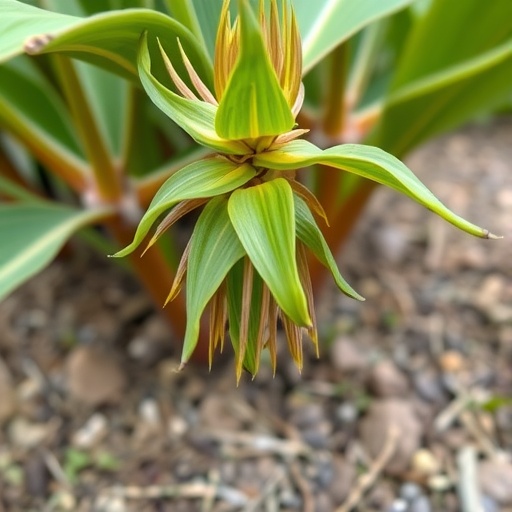
A sweeping genomic analysis of the spurge family has uncovered how heat shock protein 20 genes may help economically important plants withstand rising temperatures and environmental instability. Researchers from Hainan University identified 252 Hsp20 genes across seven representative Euphorbiaceae species, including cassava, rubber tree, castor bean, physic nut, tung tree, Mercurialis annua, and Euphorbia peplus. The study, published in Tropical Plants on 12 June 2026, offers one of the broadest comparisons yet of this stress-related gene family in a plant group that includes major food, industrial, medicinal, and biofuel crops.
Heat shock proteins function as molecular chaperones, helping other proteins maintain their proper structure when cells are exposed to damaging conditions. High temperatures can cause proteins to unfold, clump together, or lose their biological activity, disrupting essential processes such as photosynthesis, metabolism, and growth. Hsp20 proteins, also known as small heat shock proteins, are particularly important because they can bind partially unfolded proteins and help prevent irreversible aggregation. In plants, members of this family have also been linked to responses to drought, cold, salinity, oxidative stress, and developmental signals.
The Euphorbiaceae family is especially relevant to climate adaptation research. Its members evolved primarily in tropical and subtropical environments but now grow across a wide range of climates. Cassava is a crucial source of calories for hundreds of millions of people, while rubber tree supports a global natural-rubber industry. Castor bean, physic nut, tung tree, and other relatives are used for oils, biofuels, medicines, and industrial materials. Understanding how these plants regulate protective genes could help scientists identify traits that allow crops to remain productive during heat waves and other forms of climate stress.
To map the Hsp20 family, the research team examined complete genome sequences from the seven species. The scientists used hidden Markov model searches and sequence-similarity analyses to detect proteins carrying the conserved α-crystallin domain, the structural feature that defines Hsp20 proteins. They then compared the genes’ chromosomal locations, encoded protein properties, conserved sequence motifs, promoter regions, evolutionary relationships, duplication history, predicted interactions, and associated biological pathways.
The results revealed substantial variation in Hsp20 gene numbers among the species. The researchers found 17 genes in Euphorbia peplus, 23 in castor bean, 24 in physic nut, 32 in M. annua, 50 in cassava, 50 in rubber tree, and 56 in tung tree. Phylogenetic analysis placed the proteins into 13 subfamilies, with most members belonging to groups associated with the cytoplasm or nucleus. This diversity suggests that the family expanded and specialized over long evolutionary timescales rather than remaining as a small set of universally interchangeable stress-response genes.
The study also traced the genetic mechanisms behind this expansion. Many Hsp20 genes appear to have arisen through ancient whole-genome duplication and later segmental duplication, in which large chromosome regions are copied and retained. Twenty-four genes located within conserved genomic blocks may be remnants of an ancient β whole-genome duplication event. Such duplications provide raw material for evolution: one copy can preserve an essential function while the other accumulates changes that may enable new expression patterns or stress responses.
Despite their expansion, the duplicated genes showed strong signs of evolutionary conservation. All identified syntenic gene pairs—genes occupying corresponding positions in related chromosome regions—were associated with segmental duplication and displayed evidence of purifying selection. This pattern indicates that harmful changes were generally removed over time, suggesting that many Hsp20 genes continue to perform biologically important functions. The combination of gene-family expansion and selective conservation may have allowed Euphorbiaceae plants to maintain core protective mechanisms while adapting them to different tissues and environments.
Promoter analysis provided further clues about how these genes may respond to heat. Of the 252 genes, 207 contained predicted binding sites for heat shock transcription factors, master regulators that activate stress-protection programs when temperatures rise. These regulatory sites do not prove that every gene responds directly to heat, but their prevalence indicates that Hsp20 genes are widely connected to the canonical heat-response network. The researchers selected cassava for a more detailed expression analysis and found that at least 16 genes were active in patterns associated with tissue growth and development, while 25 responded to drought treatment.
Cold stress produced a strikingly different pattern. Only two cassava Hsp20 genes showed clear induction under cold conditions, suggesting that many members of this gene family may be more strongly associated with high-temperature adaptation than with low-temperature protection in Euphorbiaceae. Comparative genomic and expression evidence highlighted four candidates—MeHsp20-17, EpHsp20-7, MaHsp20-14, and HbHsp20-30—as potentially important temperature-adaptation genes. Their exact contributions remain unknown, however, because computational predictions and expression changes must be confirmed through laboratory experiments.
The findings give researchers a detailed framework for testing how Hsp20 genes influence heat tolerance, drought resilience, growth, and crop productivity. Future studies could silence individual genes, increase their activity through overexpression, or edit their regulatory regions before measuring plant survival, photosynthetic performance, protein stability, and yield under controlled heat stress. If the most promising candidates prove effective without damaging growth or reproduction, they could become targets for molecular breeding and gene-editing programs. As climate change brings more frequent and intense heat events, this newly assembled genetic map may help transform the hidden stress-response capacity of Euphorbiaceae crops into practical climate resilience.
News Publication Date: 12 June 2026
Web References: https://www.maxapress.com/tp
References: DOI: 10.48130/tp-0026-0017
Cite Scienmag News
Juliet Wilcox. (August 11, 2026). Gene Family Reveals How Tropical Crops Adapt to Heat. Scienmag. https://scienmag.com/gene-family-reveals-how-tropical-crops-adapt-to-heat/
Juliet Wilcox. "Gene Family Reveals How Tropical Crops Adapt to Heat." Scienmag, 11 August 2026, https://scienmag.com/gene-family-reveals-how-tropical-crops-adapt-to-heat/. Accessed 3 September 2026.
Juliet Wilcox. "Gene Family Reveals How Tropical Crops Adapt to Heat." Scienmag. August 11, 2026. https://scienmag.com/gene-family-reveals-how-tropical-crops-adapt-to-heat/


