


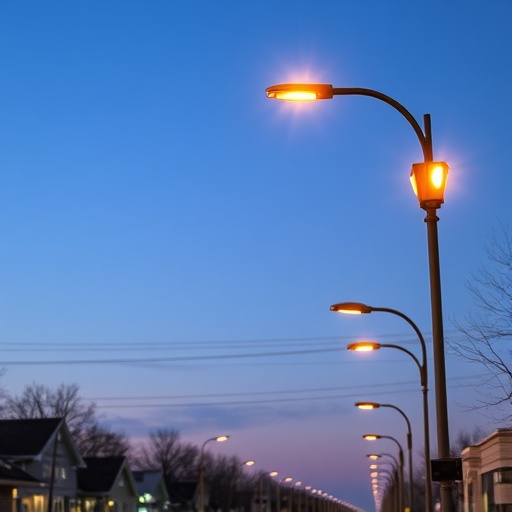
The charming gas streetlights that glow along the sidewalks of Cincinnati, Ohio, and in historic districts from Berlin to London to New Orleans have long been celebrated as emblems of a bygone era of urban romance. Now, a new study reveals that these beloved fixtures are also far dirtier than anyone suspected, leaking methane at rates an order of magnitude higher than household gas appliances and losing a larger share of the fuel they consume than almost any other segment of the natural gas supply chain. The research, published in the Journal of Environmental Studies and Sciences, is the first to directly measure methane emissions from gas streetlights, and it suggests that these iconic lamps may hold an unexpected key to public engagement on climate change and electrification.
Methane is the primary component of natural gas and one of the most powerful greenhouse gases, with atmospheric concentrations rising rapidly enough to raise fears of climate tipping points. Because natural gas is a fossil fuel whose extraction, distribution, and combustion all release methane and carbon dioxide, the gas supply chain carries enormous mitigation potential for cities trying to meet regional and global climate goals. Urban studies have repeatedly shown that methane emissions from city gas systems are underestimated, and as renewable electricity displaces fossil power, scientists argue that electrifying end uses such as stoves, water heaters, and vehicles will be essential. Gas streetlights, it turns out, represent a small but glaringly inefficient pocket of that urban gas infrastructure, one that has survived more than a century of technological change largely on the strength of nostalgia.
The interdisciplinary team, led by Amy Townsend-Small of the University of Cincinnati’s School of Environment and Sustainability, together with Sacha Brewer and historian David Stradling, combined archival research with field measurement. Using historical records, satellite imagery, and on-the-ground verification, the researchers constructed the first publicly available map of gas streetlights in Cincinnati, documenting 1,126 lamps still in operation across the city. That number is a shadow of the peak: Cincinnati’s gaslight era began in 1843 with the purchase of 100 cast-iron streetlamps, and by 1892 the city boasted more than 9,500 of them. The decline slowed dramatically in recent decades, and the remaining lamps cluster in older, wealthier neighborhoods such as Clifton, Hyde Park, Avondale, College Hill, Kennedy Heights/Pleasant Ridge, Oakley, O’Bryonville, and Roselawn, with a few stragglers elsewhere. Most are “Boulevard” style fixtures, about eight feet tall, with two mantles flanking a metal pipe beneath a glass or plastic globe, and nearly all have burned around the clock since 1956, when the city decided that maintaining automatic timers and patrol crews had grown too expensive.
To quantify the emissions, the team adapted a high-flow sampling method well established in natural gas leak studies. They first screened each lamp with a Bascom Turner Gas Rover to detect methane enhancements, then fitted a custom aluminum flux chamber with a foil wind skirt over the top vent of the light and connected it to an Indaco High Flow Sampler. Of 82 gaslights tested, nearly all were emitting methane, with a mean emission rate of 1.7 grams of methane per hour, an order of magnitude higher than typical natural gas appliances. Storage and tankless hot water heaters, by comparison, emit roughly 0.2 to 0.3 grams per hour, and household stoves, averaged over their on-and-off usage patterns, emit about 0.07 grams per hour. The distribution was strongly skewed, a pattern familiar throughout the oil and gas supply chain: most lamps emitted less than 5 grams per hour, but six exceeded that figure, and the largest emissions came from lamps that were partially or completely unlit. The single highest emitter, an unlit gaslight, released 21.0 plus or minus 5.0 grams of methane per hour, approaching the total hourly gas consumption of an average lamp.
That consumption figure is central to the study’s most striking finding. According to city records, all 1,126 gaslights consume roughly 20.9 million cubic feet of natural gas per year, which works out to about 41 grams of methane per hour per lamp, assuming the gas is 94.9 percent methane at standard temperature and pressure. Set against the measured average emission rate of 1.7 grams per hour, that yields a loss rate of 4.2 percent of all gas delivered to the streetlights. For perspective, distribution pipelines and meters typically lose between 0.1 and 0.2 percent of the gas flowing through them, and even newly drilled unconventional wells, the largest emitting segment of the supply chain, show loss rates between 0.01 and 1.2 percent. In other words, Cincinnati’s gaslights lose a larger proportion of their fuel than most of the natural gas system that feeds them.
The lamps also emit carbon monoxide, sometimes at concerning levels. Using a Testo 300 Combustion Analyzer at six gaslights, the team measured ambient concentrations inside the glass enclosures and at the vents, and calculated emission rates from methane-to-carbon-monoxide ratios. While the outdoor sites are well ventilated and the city remains in attainment with EPA carbon monoxide standards, the researchers observed some streetlights positioned close to residential and commercial windows, and because the lamps burn continuously, they could contribute hazardous air pollutants to nearby occupants. The greatest risk, the authors suggest, likely falls on repair workers who might unknowingly service a high-emitting fixture. Excluding one anomalous lamp, the team found an approximate two-to-one ratio of carbon monoxide to methane emissions, a metric that could prove useful for estimating combustion efficiency or extrapolating carbon monoxide releases in other cities.
In regional context, the gaslights are a modest source compared with Cincinnati’s enormous landfill, one of the largest in the United States, which emits an estimated 3,100 kilograms of methane per hour. But they outpace the city’s underground sewer pipes and leaking gas distribution lines, which previous studies found emit up to only about 0.01 grams per hour at street level. The researchers emphasize that a comprehensive methane budget for Cincinnati has yet to be assembled and that future work should combine bottom-up inventories with top-down atmospheric measurements to place these sources in full perspective.
The historical analysis embedded in the study reveals why these lamps have survived so long, and it is here that the research acquires its broader political resonance. When the city proposed removing 600 of its remaining 1,700 gaslights in the early 1960s as a cost-saving measure, residents of affluent Clifton organized, petitioned, and appeared before city council, arguing that gas lamps gave their streets a distinctiveness that mercury vapor lamps could not match, and warning that the substitutes might even hasten neighborhood decline. The city relented, allowing residents to keep the lamps by majority vote with a special assessment to cover the extra cost. Some residents, like Alice Posten, who found her street too dark in winter to see curbs and puddles and worried that poor lighting bred crime, pushed back, but the forces of preservation prevailed. By 1976, Vice Mayor Jim Cissell declared that gas lights had become “a mark of charm and character,” and two years later the lamps earned a place on the National Register of Historic Places. Similar dynamics have played out globally: Berlin’s gaslight preservationists have catalogued more than 20,000 lamps, Düsseldorf activists have fought to save more than 14,000, London’s Gasketeers have secured heritage protection for some of the city’s roughly 1,300 gaslights, South Orange, New Jersey maintains about 2,500, Boston has about 2,800 with an electrification plan that preserves their “look and feel,” and San Diego even installed imitation gas lamps in the 1980s to manufacture a sense of history in its Gaslamp Quarter.
That emotional attachment, the authors argue, is precisely what makes gaslights a potential case study for understanding broader cultural resistance to electrification, whether of stoves, vehicles, or heating systems. During their fieldwork, residents frequently approached the sampling crew to say “we love our gaslights,” while only a few mentioned the environmental or safety implications of natural gas. Several residents could not distinguish gas lamps from gaslight-looking electric ones, and many conversations turned simply to how the streetlights were powered, a level of curiosity the researchers see as an opening for public education about natural gas and the climate benefits of electrification. The findings echo previous research showing that fire evokes positive emotional responses and resistance to change, as documented in Swedish studies of opposition to phasing out old wood stoves.
The study’s conclusion is both a warning and an invitation. Gas streetlights burning 24 hours a day for over seventy years, each leaking on average about 4 percent of the gas it consumes, are undeniably good candidates for methane mitigation, and their high visibility as symbols of the city makes them powerful teaching tools. But the researchers caution that efforts to reduce emissions will fail unless they grapple with the material and cultural factors that have sustained these lamps through more than a century of technological transition. As the authors ask, does the historic charm of dim, flickering light justify the continued emission of methane and carbon monoxide and a continued reliance on fossil fuel extraction? Future work, including interviews with residents about their emotional connections to the lamps, may help cities craft electrification strategies that honor heritage while retiring the infrastructure that fuels it.
Cite Scienmag News
Sloane Callahan. (September 8, 2026). Gas streetlights still leak methane, revealing cultural resistance to climate action. Scienmag. https://scienmag.com/gas-streetlights-still-leak-methane-revealing-cultural-resistance-to-climate-action/
Sloane Callahan. "Gas streetlights still leak methane, revealing cultural resistance to climate action." Scienmag, 8 September 2026, https://scienmag.com/gas-streetlights-still-leak-methane-revealing-cultural-resistance-to-climate-action/. Accessed 8 September 2026.
Sloane Callahan. "Gas streetlights still leak methane, revealing cultural resistance to climate action." Scienmag. September 8, 2026. https://scienmag.com/gas-streetlights-still-leak-methane-revealing-cultural-resistance-to-climate-action/


