


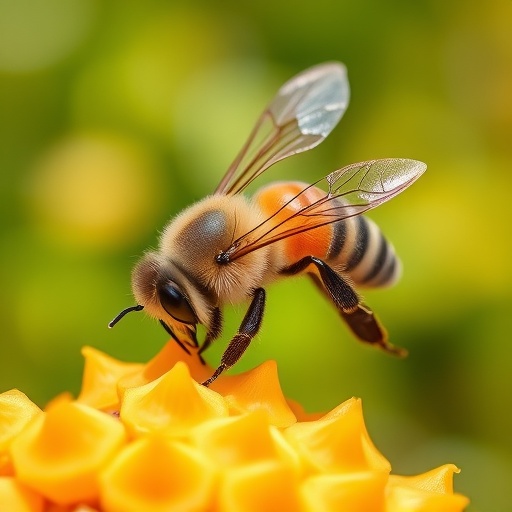
In an era of increasing environmental consciousness and the urgent need to protect pollinator species, new research sheds light on the impact of fipronil, a commonly used pesticide, on the quality of honey and the survival of the honeybee species, Apis mellifera. This study, conducted by Paloschi, Tavares, and Berte, reveals critical findings about the implications of fipronil application, offering insights into both agriculture and environmental health. With widespread use of pesticides in modern farming, the ramifications of such chemicals on apiculture and food safety are more important than ever.
Fipronil is a broad-spectrum insecticide known for its effectiveness against a variety of pests. However, its neurotoxic properties raise significant concerns regarding non-target species, particularly the invaluable honeybee. The researchers aimed to investigate how sub-lethal concentrations of fipronil influenced not only bee survival rates but also the overall quality of the honey produced during exposure. The findings are alarming and could have far-reaching implications for both bee populations and honey consumers.
Using a controlled experimental design, the authors exposed colonies of Apis mellifera to varying concentrations of fipronil. Over a series of weeks, they assessed bee mortality rates, behavioral changes, and the overall health of the hives. Additionally, they analyzed the honey produced by the exposed colonies for residues of fipronil and other potential contaminants. It’s a meticulous process that raises important questions about the safety of honey consumed by humans and the broader ecological impact of pesticide use on pollinators.
The results documented in the study indicated a marked increase in mortality rates among the exposed bee colonies compared to control groups. Behavioral observations showed that fipronil-exposed bees exhibited disorienting effects, which limited their foraging efficiency and overall productivity. These findings highlight a dire need for more stringent regulations surrounding the use of harmful pesticides that pose a threat to bee health.
The study’s implications extend beyond just the survival of honeybees; they also touch on the integrity of honey as a food product. Contaminated honey can pose health risks to consumers, inadvertently linking agricultural practices to human health outcomes. Through rigorous testing, researchers found that honey from fipronil-exposed colonies contained detectable levels of the pesticide, indicating a direct route for chemical transfer into the food chain.
With honeybee populations declining globally due to various stressors, including habitat loss, climate change, and pesticide exposure, the findings of this research underscore the urgent need for a reevaluation of pesticide approval processes. Beekeepers, farmers, and policymakers must carefully consider the long-term effects of their agricultural practices on pollinator health and productivity.
Furthermore, the study connects to a larger conversation about sustainable agriculture and the need for environmentally friendly pest control solutions. Integrated Pest Management (IPM) protocols prioritize the health of non-target species, aiming to minimize pesticide use and promote the health of ecosystems. Such approaches could safeguard not only Apis mellifera but also the biodiversity that supports our food systems.
As the discourse on chemical safety and environmental responsibility intensifies, the researchers advocate for heightened public awareness about the risks associated with pesticide usage. Consumer pressure can lead to significant changes in agricultural practices, encouraging the adoption of organic farming techniques that avoid harmful chemicals. This aligns with a growing trend of consumers seeking products certified as organic or sustainably produced.
In light of these findings, it remains crucial for researchers to continue exploring alternative pest control options that minimize negative impacts on pollinators. Innovations in agricultural technology, such as biopesticides derived from natural sources or advancements in genetic engineering, offer hope for a future where food production is less reliant on toxic chemicals. This approach not only benefits bees but also fosters a healthier environment for all living organisms.
Moreover, the bee-pollinated crops are pivotal for global food security; thus, protecting honeybees and ensuring their survival is fundamentally linked to maintaining agricultural productivity. The potential for widespread repercussions on food availability and agriculture necessitates immediate action and comprehensive policy reform to protect these beneficial insects.
Ultimately, the research conducted by Paloschi and colleagues serves as a clarion call to rethink our agricultural methods and the chemicals we utilize. The fragile balance between pest management and pollinator health demands a reevaluation of long-standing practices in a pursuit of sustainable agriculture. It is essential as a society to act decisively to safeguard the future of honeybees, which are not only vital to the ecosystem but also to global food production.
In summary, this study on the effects of fipronil on honey quality and bee survival ignites a vital conversation about pesticide regulations, agricultural practices, and environmental stewardship. As consumers, experts, and policymakers take heed of these revelations, there is hope for a future that reconciles agricultural demands with the urgent need to protect our indispensable pollinators.
Paloschi, C.L., Tavares, M.H.F., Berte, E.A. et al. Impact of the pesticide fipronil on honey quality and the survival of Apis mellifera bees.
Environ Sci Pollut Res (2026). https://doi.org/10.1007/s11356-026-37404-9
Cite Scienmag News
Violet Maxwell. (February 2, 2026). Fipronil Pesticide Threatens Honey Quality and Bee Survival. Scienmag. https://scienmag.com/fipronil-pesticide-threatens-honey-quality-and-bee-survival/
Violet Maxwell. "Fipronil Pesticide Threatens Honey Quality and Bee Survival." Scienmag, 2 February 2026, https://scienmag.com/fipronil-pesticide-threatens-honey-quality-and-bee-survival/. Accessed 4 September 2026.
Violet Maxwell. "Fipronil Pesticide Threatens Honey Quality and Bee Survival." Scienmag. February 2, 2026. https://scienmag.com/fipronil-pesticide-threatens-honey-quality-and-bee-survival/


