


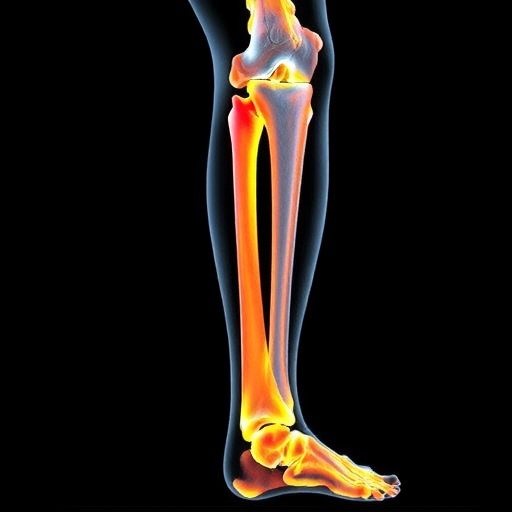
In the realm of geriatric healthcare, femoral fractures stand as a debilitating and critical concern, particularly among the elderly population whose vulnerability is exacerbated by a myriad of biological and social factors. Recent research has shed new light on the spatiotemporal dynamics of femoral fractures in older adults, emphasizing the intricate interplay between healthcare access and regional disparities. A groundbreaking study originating from southern Brazil offers unprecedented insights into how these fractures are distributed across time and geography, unraveling patterns that have profound implications for public health planning and intervention strategies.
The study delves deeply into the epidemiology of femoral fractures—primarily occurring in the proximal region of the femur that often results from falls or low-energy trauma in the elderly. Such fractures are not only a marker of frailty but also a predictor of morbidity and mortality, often leading to significant declines in mobility, independence, and quality of life. Researchers navigated vast datasets spanning several years to map incidence rates and correlate these with healthcare infrastructure, socioeconomic variables, and regional healthcare accessibility indexes across the southern regions of Brazil.
One of the pivotal revelations from this investigation is the uneven distribution of femoral fracture incidents, which appears to correlate strongly with disparities in healthcare access. Regions characterized by higher densities of healthcare facilities, including emergency services and orthopedic specialists, demonstrated lower rates of untreated fractures and complications. Conversely, more remote or economically disadvantaged areas exhibited delayed medical intervention and an increased incidence of secondary complications, such as infections and prolonged immobilization, which dramatically affect recovery outcomes.
This spatial heterogeneity suggests that healthcare system efficiency and availability are critical determinants not only of fracture management success but also of fracture occurrence itself, indicating that preventive measures—and timely treatment—are less accessible in marginalized regions. The researchers employed spatiotemporal statistical models to examine fluctuations in fracture incidences across months and seasons, uncovering cyclical patterns likely influenced by environmental conditions such as temperature variations and precipitation, which modulate fall risks among the elderly.
The methodological approach, integrating geographic information systems (GIS) with longitudinal health data, enabled an unprecedented granularity in observing how femoral fracture rates evolve over time within different micro-regions. This analytic precision paves the way for tailoring regional health policies and resource allocation to target high-risk zones more effectively. For example, areas identified as fracture hotspots could benefit from enhanced fall-prevention programs, community health worker engagement, and improved emergency response capabilities.
Remarkably, the study underscores the role of social determinants of health, such as income, education levels, and urbanization, which modulate both fracture risks and healthcare access. Older adults residing in regions with lower socioeconomic status faced compounded risks—exposure to unsafe living conditions that increase fall likelihood and limited access to prompt orthopedic care. This layered complexity challenges healthcare policymakers to address fractures not solely as clinical emergencies but as symptoms of broader systemic inequalities.
Clinically, these findings advocate for the incorporation of regional comparative data into geriatric care protocols. Physicians and health systems are urged to consider the local epidemiological context when devising treatment plans, emphasizing robust screening for osteoporosis and fall risk in high-incidence areas. Moreover, integrating community-based rehabilitation resources stands as a critical adjunct to hospital-based treatments, facilitating better long-term recovery and reducing rehospitalization risks driven by poorly managed post-fracture care.
From a technological perspective, the research highlights the transformative potential of advanced spatiotemporal analytics in epidemiology. The ability to visualize and predict fracture patterns enables proactive health interventions, akin to precision medicine but applied at population levels—a paradigm shift that aligns with global calls for more data-driven, equitable healthcare systems. These analytic tools also allow health authorities to simulate the impacts of proposed policy changes, strengthening evidence-based decision making.
The socio-political implications are equally glaring. The study acts as a clarion call for urgent investment in healthcare infrastructure in underserved regions, highlighting how fractured access perpetuates health disparities and undermines the collective resilience of healthcare systems. It also opens pathways for community engagement initiatives designed to empower older adults with education about fall prevention and early symptom recognition, central to mitigating the burden of femoral fractures.
Additionally, the temporal dimension revealing seasonal peaks could guide the timing of targeted interventions, such as intensified community support during winter months when icy conditions exacerbate fall risk, or during local festivals and events that might influence elderly exposure to hazardous environments. Such timing precision enhances the efficiency of prevention campaigns and optimizes resource utilization.
The implications extend beyond Brazil’s borders, offering a scalable model for other regions grappling with similar demographic and healthcare infrastructure challenges. As global populations age, particularly in developing nations, the intersection of environmental, socioeconomic, and healthcare access factors will increasingly define outcomes for age-related injuries. This research framework could thus inform global strategies on managing orthopedic trauma in aging populations.
Ultimately, this study contributes to a more nuanced understanding of how geographic and temporal variables intertwine with social inequities to shape health outcomes in fragile populations. Bridging these gaps demands collaboration among clinicians, data scientists, public health officials, and community stakeholders—a collaborative mosaic that can translate scientific insights into tangible improvements in geriatric fracture care.
In an era where longevity is celebrated yet fraught with the risk of debilitating injury, the emergent patterns revealed by this research not only chart the distribution of femoral fractures but challenge societies to rethink how and where care is delivered. Beyond statistics and models lies a compelling human narrative of vulnerability and resilience—one that calls for innovative, compassionate, and context-sensitive responses tailored to the lived realities of older adults.
The future of geriatric fracture management will likely hinge on harnessing these spatiotemporal insights to create more responsive health ecosystems capable of anticipating regional needs and delivering equitable care. This research sets a new benchmark in that journey, blending data with humanity and offering hope that advancing technology and policy can converge to stem the tide of femoral fractures afflicting the elderly.
With healthcare systems worldwide under strain, the Brazilian example illuminated here serves as both a warning and a guidepost. Identifying fracture patterns in space and time is a critical step toward mitigating this serious public health challenge through targeted action, ultimately extending not just life expectancy but the quality of those added years for millions of older adults.
The spatiotemporal distribution and determinants of femoral fractures in older adults, with a focus on healthcare access and regional inequalities in southern Brazil.
Spatiotemporal patterns of femoral fractures in older adults: healthcare access and regional inequalities in southern Brazil.
Gabella, J.L., Gualda, I.A.P., Beltrame, M.H.A. et al. Spatiotemporal patterns of femoral fractures in older adults: healthcare access and regional inequalities in southern Brazil. BMC Geriatr (2026). https://doi.org/10.1186/s12877-026-07521-8
Cite Scienmag News
Phoebe Ingram. (April 26, 2026). Femoral Fracture Patterns Reveal Southern Brazil Inequalities. Scienmag. https://scienmag.com/femoral-fracture-patterns-reveal-southern-brazil-inequalities/
Phoebe Ingram. "Femoral Fracture Patterns Reveal Southern Brazil Inequalities." Scienmag, 26 April 2026, https://scienmag.com/femoral-fracture-patterns-reveal-southern-brazil-inequalities/. Accessed 4 September 2026.
Phoebe Ingram. "Femoral Fracture Patterns Reveal Southern Brazil Inequalities." Scienmag. April 26, 2026. https://scienmag.com/femoral-fracture-patterns-reveal-southern-brazil-inequalities/


