

Friday, August 28, 2026
Science
No Result
View All Result
  • Login
  • HOME
  • SCIENCE NEWS
  • CONTACT US
  • HOME
  • SCIENCE NEWS
  • CONTACT US
No Result
View All Result
Scienmag
No Result
View All Result
Home Science News Medicine

Exercise Reduces IL-27 Muscle Atrophy After Heart Attack

January 26, 2026
in Medicine
Arden W.
By Arden W. Clinical Medicine & Diagnostics
Reading Time: 3 mins read
0
Exercise Reduces IL-27 Muscle Atrophy After Heart Attack
66
SHARES
597
VIEWS
Share on FacebookShare on Twitter
ADVERTISEMENT

Recent research has unveiled significant insights into how exercise can play a crucial role in combating muscle atrophy induced by inflammatory cytokines after a myocardial infarction, commonly referred to as a heart attack. The study, led by Li et al., delves into the complex biochemical interactions that ensue following such cardiac events and how physical activity can serve as a counteracting force against detrimental physiological changes.

In the aftermath of a myocardial infarction, an inflammatory response is triggered in the body, with cytokines like IL-27 at the forefront. IL-27 is known to be a pro-inflammatory cytokine that exacerbates muscle loss, which can lead to adverse outcomes in patients recovering from heart attacks. Traditionally, efforts to mitigate muscle atrophy have focused on pharmacological approaches; however, this research highlights the importance of incorporating exercise as a non-pharmacological intervention.

The study draws attention to the mechanistic pathways influenced by exercise, showing that it can significantly reduce IL-27 levels or its effects on muscle tissue. Through exercise, the researchers observed reductions in markers associated with muscle degradation, thus demonstrating a tangible benefit for those suffering from the aftermath of myocardial infarctions. This emphasizes the therapeutic potential of physical activity in clinical settings, especially for cardiac rehabilitation programs.

In addition, the interplay between exercise and the inflammatory profile of patients presents a fascinating avenue for further research. The data suggest that regular physical activity initiates a cascade of anti-inflammatory responses that ultimately results in a healthier muscle composition. This phenomenon not only aids in reversing muscle loss but also enhances overall wellbeing and recovery rates following cardiac incidents.

Furthermore, the study underlines the necessity of personalized exercise regimens tailored to individual patients based on their specific health conditions and recovery progress. By evaluating factors such as the degree of muscle atrophy and the inflammatory response, healthcare providers can design more effective rehabilitation plans that harness the power of exercise to restore function and improve quality of life.

Overall, the findings from this research should serve as a wake-up call to healthcare practitioners to prioritize physical activity in treatment protocols for patients recovering from myocardial infarction. The ability of exercise to counteract inflammatory processes while promoting muscle health is a compelling reason to re-evaluate rehabilitation strategies in favor of holistic approaches that emphasize physical activity.

In conclusion, this research by Li and colleagues not only sheds light on the biochemical implications of exercise following myocardial infarction but also opens the door for innovative and integrative methods in cardiovascular rehabilitation. The study’s results are a testament to the intricate relationship between exercise and inflammatory responses, and they advocate for a paradigm shift in how heart disease recovery is approached.

As the field continues to evolve, it will be crucial to explore further the long-term benefits of exercise on muscle retention and overall heart health. With ongoing investigations, we can hope to uncover additional strategies that empower patients in their recovery journeys. Ultimately, promoting exercise as a key therapeutic intervention could redefine recovery protocols, potentially leading to better outcomes for millions affected by heart disease.

This transformative approach to rehabilitation underscores the importance of lifestyle modifications as a pivotal element in decreasing the impact of chronic diseases and enhancing quality of life. As more studies continue to emerge, they contribute towards a broader understanding of how proactive measures, such as exercise, can create long-lasting positive changes in muscle health after significant medical events like myocardial infarctions.

In an age where personalized medicine is becoming increasingly important, integrating exercise into treatment plans not only optimizes physical recovery but also addresses the mental and emotional challenges faced by individuals post-heart attack. The psychological benefits of engaging in regular physical activity, such as enhanced mood and reduced anxiety, are critical aspects that cannot be overlooked in a comprehensive recovery strategy.

Furthermore, the role of healthcare providers in facilitating this change is of paramount importance. By educating patients about the benefits of exercise and providing structured support, healthcare professionals can empower individuals to take ownership of their health post-myocardial infarction. This engagement leads to enhanced adherence to exercise regimens and, ultimately, better recovery outcomes.

As research in this area expands, there is an urgent need to disseminate this knowledge widely, ensuring that all patients have access to effective rehabilitation strategies. Policymakers, healthcare systems, and rehabilitation centers should collaborate to integrate physical activity into standard care for heart patients, ultimately cultivating a more health-centric approach to recovery from cardiovascular events.

Li, Y., Yin, G., Li, S. et al. Exercise mitigates IL-27-induced muscle atrophy following myocardial infarction through anti-inflammatory mechanisms. J Transl Med (2026). https://doi.org/10.1186/s12967-025-07527-7

Subject of Research: The impact of exercise on IL-27-induced muscle atrophy following myocardial infarction
Article Title: Exercise mitigates IL-27-induced muscle atrophy following myocardial infarction through anti-inflammatory mechanisms
Article References:

Article Title: Exercise Reduces IL-27 Muscle Atrophy After Heart Attack

Article References: Li, Y., Yin, G., Li, S., Zheng, Q., Jiang, Y., Li, C., Yang, L., Li, H., Chen, X., Yang, P., & Sun, L. (2026). Exercise mitigates IL-27-induced muscle atrophy following myocardial infarction through anti-inflammatory mechanisms. Journal of Translational Medicine, 24(1), Article 271. https://doi.org/10.1186/s12967-025-07527-7

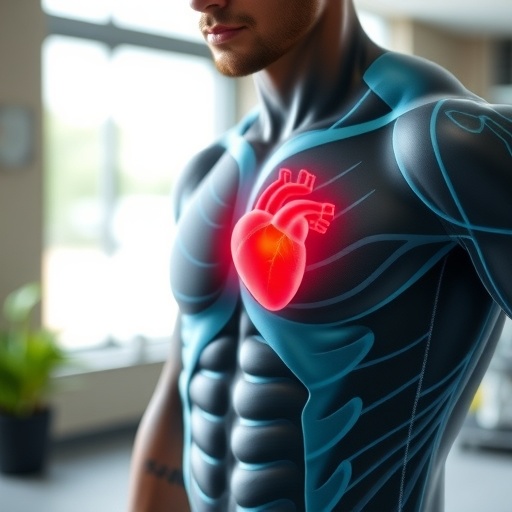
Image Credits: AI Generated
DOI: 10.1186/s12967-025-07527-7
Keywords: myocardial infarction, IL-27, muscle atrophy, exercise, anti-inflammatory mechanisms, rehabilitation, cardiovascular health, exercise therapy

DOI: 10.1186/s12967-025-07527-7

Keywords: biochemical interactions post-heart attack, cardiac rehabilitation through physical activity, enhancing recovery after myocardial infarction, exercise and muscle atrophy recovery, exercise as a therapeutic approach, IL-27 cytokine effects on muscle, impact of exercise on inflammatory markers, inflammatory response and muscle loss, myocardial infarction rehabilitation strategies, non-pharmacological interventions for heart attack, physical activity and muscle health, reducing cytokine-induced muscle degradation

Cite Scienmag News

Arden W. (January 26, 2026). Exercise Reduces IL-27 Muscle Atrophy After Heart Attack. Scienmag. https://scienmag.com/exercise-reduces-il-27-muscle-atrophy-after-heart-attack/

Arden W. "Exercise Reduces IL-27 Muscle Atrophy After Heart Attack." Scienmag, 26 January 2026, https://scienmag.com/exercise-reduces-il-27-muscle-atrophy-after-heart-attack/. Accessed 28 August 2026.

Arden W. "Exercise Reduces IL-27 Muscle Atrophy After Heart Attack." Scienmag. January 26, 2026. https://scienmag.com/exercise-reduces-il-27-muscle-atrophy-after-heart-attack/


Tags: biochemical interactions post-heart attackcardiac rehabilitation through physical activityenhancing recovery after myocardial infarctionexercise and muscle atrophy recoveryexercise as a therapeutic approachIL-27 cytokine effects on muscleimpact of exercise on inflammatory markersinflammatory response and muscle lossmyocardial infarction rehabilitation strategiesnon-pharmacological interventions for heart attackphysical activity and muscle healthreducing cytokine-induced muscle degradation
Share26Tweet17
Previous Post

Post-COVID Healthcare Costs and Social Inequalities in Belgium

Next Post

AngioTag Zebrafish: In Vivo Endothelium Profiling

Related Posts

Supporting Behavior Change in a New Era of Obesity Care
Medicine

Supporting Behavior Change in a New Era of Obesity Care

August 28, 2026
Urinary Incontinence Linked to Self-Reported Hearing Loss in Two National Aging Studies
Medicine

Urinary Incontinence Linked to Self-Reported Hearing Loss in Two National Aging Studies

August 28, 2026
BioFire Respiratory Panel Improves Syndromic Diagnosis of Suspected COVID-19 Infections in Madagascar
Medicine

BioFire Respiratory Panel Improves Syndromic Diagnosis of Suspected COVID-19 Infections in Madagascar

August 28, 2026
Review maps statistical methods for harmonizing historical longitudinal epidemiological data
Medicine

Review maps statistical methods for harmonizing historical longitudinal epidemiological data

August 28, 2026
Balancing Brain and Lung Care: Strategies for ARDS in Acute Brain Injury
Medicine

Balancing Brain and Lung Care: Strategies for ARDS in Acute Brain Injury

August 28, 2026
Study tracks lasting cognitive and functional effects after tick-borne encephalitis
Medicine

Study tracks lasting cognitive and functional effects after tick-borne encephalitis

August 28, 2026
Next Post
AngioTag Zebrafish: In Vivo Endothelium Profiling

AngioTag Zebrafish: In Vivo Endothelium Profiling

  • Mothers who receive childcare support from maternal grandparents show more optimized

    Mothers who receive childcare support from maternal grandparents show more parental warmth, finds NTU Singapore study

    27656 shares
    Share 11059 Tweet 6912
  • University of Seville Breaks 120-Year-Old Mystery, Revises a Key Einstein Concept

    1061 shares
    Share 424 Tweet 265
  • Bee body mass, pathogens and local climate influence heat tolerance

    682 shares
    Share 273 Tweet 171
  • Researchers record first-ever images and data of a shark experiencing a boat strike

    546 shares
    Share 218 Tweet 137
  • Groundbreaking Clinical Trial Reveals Lubiprostone Enhances Kidney Function

    531 shares
    Share 212 Tweet 133
Science

Embark on a thrilling journey of discovery with Scienmag.com—your ultimate source for cutting-edge breakthroughs. Immerse yourself in a world where curiosity knows no limits and tomorrow’s possibilities become today’s reality!

RECENT NEWS

  • Targeting METTL3/m6A/SOCS3 Reprograms Macrophages, Boosting Anti-PD-1 Therapy in Multiple Myeloma
  • Genomes reveal how Sotalia dolphins diverged while retaining key conserved traits
  • CHAMS-DTA Improves Drug-Target Binding Affinity Prediction with Cross-Hybrid Attention and Multistage Sampling
  • Indian Polistine Wasps Harbor Distinct Microbiota Across Four Species

Categories

  • Agriculture
  • Anthropology
  • Archaeology
  • Athmospheric
  • Biology
  • Biotechnology
  • Blog
  • Bussines
  • Cancer
  • Chemistry
  • Climate
  • Earth Science
  • Editorial Policy
  • Marine
  • Mathematics
  • Medicine
  • Pediatry
  • Policy
  • Psychology & Psychiatry
  • Science Education
  • Social Science
  • Space
  • Technology and Engineering

Subscribe to Blog via Email

Enter your email address to subscribe to this blog and receive notifications of new posts by email.

Join 5,150 other subscribers

© 2025 Scienmag - Science Magazine

Welcome Back!

Login to your account below

Forgotten Password?

Retrieve your password

Please enter your username or email address to reset your password.

Log In
No Result
View All Result
  • HOME
  • SCIENCE NEWS
  • CONTACT US

© 2025 Scienmag - Science Magazine

Discover more from Science

Subscribe now to keep reading and get access to the full archive.

Continue reading