


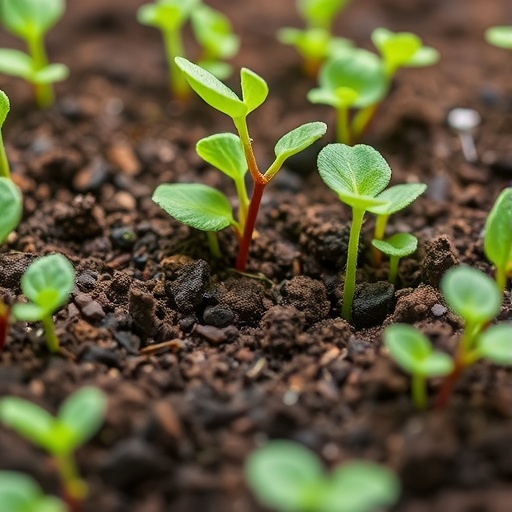
Persistent herbicide residues can linger in agricultural soils long after application, where they disrupt microbial communities, impair nutrient cycling, reduce crop productivity, and weaken long-term farmland resilience. A new review argues that the next wave of remediation may come not from single “super” strains, but from purpose-built teams of microorganisms that work together. These synthetic microbial communities, or SynComs, aim to accelerate herbicide biodegradation while maintaining stability in heterogeneous soil environments.
Rather than assigning every reaction to one organism, SynComs distribute the degradation pathway across multiple community members. “By combining complementary metabolic abilities, these communities may achieve faster and more complete contaminant removal while remaining more resilient,” said corresponding author Xueling Yang of Zhejiang University.
The review, published in Agricultural Ecology and Environment, focuses on persistent herbicides such as atrazine, metolachlor, and fomesafen. These compounds are widely used in crop production but can persist in soil, alter beneficial microbial activity, and increase the risk of migration into groundwater.
Traditional approaches often introduce a single herbicide-degrading strain. While such strains may perform well in laboratory settings, performance frequently drops in real soils. A lone microorganism may lack the full set of enzymes needed to complete the degradation pathway, leading to partial transformation and accumulation of intermediates that can be toxic or environmentally problematic.
SynComs address this bottleneck through metabolic division of labor and cross-feeding. One member can initiate breakdown of the parent herbicide, while another consumes intermediate metabolites. Helper organisms may further enhance community function by producing protective biofilms, supplying nutrients, buffering oxidative stress, or improving survival under shifting moisture, pH, and oxygen conditions.
Across studies reviewed, rationally designed SynComs generally improved herbicide degradation by roughly 1.5 to 3 times compared with single strains or natural attenuation. Outcomes vary with herbicide chemistry, community composition, and local soil properties, but the cooperative strategy consistently reduces pathway interruptions.
The authors also highlight emerging tools that could make SynCom design more predictable. High-throughput microbial screening can identify candidates with both degradative capacity and stress tolerance. Multi-omics approaches can map active genes, proteins, and metabolites within a community during herbicide exposure.
Genome-scale metabolic modeling may then forecast beneficial interactions, intermediate fluxes, nutrient exchange, and suitable partner ratios. Machine learning could further help select combinations likely to remain effective beyond controlled microcosms.
Still, the review cautions that most evidence comes from laboratory experiments and soil microcosms. Field-scale validation is limited, and open questions remain about long-term community stability, interactions with native microbiomes, ecological side effects, delivery methods, biosafety, and regulatory oversight.
With continued integration of microbiology, ecological engineering, multi-omics, and predictive modeling, SynCom-based remediation could become a practical tool for restoring herbicide-contaminated soils and supporting more sustainable agriculture.
Cite Scienmag News
Morgan Morrow. (July 27, 2026). Engineered microbial communities speed up removal of herbicide residues from soil. Scienmag. https://scienmag.com/engineered-microbial-communities-speed-up-removal-of-herbicide-residues-from-soil/
Morgan Morrow. "Engineered microbial communities speed up removal of herbicide residues from soil." Scienmag, 27 July 2026, https://scienmag.com/engineered-microbial-communities-speed-up-removal-of-herbicide-residues-from-soil/. Accessed 4 September 2026.
Morgan Morrow. "Engineered microbial communities speed up removal of herbicide residues from soil." Scienmag. July 27, 2026. https://scienmag.com/engineered-microbial-communities-speed-up-removal-of-herbicide-residues-from-soil/


