


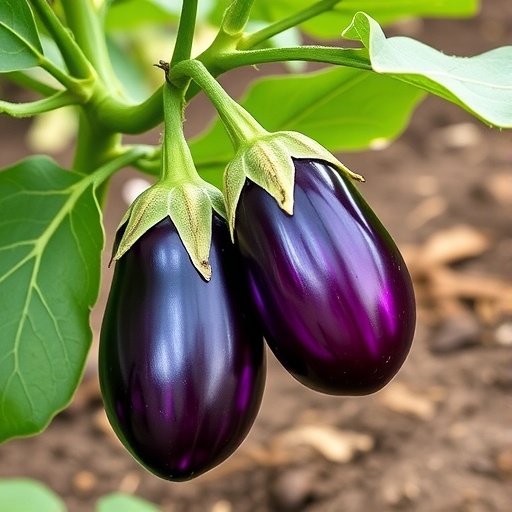
Eggplant, one of the world’s most beloved vegetables and a staple of cuisines from South Asia to the Mediterranean, is getting a twenty-first-century makeover. A sweeping new review published in the journal Discover Plants synthesizes a decade of breakthroughs in eggplant genetics, genomics, and biotechnology, arguing that the combined power of genome-wide association studies, quantitative trait loci mapping, functional genomics, and CRISPR-Cas9 gene editing can transform this ancient crop into a climate-resilient, nutritionally fortified pillar of global food security. The review, authored by researchers at ICAR-Indian Agricultural Statistics Research Institute, Graphic Era Hill University, and ICAR-Indian Agricultural Research Institute, provides the most comprehensive roadmap yet for accelerating eggplant improvement in the face of mounting environmental pressures.
The case for urgent action is compelling. Eggplant (Solanum melongena L., 2n = 2X = 24), also known as brinjal or aubergine, was domesticated in India and Southeast Asia between roughly 9,000 and 10,000 years ago from its wild ancestor Solanum insanum. Today it serves as a strategic horticultural crop within the Solanaceae family, prized not only for its culinary versatility but for its extraordinary phytochemical arsenal. The fruit is rich in phenolic acids, anthocyanins, flavonoids, and other bioactive secondary metabolites that exhibit antioxidant, anticarcinogenic, anti-inflammatory, anti-asthmatic, antithrombotic, hypolipidemic, and immunoregulatory activities. Yet the crop’s genetic improvement has long been hampered by the complex inheritance of its most valuable traits. Fruit yield, quality attributes, stress tolerance, and morphological diversity are governed by polygenic genomic architectures characterized by low heritability, epistasis, and strong genotype-by-environment interactions—features that have limited the efficacy of traditional breeding methods for decades.
The review’s authors identify genome-wide association studies (GWAS) and quantitative trait loci (QTL) mapping as transformative platforms for dissecting these complex traits. GWAS exploits historical recombination within diverse germplasm panels to associate genomic variation with phenotypic traits at high resolution. In eggplant, these studies have already delivered striking results. Recent analyses have pinpointed SNP markers linked to days to maturity, flower size, fruit width, harvest fruit color, and the presence of leaf and stem prickles. One notable study identified twenty SNPs significantly associated with total phenolic content, including five located within the gene encoding IRX12 laccase-4 on Chromosome 10—a candidate gene involved in secondary metabolite biosynthesis. Mixed linear models applied to GWAS pipelines have revealed fifty-six SNP-trait associations across nine chromosomes, while large-scale analyses demonstrated that selection for fruit shape has profoundly shaped the genetic structure of eggplant populations, leaving round and oval-fruited cultivars with a notably narrow genetic base.
Complementing GWAS, QTL mapping in structured populations continues to illuminate the genetic architecture of domestication and agronomic traits. Pioneering work using tomato-derived molecular markers revealed extensive collinear regions between the eggplant and tomato genomes, underscoring deep synteny within the Solanaceae. Subsequent studies have mapped QTL controlling fruit weight, explaining more than 10 percent of phenotypic variance on linkage groups LG1 and LG4. Particularly exciting are discoveries emerging from multi-parent advanced generation inter-cross (MAGIC) populations, which offer increased recombination and allelic diversity. These populations enabled the identification of functional variants in the APRR2 transcription factor that suppress chlorophyll pigmentation in fruit peel—key drivers of eggplant’s diversified color palette—as well as associations with MYB and COP1 genes, central regulators of anthocyanin biosynthesis and light signaling. A QTL hotspot on chromosome 6 was linked to root biomass and total root length, with a LATERAL ORGAN BOUNDARIES-domain protein implicated in lateral root development, a trait that could enhance water and nutrient acquisition under stress.
Disease resistance has emerged as one of the most consequential frontiers. Bacterial wilt, caused by Ralstonia solanacearum, and Fusarium and Verticillium wilts inflict substantial yield losses worldwide. QTL analyses have identified major resistance loci, including the dominant gene ERs1 and the well-characterized Rfo-Sa1 region for fungal wilt resistance. In a striking example of cross-kingdom biology, the QTL qEBWR10 was found to mediate bacterial wilt resistance by modulating the rhizosphere microbiome—enhancing the recruitment of beneficial Bacillus species and altering the plant’s antioxidant defenses. This discovery opens avenues for breeding cultivars that engineer their own probiotic soil environments. Genotyping-by-sequencing studies have further revealed both broad-spectrum and strain-specific resistance QTL against the genetically diverse Ralstonia species complex, with the most stable loci on chromosomes 3 and 6 showing synteny with bacterial wilt resistance regions in tomato.
The prickle problem illustrates how modern genetics addresses practical breeding challenges. Sharp epidermal outgrowths on leaves, stems, and calyxes hinder mechanical harvesting, increase labor costs, and damage fruit during transit. Research has now shown that prickle loss in domesticated eggplant is associated with mutations in a duplicated member of the LONELY GUY cytokinin-biosynthetic gene family—a remarkable case of convergent evolution repeated across the plant kingdom. Additional work has implicated the auxin response factors ARF10B and ARF18, along with a WUSCHEL-related homeobox transcription factor encoded at the qPC.12 locus on chromosome 12, in prickle morphogenesis. RNA interference-mediated downregulation of ARF10B reduced both prickle density and size, confirming functional roles and providing molecular tools for breeding smooth, harvest-friendly phenotypes without sacrificing the natural pest deterrence prickles can provide in certain contexts.
Genomic resources have expanded exponentially. The first draft genome sequence predicted more than 85,000 genes, later refined by a chromosome-anchored assembly to approximately 35,000 genes, revealing rapid diversification of miRNA-mRNA regulatory pairs and R-type resistance genes within the Solanaceae. A high-quality chromosome-level assembly described a genome of roughly 1.17 gigabases organized into 12 chromosomes and enabled functional validation of candidate genes controlling fruit length. Population-scale resequencing uncovered selective sweeps associated with fruit color, prickliness, and shape—hallmarks of human-mediated selection. Most recently, a telomere-to-telomere assembly has provided unprecedented resolution for structural variation analysis, enabling the fine-mapping and cloning of the GLK gene responsible for green pericarp stripes and facilitating the development of co-segregated markers for breeding.
Non-coding RNAs are emerging as fine-tuners of agronomic traits. Small RNA sequencing has identified dozens of novel microRNAs in eggplant, several of which respond to infection by Verticillium dahliae and Ralstonia solanacearum. Overexpression of miR395 increased susceptibility to Verticillium infection, marking it as a candidate for disease management. Long non-coding RNAs responsive to cold stress have been catalogued in tolerant and sensitive lines, with target genes linked to Acyl-CoA dehydrogenase and pseudouridine synthase activities. Artificial microRNA-mediated silencing has even been used to engineer reversible male sterility—a valuable tool for hybrid seed production. The authors caution, however, that circular RNAs and broader ncRNA-QTL interactions remain largely unexplored and represent a priority for future research.
On the biotechnology front, CRISPR-Cas9 gene editing is revolutionizing precision breeding in eggplant. Before gene editing, Bt brinjal—developed through Agrobacterium-mediated introduction of the Cry1Ac insecticidal gene from Bacillus thuringiensis—demonstrated the power of biotechnological intervention against the devastating fruit and shoot borer, though it faced regulatory and public acceptance hurdles. Gene editing offers a faster and potentially less contentious path forward. A refined Agrobacterium-mediated transformation system now underpins efficient editing, and pioneering CRISPR-Cas9 knockouts of the phytoene desaturase gene achieved a 71 percent transformation efficiency with the expected albino phenotype. Simultaneous editing of three polyphenol oxidase genes has produced genotypes with dramatically reduced post-harvest flesh browning while preserving high polyphenol content—a direct win for fruit quality and marketability. Studies editing the tyrosinase CuA-binding domain of PPO2 have also revealed previously hidden pleiotropic effects on agronomic traits, a reminder that comprehensive functional analysis must accompany any editing campaign.
The review concludes with a vision of integrative, multi-omics-driven breeding. By layering transcriptomic, proteomic, and metabolomic information onto genomic foundations, researchers can build systems-level models of trait architecture. Integrated multi-omics studies have already decoded peel brightness differences, revealed metabolic networks governing quality in green-skinned eggplants, and identified key enzymes in chlorogenic acid biosynthesis with potential for nutritional engineering. Machine learning and advanced bioinformatics promise to sharpen marker-trait associations, while single-cell technologies and AI-assisted editing platforms loom on the horizon. Challenges remain—large repetitive genomes, incomplete functional annotation, population structure confounding GWAS signals, and the need for efficient transformation systems—but the trajectory is unmistakable. With its untapped wild relatives, expanding genomic toolkits, and maturing editing platforms, eggplant stands poised to deliver the resilient, high-yielding, nutritionally enhanced cultivars that food security in a changing climate demands.
Cite Scienmag News
Juliet Wilcox. (September 7, 2026). Eggplant genetics and biotechnology advance crops for food security. Scienmag. https://scienmag.com/eggplant-genetics-and-biotechnology-advance-crops-for-food-security/
Juliet Wilcox. "Eggplant genetics and biotechnology advance crops for food security." Scienmag, 7 September 2026, https://scienmag.com/eggplant-genetics-and-biotechnology-advance-crops-for-food-security/. Accessed 7 September 2026.
Juliet Wilcox. "Eggplant genetics and biotechnology advance crops for food security." Scienmag. September 7, 2026. https://scienmag.com/eggplant-genetics-and-biotechnology-advance-crops-for-food-security/


