


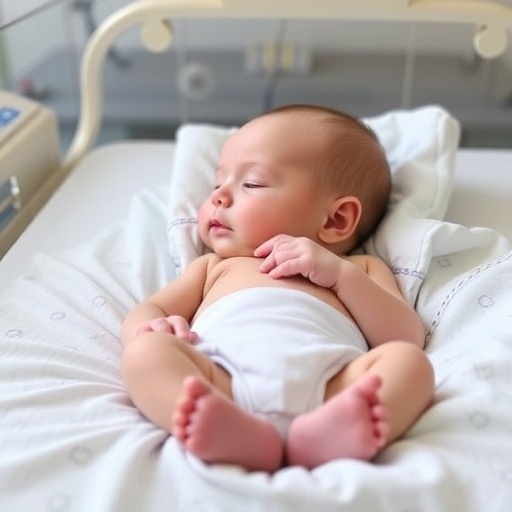
A recent clinical investigation into the impact of prone positioning on infants suffering from moderate to severe bronchiolitis has brought new insights into pediatric respiratory care. Bronchiolitis, an acute infection of the lower respiratory tract commonly caused by respiratory syncytial virus (RSV), presents a significant healthcare challenge worldwide, particularly among infants. The study specifically targeted infants receiving high-flow nasal cannula (HFNC) therapy, a common supportive treatment designed to improve oxygenation and reduce respiratory effort. Despite its widespread use, the efficacy of adjunctive positioning techniques like prone positioning in this population has remained uncertain until now.
The trial explored whether placing infants in the prone position—lying on their stomachs—could influence clinical outcomes, specifically by reducing the escalation of care. Escalation of care represents clinical deterioration requiring increased respiratory support, such as moving from HFNC to mechanical ventilation or intensive care admission. The physiological rationale behind prone positioning lies in its known benefits in improving ventilation-perfusion matching, enhancing lung mechanics, and optimizing secretion clearance. These effects have been well-documented in adult acute respiratory distress syndrome (ARDS) management, yet pediatric evidence remains limited.
In the conducted study, infants with moderate to severe bronchiolitis under HFNC support were randomized to receive either prone positioning or continue with standard positioning protocols. Researchers meticulously monitored clinical outcomes, including respiratory parameters, oxygenation indices, and the need for escalating respiratory support over the treatment course. The cohort was carefully selected to include infants representing a range of disease severities, thereby ensuring the findings would be broadly applicable to clinical practice.
Contrary to expectations driven by adult data and mechanistic theories, the results revealed no statistically significant reduction in care escalation rates associated with prone positioning in this infant population. The observed odds ratio exhibited a wide 95% confidence interval, indicating variability and uncertainty around the estimate. This statistical phenomenon suggests that while the study failed to demonstrate definitive benefit, it did not conclusively exclude the possibility that certain subgroups might still derive clinical advantage from this intervention.
The ambiguity exposed by the confidence intervals underscores the complex interplay of factors influencing respiratory mechanics and disease progression in bronchiolitis. The heterogeneity of this disease, rooted in diverse viral etiologies and varying host immune responses, may attenuate the effects of positional changes on lung function. Moreover, compliance with prone positioning protocols can be particularly challenging in infants, owing to safety concerns and caregiver adherence, potentially diluting any therapeutic effect.
Physiologically, the application of high-flow nasal cannula therapy delivers heated and humidified oxygen at flow rates sufficient to generate a mild positive end-expiratory pressure (PEEP), which helps maintain alveolar patency. Prone positioning theoretically complements this by redistributing ventilation, reducing dorsal lung atelectasis, and improving secretion mobilization. However, the dynamic respiratory mechanics of infants, coupled with the distinct pathophysiology of bronchiolitis characterized primarily by airway inflammation and mucus plugging, may limit the translation of these theoretical benefits into clinical outcomes.
In reviewing the methodological aspects, the study was conducted with rigorous adherence to randomized controlled trial protocols. Blinding was implemented where feasible, and standardized clinical criteria dictated escalation of care, thereby minimizing potential biases. The statistical power and sample size calculations accounted for anticipated effect sizes based on previous smaller studies, yet the results accentuated the need for larger, multicentric trials to verify findings and identify responsive patient subsets.
The absence of clear benefit does not diminish the value of prone positioning as a component of critical care but rather refines its role within the therapeutic armamentarium for bronchiolitis. Clinical decisions must integrate a nuanced understanding of individual patient factors, balancing potential physiological advantages against logistical and safety considerations. Additionally, continued research investigating adjunctive therapies, including pharmacologic agents and alternative respiratory support modalities, remains imperative to improve outcomes for this vulnerable population.
This investigation is particularly timely given the ongoing global burden of bronchiolitis and the frequent hospitalization of infants due to severe respiratory distress. Optimizing non-invasive interventions like HFNC and positioning could significantly impact healthcare resource utilization and patient morbidity if proven effective. Until then, prudent clinical judgment guided by evolving evidence must steer treatment approaches.
Future studies should employ advanced imaging and respiratory monitoring techniques such as electrical impedance tomography and lung ultrasound to elucidate the mechanistic effects of prone positioning on infant lung ventilation and perfusion patterns. Stratification by viral etiology, age, and baseline respiratory status could also uncover subpopulations more amenable to positional interventions. Furthermore, integrating caregiver education and safety protocols will enhance feasibility and adherence, potentially amplifying clinical benefits.
In summary, the recent multicenter randomized trial encompassing infants with moderate to severe bronchiolitis on high-flow nasal cannula support indicates that prone positioning does not significantly reduce the risk of escalation of care. Nevertheless, the wide confidence intervals highlight that this evidence is not conclusive, and further meticulously designed research is warranted. Advancing the understanding of respiratory mechanics and therapeutic positioning strategies in bronchiolitis remains a critical priority in pediatric medicine.
Corresponding author Dr. Florent Baudin emphasizes the necessity for ongoing critical appraisal and clinical trials to refine pediatric respiratory care practices. The study’s findings, presented at the International Congress of the European Society of Paediatric and Neonatal Intensive Care, contribute valuable data to the pediatric critical care community. Engaging clinicians, researchers, and healthcare providers in collaborative efforts will be essential to translate these insights into improved outcomes for infants affected by this common yet severe respiratory condition.
News Publication Date:
Not provided.
Web References:
Not provided.
References:
Not provided.
Cite Scienmag News
Ophelia Keating. (June 17, 2026). Effectiveness of Prone Positioning in Infants with Acute Bronchiolitis: New Insights. Scienmag. https://scienmag.com/effectiveness-of-prone-positioning-in-infants-with-acute-bronchiolitis-new-insights/
Ophelia Keating. "Effectiveness of Prone Positioning in Infants with Acute Bronchiolitis: New Insights." Scienmag, 17 June 2026, https://scienmag.com/effectiveness-of-prone-positioning-in-infants-with-acute-bronchiolitis-new-insights/. Accessed 4 September 2026.
Ophelia Keating. "Effectiveness of Prone Positioning in Infants with Acute Bronchiolitis: New Insights." Scienmag. June 17, 2026. https://scienmag.com/effectiveness-of-prone-positioning-in-infants-with-acute-bronchiolitis-new-insights/


