


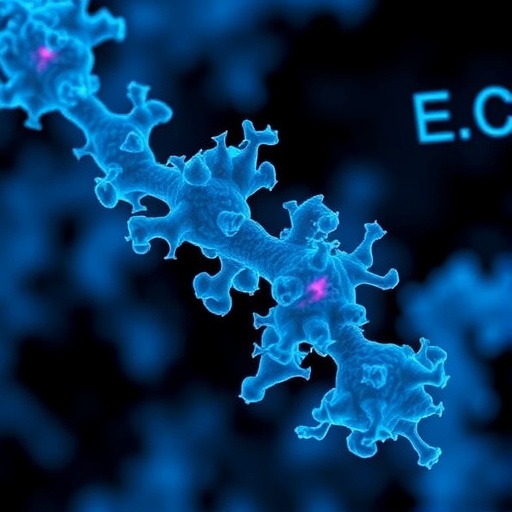
In a groundbreaking study published in the Journal of Translational Medicine, researchers have unveiled a compelling link between metagenomic analyses and breast cancer through the investigation of E. coli-derived siderophores. This innovative research, led by Manzoor et al., suggests that these bacterial metabolites could serve as indicative signatures in the early detection and diagnosis of breast cancer, a disease that continues to challenge the medical community.
Recent advances in metagenomics have enabled scientists to delve deeper into the human microbiome—particularly the multitude of microorganisms residing in various bodily environments. In this study, the researchers focused on the gut microbiota and its potential connections to cancer pathogenesis, a developing area of research that seeks to elucidate the complex interplay between microbial communities and human health. The importance of understanding the gut microbiome’s role in systemic diseases cannot be overstated, as it opens new avenues for diagnostic and therapeutic strategies.
Siderophores, which are small, high-affinity iron-chelating compounds produced by various bacteria, play a significant role in microbial iron acquisition. The research team posits that these molecules, particularly those derived from E. coli, could exert significant biological effects on human cells, particularly in the context of cancer. By utilizing advanced metagenomic techniques, the team was able to identify specific siderophores that were present in higher concentrations in individuals diagnosed with breast cancer compared to healthy controls.
Armed with this information, the researchers conducted a series of analyses to explore the mechanism by which E. coli-derived siderophores may influence breast cancer pathology. They hypothesized that these compounds could alter the iron metabolism within breast tissue, potentially leading to carcinogenic processes. This discovery is not only intriguing from a biological perspective but might also have practical implications for breast cancer screening and early intervention.
Among the various analytical methods employed in the study, the application of high-throughput sequencing techniques enabled the researchers to generate comprehensive profiles of the microbial populations inhabiting patients’ microbiomes. The data revealed that certain E. coli strains were prevalent in breast cancer patients, a finding that underscores the need for further exploration into the microbial influence on tumor development and progression.
The implications of these findings extend beyond mere correlation, as the research team also delved into potential causative pathways. The team investigated how siderophores from E. coli could modulate local immune responses in breast tissue. Given that iron is a critical nutrient for both bacterial growth and cellular processes, the dysregulation of iron homeostasis by bacterial metabolites may foster an environment conducive to tumorigenesis. This underscores the dual role of the microbiome as both a participant in health and a potential provocateur of disease.
Moreover, the study emphasizes the need for a multidisciplinary approach to cancer research, where microbiologists, oncologists, and bioinformaticians work collaboratively. There is a rich tapestry of interactions between the human host and its microbial inhabitants, and unraveling these complexities could yield significant insights into disease mechanisms. The combination of metagenomic analysis with traditional cancer research methods holds promise for the future of personalized medicine.
The implications for clinical practice could be profound. If E. coli-derived siderophores prove to be robust biomarkers for breast cancer, this could lead to the development of novel diagnostic tests that are less invasive yet highly sensitive. Currently, breast cancer diagnosis often relies on mammography, biopsies, and serum markers, which can be limiting and uncomfortable for patients. Siderophore-based diagnostics could represent a paradigm shift towards more accessible screening options.
Additionally, the study’s findings raise questions about the potential for therapeutic strategies targeting microbial metabolism in tumor suppression. If siderophores play a role in cancer progression, then modulating their activity could become a novel approach to treatment. Future research could explore whether dietary interventions, probiotics, or antibiotics could influence the microbiome in a way that reduces cancer risk—an area ripe for exploration.
As the research community becomes increasingly aware of the microbiome’s impacts on cancer, this study serves as a compelling illustration of the potential for microbial metabolites in cancer diagnostics. The integration of metagenomic data into conventional cancer research methodologies not only elucidates the role of bacteria in disease but also opens up exciting avenues for innovation in cancer care.
In summary, Manzoor and colleagues have set the stage for future endeavors that aim to further dissect the relationship between the microbiome and cancer. Their findings could be transformative, influencing both our understanding of disease mechanisms and paving the way for innovative diagnostic and therapeutic strategies. The intersection of microbiology and oncology holds immense potential, and as research in this area progresses, we may find ourselves bolstered by novel interventions that were once the stuff of science fiction.
As we look to the future, the importance of interdisciplinary collaboration cannot be overstated, as it is this synergy that will drive the next wave of breakthroughs in cancer research. With mounting evidence supporting the microbiome’s role in human health, we are reminded of the intricate connections that define our biological landscape. Continuing to unravel these complexities will not only shed light on cancer but may ultimately enhance our approach to health care as a whole.
The implications of the research by Manzoor et al. extend far beyond microbiology alone. They encourage us to reconsider our approach to disease prevention, early detection, and treatment, highlighting the importance of harnessing our understanding of microorganisms. With further investigation into the connections between E. coli and breast cancer, the hope remains that we will one day harness the power of our microflora in the fight against cancer and contribute to a significant leap forward in medical science.
Manzoor, H., Jabeen, I., Saeed, M.T. et al. Metagenomic analyses reveal E. coli-derived siderophores as potential signatures for breast cancer.
J Transl Med (2025). https://doi.org/10.1186/s12967-025-07513-z
Cite Scienmag News
Nathaniel Bowman. (December 14, 2025). E. coli Siderophores Linked to Breast Cancer Detection. Scienmag. https://scienmag.com/e-coli-siderophores-linked-to-breast-cancer-detection/
Nathaniel Bowman. "E. coli Siderophores Linked to Breast Cancer Detection." Scienmag, 14 December 2025, https://scienmag.com/e-coli-siderophores-linked-to-breast-cancer-detection/. Accessed 3 September 2026.
Nathaniel Bowman. "E. coli Siderophores Linked to Breast Cancer Detection." Scienmag. December 14, 2025. https://scienmag.com/e-coli-siderophores-linked-to-breast-cancer-detection/


