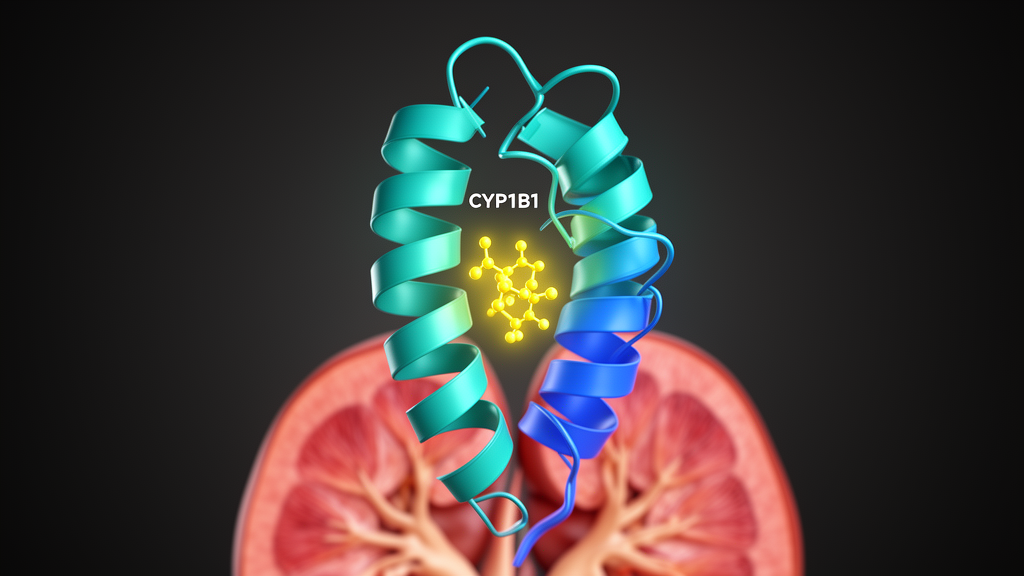
Kaempferol, a natural flavonoid found in many medicinal plants and dietary sources, has long been credited with anti-inflammatory, antioxidant and antifibrotic properties, yet its precise molecular targets in kidney disease have remained unclear. A new computational study published in Bioresources and Bioprocessing now proposes that cytochrome P450 1B1, or CYP1B1, may serve as a key functional target through which kaempferol could act in renal fibrosis, the progressive and largely irreversible scarring process that underlies the advance of chronic kidney disease toward end-stage renal failure. The authors, Chenjie Huang, Xueli Shi and Ziyou Yan, stress from the outset that their findings are hypothesis-generating and require experimental validation before any clinical conclusions can be drawn.
The research team assembled a multi-layered analytical pipeline that moved from bulk transcriptomic data down to single-cell resolution. They began with the gene expression dataset GSE76882, comprising 99 normal kidney samples and 175 disease samples, and identified 1,482 differentially expressed genes using thresholds of an absolute log2 fold change above 0.5 and a P-value below 0.05. Of these, 833 genes were up-regulated and 649 down-regulated in fibrotic tissue. In parallel, they predicted kaempferol’s potential human targets using three online databases—SwissTargetPrediction, SEA and CTD—yielding 322 candidate genes after merging and de-duplication.
To narrow the field, the investigators applied weighted gene co-expression network analysis, or WGCNA, which groups genes into modules whose activity rises and falls together across samples. Using a soft-threshold power of 15, they identified six co-expression modules, and the brown module, containing 883 genes, showed the strongest correlation with disease status, with an absolute correlation coefficient of 0.52. Intersecting this module with the differentially expressed genes produced 616 disease-associated genes, and a further intersection with kaempferol’s predicted targets left just 25 genes linked to both the compound and the disease. Sensitivity analyses around the chosen parameters produced intersections of 20 to 25 genes, suggesting the result was robust to the analytical settings.
Three machine learning algorithms then competed to prioritise the most relevant genes from this set of 25. Least absolute shrinkage and selection operator regression, run with ten-fold cross-validation, retained seven genes with non-zero coefficients. Support vector machine-recursive feature elimination confirmed an optimal seven-variable feature set with a cross-validation accuracy of 0.8176. Random Forest, assessed by the MeanDecreaseGini importance index, ranked its own top ten candidates. The intersection of all three methods produced six core genes: VCAM1, NFKBIA, SFN, CCL5, CYP1B1 and AXL. All six were significantly elevated in fibrotic samples, and each achieved a single-gene diagnostic area under the curve above 0.70 in the training data.
The team then built a multigene diagnostic model using multivariate logistic regression. Four genes—NFKBIA, VCAM1, SFN and CCL5—emerged as independent risk factors, with NFKBIA showing an odds ratio of 3.61 and VCAM1 an odds ratio of 2.21. The combined model achieved an area under the curve of 0.889 in the training set and 0.759 in an independent external validation cohort, GSE22459, which contained 25 normal and 40 disease samples. Shapley additive explanations analysis revealed that VCAM1, with a mean absolute SHAP value of 0.0759, and CYP1B1, at 0.0736, contributed most strongly to the model’s predictions, and a notable synergistic effect appeared when VCAM1 and CCL5 were both highly expressed.
Immune microenvironment analysis using the CIBERSORT algorithm, which estimates the relative abundance of 22 immune cell types from bulk transcriptomic data, showed significant remodelling in fibrotic kidneys. Plasma cells and eosinophils were markedly increased in disease samples, while activated NK cells, resting memory CD4-positive T cells, M0 macrophages, M1 macrophages and resting dendritic cells were all significantly reduced, with false-discovery-rate-corrected P-values below 0.05. Spearman correlation analysis further linked the core genes to specific immune populations: CCL5 correlated positively with eosinophils, CD8-positive T cells and gamma-delta T cells, while CYP1B1 correlated positively with neutrophils and inversely with activated NK cells and resting dendritic cells.
Single-cell RNA sequencing of nine samples from dataset GSE195718, yielding 37,020 high-quality cells after quality control and doublet removal, allowed the researchers to localise each core gene within distinct renal cell lineages. CYP1B1 showed its highest expression in smooth muscle cells, followed by fibroblasts and endothelial cells—cell types central to myofibroblast generation in fibrotic kidneys. VCAM1 was also highest in smooth muscle cells, while AXL was prominent in monocytes and fibroblasts. CCL5 was expressed mainly in T cells, NFKBIA in endothelial cells and monocytes, and SFN was nearly silent across all populations, with mean expression below 0.005.
Pseudotemporal trajectory analysis using Monocle3, with fibroblasts designated as the developmental starting point, traced a differentiation path through endothelial and smooth muscle cell states toward epithelial fates. CYP1B1-high cells were progressively enriched along this trajectory, reaching a pronounced peak at late pseudotime values of roughly 40 to 50, where their density significantly exceeded that of low-expressing cells. This pattern suggests that CYP1B1 overexpression accompanies the mid-to-late stages of fibroblast-to-myofibroblast differentiation rather than the initiation of fibrogenesis. The authors interpret this as indicating an association with sustained fibroblast activation and stabilisation of the myofibroblast phenotype.
To probe CYP1B1’s functional role computationally, the team employed scTenifoldKnk, a machine learning-based virtual gene knockout tool that simulates the transcriptional consequences of gene loss. Virtual knockdown of CYP1B1 produced significant differential expression of 46 genes, all up-regulated, with fold changes exceeding 70 for genes including EFNA5, PDE1A and COBLL1. These dysregulated genes were functionally enriched in fibrosis-related biological processes such as cell adhesion, G protein-coupled receptor signalling, ion transport and cytoskeletal remodelling. The authors note an apparent tension in these results: prior animal studies have associated CYP1B1 inhibition with reduced renal and hepatic fibrosis, yet their virtual knockdown up-regulated pro-fibrotic genes. They propose that CYP1B1 may play stage-dependent dual roles—potentially pro-fibrotic early in disease while serving a compensatory protective function in later stages—a hypothesis they emphasise requires direct experimental testing.
Molecular docking with AutoDock Vina predicted favourable binding between kaempferol and the proteins encoded by all six core genes, with binding energies below the minus 5.0 kilocalorie per mole threshold. The kaempferol–CYP1B1 complex showed a binding energy of minus 6.5 kilocalories per mole, the strongest predicted interaction highlighted in the study. The authors caution that docking indicates only a potential physical interaction and cannot predict whether kaempferol would act as an agonist or antagonist of CYP1B1 enzymatic activity. They also acknowledge that their regulatory network findings rest entirely on bioinformatics predictions, and that validation will require in vitro and ex vivo functional experiments, including assessments of NF-kappaB pathway markers, CYP1B1 knockout models, and co-culture systems with primary renal fibroblasts, tubular epithelial cells and immune cells. Within those limits, the study offers a computational framework linking kaempferol, CYP1B1-expressing stromal cells and immune microenvironment remodelling, and prioritises CYP1B1 as a candidate target for future antifibrotic drug development in chronic kidney disease.
Subject of Research: A multi-omics and single-cell transcriptomics study identifying CYP1B1 as a potential target of the flavonoid kaempferol in renal fibrosis.
Article Title: CYP1B1 is a potential target of kaempferol in renal fibrosis: a multi‑omics and single‑cell transcriptomics study
Article References: Huang, C., Shi, X., & Yan, Z. (2026). CYP1B1 is a potential target of kaempferol in renal fibrosis: a multi‑omics and single‑cell transcriptomics study. Bioresources and Bioprocessing, 13(1), Article 153. https://doi.org/10.1186/s40643-026-01135-z
Image Credits: AI Generated
DOI: 10.1186/s40643-026-01135-z
Keywords: renal fibrosis, kaempferol, CYP1B1, single-cell transcriptomics, machine learning, WGCNA, molecular docking, chronic kidney disease, myofibroblast, extracellular matrix, bioinformatics, natural compounds
Cite Scienmag News
Jerry Hayes. (October 28, 2026). Computational Study Points to CYP1B1 as Kaempferol Target in Renal Fibrosis. Scienmag. https://scienmag.com/computational-study-points-to-cyp1b1-as-kaempferol-target-in-renal-fibrosis/
Jerry Hayes. "Computational Study Points to CYP1B1 as Kaempferol Target in Renal Fibrosis." Scienmag, 28 October 2026, https://scienmag.com/computational-study-points-to-cyp1b1-as-kaempferol-target-in-renal-fibrosis/. Accessed 29 October 2026.
Jerry Hayes. "Computational Study Points to CYP1B1 as Kaempferol Target in Renal Fibrosis." Scienmag. October 28, 2026. https://scienmag.com/computational-study-points-to-cyp1b1-as-kaempferol-target-in-renal-fibrosis/