As climate change pushes summer temperatures higher across the world’s grazing lands, livestock producers are searching for affordable ways to protect their animals from heat. A new study from the University of Melbourne offers a surprisingly simple answer: a common dietary supplement called betaine. Published in Discover Sustainability, the research shows that lambs given a small daily dose of betaine maintained lower body temperatures, breathed less frantically, and showed stronger antioxidant defenses when exposed to sustained heat stress, even when warm nights robbed them of their usual chance to cool down.
Betaine, also known as trimethylglycine, is a naturally occurring compound found in sugar beets, spinach, and other plants. It plays a central role in cellular chemistry as a methyl donor, participating in reactions that regulate gene expression and protein function. But its most relevant property for heat-stressed animals is its role as an osmolyte, a molecule that helps cells retain water and maintain their internal balance when the body is losing fluid through sweating and panting. Because betaine is inexpensive and already approved as a feed additive in many countries, the researchers saw it as a practical candidate for protecting livestock welfare without requiring expensive infrastructure like cooling sheds.
The study, led by Jamal Nasir and Surinder S. Chauhan, is among the first to test betaine under conditions that mimic the increasingly common reality of hot nights. Most previous research on heat stress in sheep has assumed that animals can recover overnight when temperatures drop. But as climate patterns shift, nocturnal temperatures in many sheep-producing regions are rising too, meaning animals never fully recover from the day’s heat load. To capture this scenario, the team designed an experiment where heat-stressed lambs experienced daytime temperatures between 28 and 38 degrees Celsius with 40 to 60 percent relative humidity, followed by nights that stayed warm at 26 to 28 degrees Celsius.
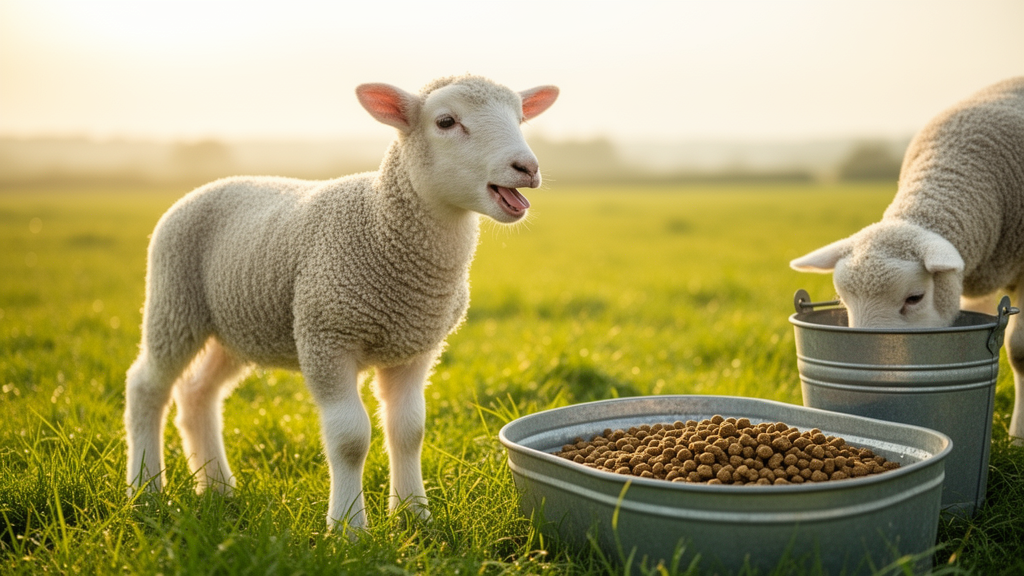
Forty-eight crossbred lambs, a Merino, Border Leicester, and Dorset cross aged six to ten months, were randomly assigned to one of four groups in a two-by-two factorial design. Half were kept in thermoneutral conditions at 18 to 21 degrees Celsius, while the other half faced the heat stress regimen for fourteen days. Within each temperature group, lambs received either a control diet or a diet supplemented with 2 grams of betaine per day, a dose previously shown to be effective in heat-stressed sheep. The researchers then measured rectal temperature and respiration rate three times daily and collected blood and muscle samples to analyze plasma metabolites and antioxidant enzyme activities.
The results were striking. Under heat stress, lambs receiving betaine had significantly lower rectal temperatures at both the 9 a.m. and 1 p.m. measurements compared with control lambs. At 9 a.m., betaine-supplemented lambs averaged 39.6 degrees Celsius versus 39.7 degrees in controls, and by 1 p.m. the gap widened slightly to 40.1 versus 40.2 degrees. Respiration rate told a similar story: at the hottest point of the day, betaine-fed lambs breathed 181 times per minute compared with 194 in the control group. While these differences may seem modest on paper, they represent meaningful physiological relief for animals whose bodies are working overtime to dissipate heat.
Beyond the visible signs of heat strain, the researchers looked deeper into the biochemistry of stress. Plasma cortisol, a hormone released by the adrenal glands in response to stress, was significantly lower in betaine-supplemented lambs on day seven of the trial, measuring 15.8 nanograms per milliliter compared with 20.3 in controls. Lower cortisol suggests that betaine did not just mask the symptoms of heat stress but actually reduced the physiological burden the animals were experiencing. Chronically elevated cortisol can suppress immune function, reduce feed intake, and impair growth, so keeping it in check has real implications for animal welfare and productivity.
Perhaps the most technically significant findings came from the muscle tissue analysis. Lambs receiving betaine under heat stress showed markedly higher activity of two key antioxidant enzymes: glutathione peroxidase and catalase. Glutathione peroxidase activity rose from 54.1 to 75.6 nanomoles per minute per milligram of protein, while catalase activity more than doubled from 12.4 to 33.2 nanomoles per minute per milligram of protein. These enzymes form the front line of cellular defense against reactive oxygen species, unstable molecules that damage cell membranes, proteins, and DNA. Heat stress is known to accelerate the production of these damaging molecules, overwhelming the animal’s natural antioxidant systems and contributing to muscle damage, reduced growth, and poorer meat quality.
The mechanism behind betaine’s protective effect likely involves several converging pathways. As an osmolyte, betaine helps cells maintain volume and function under the dehydration stress that accompanies heavy panting and sweating. As a methyl donor, it supports the production of S-adenosylmethionine, which is involved in synthesizing glutathione, the molecule that glutathione peroxidase uses to neutralize peroxides. By bolstering both the physical resilience of cells and the biochemical machinery that cleans up oxidative damage, betaine appears to address heat stress from multiple angles simultaneously. The researchers note that this dual action may explain why the supplement produced measurable improvements in both physiological indicators and enzymatic defenses.
The implications for the sheep industry are considerable. Heat stress costs livestock producers billions of dollars annually through reduced weight gain, lower fertility, increased mortality, and compromised product quality. As extreme heat events become more frequent and prolonged, and as warm nights increasingly prevent overnight recovery, the problem is expected to intensify. The study’s authors suggest that dietary betaine supplementation could serve as a cost-effective strategy to safeguard lamb welfare and productivity under these changing conditions. Unlike structural interventions such as shade structures or cooling systems, which require significant capital investment, betaine can simply be added to existing feed rations at minimal cost.
While the findings are promising, the researchers acknowledge that further work is needed to determine optimal dosing strategies, long-term effects, and whether the benefits extend to other livestock species and production systems. The study was conducted over fourteen days with a specific breed cross under controlled conditions, and real-world farming environments introduce additional variables such as exercise, variable feed intake, and fluctuating weather. Nevertheless, the research represents an important step toward practical, science-based nutritional interventions that can help livestock adapt to a warming world. The work was supported by Japan’s Society for the Promotion of Science through its Program for Forming Japan’s Peak Research Universities, and the full paper is available open access for producers, researchers, and policymakers interested in building more climate-resilient livestock systems.
Subject of Research: Effects of dietary betaine supplementation on physiological stress responses and antioxidant enzyme activity in heat-stressed lambs
Article Title: Dietary betaine supplementation improves oxidative status and ameliorates the negative effects of heat stress in lambs
Article References: Nasir, J., Hiraishi, M., Dunshea, F. R., Warner, R. D., McGill, D., & Chauhan, S. S. (2026). Dietary betaine supplementation improves oxidative status and ameliorates the negative effects of heat stress in lambs. Discover Sustainability. https://doi.org/10.1007/s43621-026-05001-y
Image Credits: AI Generated
DOI: 10.1007/s43621-026-05001-y
Keywords: betaine, heat stress, lambs, antioxidant enzymes, cortisol, animal welfare, livestock, oxidative stress, climate change, sheep nutrition, thermoregulation, Discover Sustainability
Cite Scienmag News
William Thompson. (October 16, 2026). Common Sweetener Betaine Helps Lambs Beat Heat Stress, Study Finds. Scienmag. https://scienmag.com/common-sweetener-betaine-helps-lambs-beat-heat-stress-study-finds/
William Thompson. "Common Sweetener Betaine Helps Lambs Beat Heat Stress, Study Finds." Scienmag, 16 October 2026, https://scienmag.com/common-sweetener-betaine-helps-lambs-beat-heat-stress-study-finds/. Accessed 16 October 2026.
William Thompson. "Common Sweetener Betaine Helps Lambs Beat Heat Stress, Study Finds." Scienmag. October 16, 2026. https://scienmag.com/common-sweetener-betaine-helps-lambs-beat-heat-stress-study-finds/