

Thursday, October 22, 2026
Science
No Result
View All Result
  • Login
  • HOME
  • SCIENCE NEWS
  • CONTACT US
  • HOME
  • SCIENCE NEWS
  • CONTACT US
No Result
View All Result
Scienmag
No Result
View All Result
Home Science News Agriculture

Colder Alpine Grasslands Show Less Integrated Plant Trait Networks

October 22, 2026
in Agriculture
Alan Morgan
By Alan Morgan Scienmag Editorial Profile - Precision Agriculture
Reading Time: 2 mins read
0
Colder Alpine Grasslands Show Less Integrated Plant Trait Networks

Colder Alpine Grasslands Show Less Integrated Plant Trait Networks

65
SHARES
587
VIEWS
Share on FacebookShare on Twitter
ADVERTISEMENT

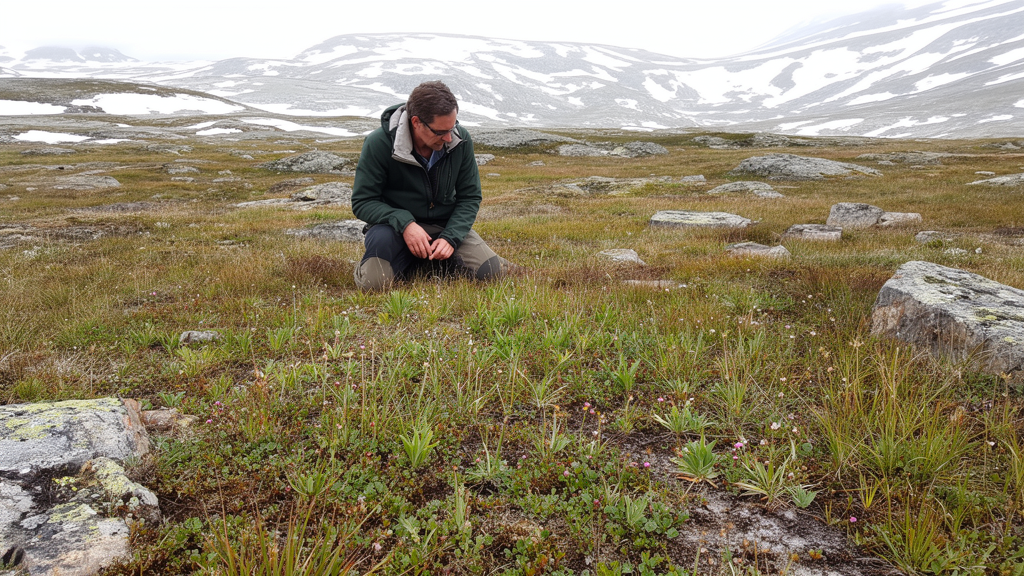
Plant communities in colder, higher-altitude grasslands had less connected and more fragmented networks of functional traits than communities in warmer, lower-altitude grasslands, according to a field study across three alpine grasslands in northern Italy. The researchers combined measurements of 18 plant and environmental traits with network analysis and found that rising altitude was associated with lower overall connectivity, fewer trait interdependencies and reduced centrality for individual traits. Groups of strongly associated traits also became smaller and more fragmented, indicating a loss of coordinated trait organization under colder conditions.

The observational study used an altitudinal gradient as a natural proxy for temperature variation. Its population comprised vegetation from three alpine grassland sites in northern Italy, where increasing elevation was accompanied by lower temperatures and harsher environmental conditions. The design captured differences in the structural organization of trait relationships across sites, but it did not isolate temperature as the sole cause of those differences.

To build the plant trait networks, or PTNs, the team integrated the 18 plant and environmental trait measurements with analytical tools designed to quantify patterns of connectivity, community structure and the relative importance of individual traits. Traditional trait analyses commonly focus on a single trait or pairwise correlations. PTNs instead examine how multiple measured traits form an interconnected structure, allowing the researchers to assess both links among traits and the groups into which strongly associated traits cluster.

Centrality provided an additional measure of the relative importance of individual traits within that structure. Across the gradient, the network pattern was consistent on all three structural measures examined. As altitude increased and temperature declined, overall network connectivity fell, the number of interdependencies among traits diminished, and the centrality of individual traits declined.

Communities of strongly associated traits simultaneously became smaller and more fragmented. Together, these observations show that the colder grassland communities had a less cohesive functional organization across the traits measured, rather than merely lower values for one trait or one isolated correlation. The study therefore demonstrates how network analysis can characterize coordinated changes in plant traits across an environmental gradient, while remaining an association among site conditions, temperature and trait-network structure rather than a controlled demonstration of a temperature effect alone.

The authors suggest that PTNs may be useful for evaluating ecosystem resilience under environmental change, but the three-site comparison establishes the potential of the method rather than a direct test of resilience outcomes.

Subject of Research: Effects of an altitudinal temperature gradient on plant functional-trait networks in northern Italian alpine grasslands

Article Title: Network-based characterization of temperature effects on the structural organization of productive Italian grasslands

Article References: Andres, E., Niedrist, G., & Mejia-Aguilar, A. (2026). Network-based characterization of temperature effects on the structural organization of productive Italian grasslands. BMC Plant Biology. https://doi.org/10.1186/s12870-026-09614-3

Image Credits: AI Generated

DOI: 10.1186/s12870-026-09614-3

Keywords: alpine grasslands, plant functional traits, temperature gradient, trait networks, network analysis, altitudinal gradient, ecological organization, climate change, plant ecology, Network-based, characterization, temperature

Cite Scienmag News

Alan Morgan. (October 22, 2026). Colder Alpine Grasslands Show Less Integrated Plant Trait Networks. Scienmag. https://scienmag.com/colder-alpine-grasslands-show-less-integrated-plant-trait-networks/

Alan Morgan. "Colder Alpine Grasslands Show Less Integrated Plant Trait Networks." Scienmag, 22 October 2026, https://scienmag.com/colder-alpine-grasslands-show-less-integrated-plant-trait-networks/. Accessed 22 October 2026.

Alan Morgan. "Colder Alpine Grasslands Show Less Integrated Plant Trait Networks." Scienmag. October 22, 2026. https://scienmag.com/colder-alpine-grasslands-show-less-integrated-plant-trait-networks/


Tags: Alpine grassland plant trait networksalpine grasslandsaltitude gradient plant studiesaltitudinal gradientcharacterizationclimate changeecological implications of trait fragmentationecological organizationenvironmental stress and plant trait fragmentationfunctional trait connectivity in cold environmentshigh-altitude plant communitiesimpact of temperature on plant trait centralitynetwork analysisnetwork analysis of plant functional traitsNetwork-basedplant community organization in alpine ecosystemsplant ecologyplant functional traitsplant trait network analysistemperaturetemperature effects on plant traitstemperature gradienttrait interdependencies in cold habitatstrait networks
Share26Tweet16
Previous Post

BMJ commentary links conflict and climate change to food shortages

Next Post

UJI funds chiral materials and switchable bio-inspired catalysts

Related Posts

Lightweight AI detects potato leaf diseases under field conditions
Agriculture

Lightweight AI detects potato leaf diseases under field conditions

October 22, 2026
Wheat in Crisis: Variability of Wheat Area in Lebanon 2017–2025
Agriculture

Wheat in Crisis: Variability of Wheat Area in Lebanon 2017–2025

October 22, 2026
High-dose sheep manure improves black cumin oil composition in field trial
Agriculture

High-dose sheep manure improves black cumin oil composition in field trial

October 22, 2026
Tea resistance to anthracnose links enzymes, flavonoids and gene regulation
Agriculture

Tea resistance to anthracnose links enzymes, flavonoids and gene regulation

October 21, 2026
Sensitive LC–MS/MS Method Detects Beta-Casomorphin 5 in Pasteurized Milk
Agriculture

Sensitive LC–MS/MS Method Detects Beta-Casomorphin 5 in Pasteurized Milk

October 21, 2026
Genome-wide analysis identifies six mangrove bZIP genes induced by multiple stresses
Agriculture

Genome-wide analysis identifies six mangrove bZIP genes induced by multiple stresses

October 21, 2026
Next Post
UJI funds chiral materials and switchable bio-inspired catalysts

UJI funds chiral materials and switchable bio-inspired catalysts

  • Mothers who receive childcare support from maternal grandparents show more optimized

    Mothers who receive childcare support from maternal grandparents show more parental warmth, finds NTU Singapore study

    27656 shares
    Share 11059 Tweet 6912
  • University of Seville Breaks 120-Year-Old Mystery, Revises a Key Einstein Concept

    1061 shares
    Share 424 Tweet 265
  • Bee body mass, pathogens and local climate influence heat tolerance

    682 shares
    Share 273 Tweet 171
  • Researchers record first-ever images and data of a shark experiencing a boat strike

    546 shares
    Share 218 Tweet 137
  • Groundbreaking Clinical Trial Reveals Lubiprostone Enhances Kidney Function

    531 shares
    Share 212 Tweet 133
Science

Embark on a thrilling journey of discovery with Scienmag.com—your ultimate source for cutting-edge breakthroughs. Immerse yourself in a world where curiosity knows no limits and tomorrow’s possibilities become today’s reality!

RECENT NEWS

  • UJI funds chiral materials and switchable bio-inspired catalysts
  • Colder Alpine Grasslands Show Less Integrated Plant Trait Networks
  • BMJ commentary links conflict and climate change to food shortages
  • CFD study ranks water-heated collector factors for natural gas preheating

Categories

  • Agriculture
  • Anthropology
  • Archaeology
  • Athmospheric
  • Biology
  • Biotechnology
  • Blog
  • Bussines
  • Cancer
  • Chemistry
  • Climate
  • Earth Science
  • Editorial Policy
  • Marine
  • Mathematics
  • Medicine
  • Pediatry
  • Policy
  • Psychology & Psychiatry
  • Science Education
  • Science News
  • Social Science
  • Space
  • Technology and Engineering

Subscribe to Blog via Email

Enter your email address to subscribe to this blog and receive notifications of new posts by email.

Join 5,151 other subscribers

© 2025 Scienmag - Science Magazine

Welcome Back!

Login to your account below

Forgotten Password?

Retrieve your password

Please enter your username or email address to reset your password.

Log In
No Result
View All Result
  • HOME
  • SCIENCE NEWS
  • CONTACT US

© 2025 Scienmag - Science Magazine

Discover more from Science

Subscribe now to keep reading and get access to the full archive.

Continue reading