


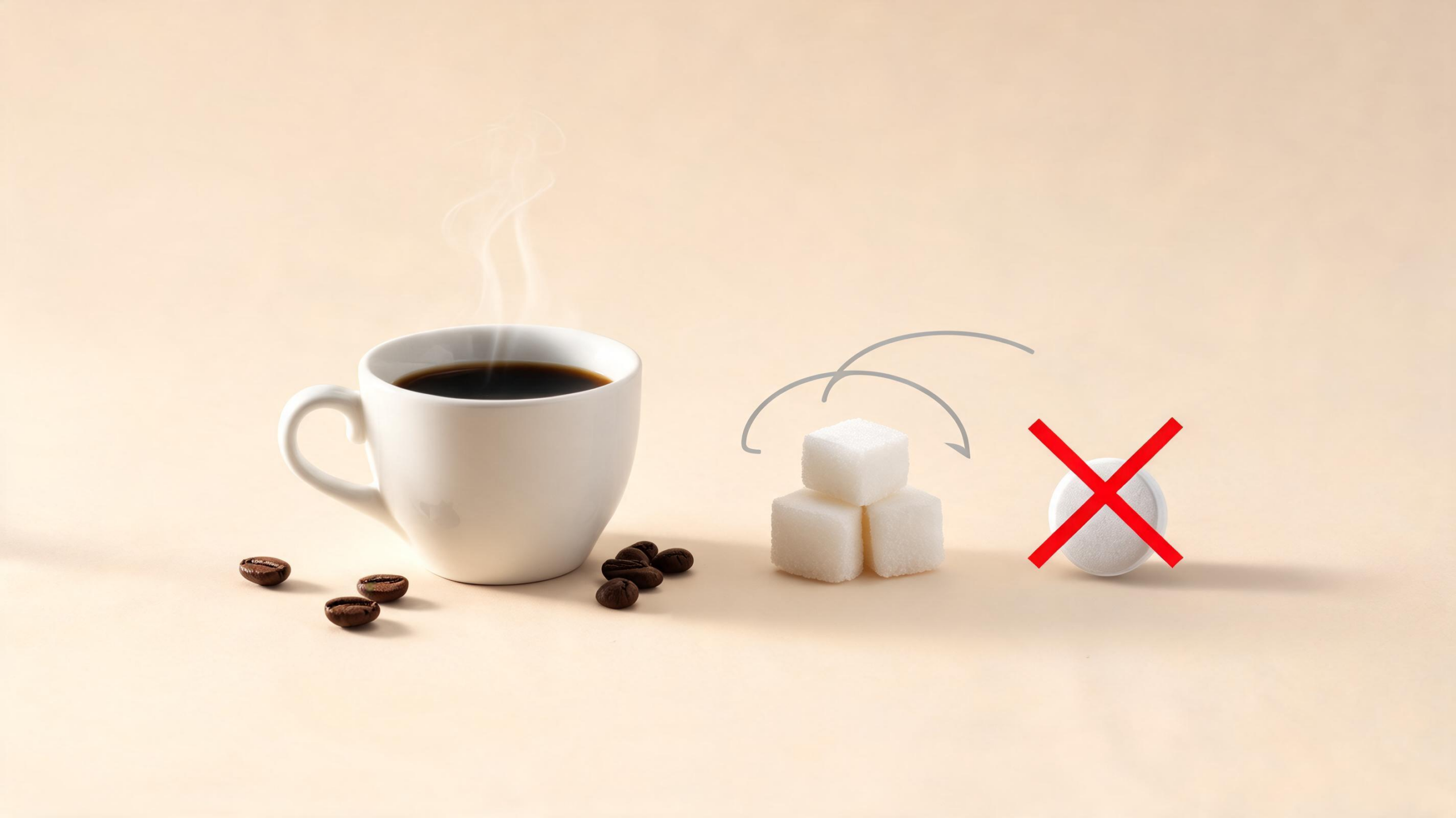
A cup of unfiltered coffee carries far more than caffeine. Suspended within its oils are diterpenes such as cafestol and kahweol, rigid plant-derived molecules that have long been studied for their effects on cholesterol metabolism and liver health. A new review published in Discover Chemistry argues that these lipidic constituents, together with their fatty acid esters and oxidized derivatives known as caffaldehydes, may represent an entirely different kind of weapon against one of the most consequential biochemical events in modern metabolism: the postprandial glucose spike. According to authors Preeti Korram and Trilochan Satapathy of the Columbia Institute of Pharmacy in Raipur, India, coffee diterpene esters could modulate the intestinal enzyme alpha-glucosidase through mechanisms fundamentally unlike those of the standard drug acarbose, potentially flattening blood sugar curves while sparing patients the bloating, flatulence and diarrhea that drive many people to abandon conventional therapy.
Alpha-glucosidase is a membrane-anchored glycoprotein of the intestinal brush border, a member of glycoside hydrolase family 31, and it performs the final cut of carbohydrate digestion by hydrolyzing alpha-1,4-glycosidic bonds to release absorbable glucose. Its catalytic domain faces the intestinal lumen and is built around a conserved (beta/alpha)8-barrel containing an acidic dyad of residues, aspartate 518 and glutamate 521 in the human N-terminal maltase-glucoamylase structure, supported by aromatic residues including tryptophan 406, phenylalanine 450, tyrosine 299 and histidine 674 that orient substrates through hydrogen bonding and pi-pi stacking. This pocket is exquisitely shaped for planar, hydrophilic sugar fragments, which is precisely why pseudo-oligosaccharide inhibitors such as acarbose are so potent. But the review emphasizes that this substrate-mimetic strategy is intrinsically constrained: it demands high luminal concentrations to compete with a meal’s worth of carbohydrate, leaving undigested polysaccharides to ferment in the colon, a direct route to the gastrointestinal distress that limits patient compliance.
The central hypothesis of the review is that the chemistry of coffee diterpenes invites a different game entirely. Cafestol and kahweol are kaurane-type diterpenoid alcohols, each built from a rigid tetracyclic hydrocarbon framework that confers pronounced hydrophobicity and conformational stability. In green and roasted beans these molecules occur predominantly not as free alcohols but as fatty acid esters, acylated mainly at the C3 hydroxyl with a chemically diverse array of chains: palmitic (C16:0), stearic (C18:0), arachidic (C20:0), margaric (C17:0), nonadecanoic (C19:0) and octadecenoic (C18:1) acids. Esterification masks the polar hydroxyl groups, boosts lipophilicity and turns the molecules into amphiphiles capable of partitioning deeply into the brush-border membrane where alpha-glucosidase resides. The bulky diterpene cores, the authors note, are sterically disfavored from entering the narrow catalytic pocket at all, so any inhibitory effect must arise from elsewhere on the enzyme.
That elsewhere, the review contends, lies in the enzyme’s neglected geography: surface-exposed hydrophobic hotspots, flexible substrate-recognition loops and the membrane-proximal interface. Regions near the transmembrane anchor are enriched in leucine, isoleucine, valine, phenylalanine and methionine, forming shallow grooves rather than deep cavities, well suited to lipid-like ligands. By embedding their fatty acyl chains in the phospholipid bilayer while the rigid diterpene scaffold engages exposed protein surfaces, diterpene esters could stabilize less active enzyme conformations, restrict the molecular gating motions of substrate-recognition loops and dampen catalytic turnover without ever touching the Asp518-Glu521 dyad. Molecular docking and molecular dynamics studies cited in the review support this picture: whole-surface docking identifies low-energy binding sites enriched in hydrophobic residues, spatially separated from the catalytic dyad, with binding dominated by van der Waals contacts, consistent with non-competitive or mixed-type inhibition. In such a regime, carbohydrate digestion is slowed rather than abolished, preserving partial digestive function and, in principle, avoiding the colonic carbohydrate dumping that plagues acarbose users.
The fatty acid component is presented not as a passive tail but as the tuning knob of the whole system. Chain length dictates how deeply the ester inserts into the bilayer and how long it lingers near the enzyme: short chains anchor weakly and diffuse away, medium chains of sixteen to eighteen carbons balance anchoring with rotational freedom, and very long chains embed so deeply that they may restrict the diterpene core’s access to protein surfaces, suggesting an optimal intermediate length. Saturation matters as well. Saturated chains pack tightly and promote stable, ordered membrane association, while the cis double bond of monounsaturated C18:1 introduces a kink that increases conformational adaptability, letting the diterpene scaffold fit into hydrophobic grooves and accommodate the enzyme’s dynamic conformations, a profile the authors associate with mixed-type inhibition. Odd-chain fatty acids such as margaric and nonadecanoic acid, rare in most diets but present in coffee esters, introduce subtle steric asymmetry that can perturb uniform lipid packing and bias binding orientation, expanding the structure-activity repertoire available to these molecules.
The review adds a further chemical wrinkle in the form of caffaldehydes, oxidized derivatives of cafestol and kahweol generated during roasting and prolonged oxygen exposure. Radical-mediated oxidation converts allylic hydroxyl or furan functionalities into aldehyde groups, and kahweol, with its additional conjugated double bond, is particularly susceptible to this transformation. The resulting molecules retain the hydrophobic tetracyclic backbone but carry an electrophilic carbonyl capable of forming reversible Schiff bases with surface-exposed lysine residues, and potentially thiohemiacetal or related adducts with cysteine and histidine side chains. Because these covalent links are reversible under physiological conditions, caffaldehydes are proposed to occupy an intermediate position on a mechanistic continuum: stronger and more persistent than purely non-covalent diterpene esters, yet far milder and more self-limiting than engineered electrophilic drugs, allowing enzyme function to recover rather than shutting catalysis down outright.
Pharmacokinetically, the review sketches a two-phase behavior that matches this mechanistic story. Intact diterpene esters, being highly lipophilic, remain largely localized to the intestinal lumen and brush-border membrane, where they can act directly on membrane-anchored alpha-glucosidase. Over time, intestinal esterases progressively hydrolyze the esters, releasing free cafestol and kahweol that are then absorbed systemically and extensively metabolized in the liver. This sequential release supports sustained, low-intensity enzyme modulation at the gut level while limiting systemic exposure of the intact esters. The authors frame this profile as well suited to nutraceutical and functional-food applications rather than conventional pharmacotherapy, and they connect it to epidemiological findings that coffee consumption is consistently associated with better glycemic control and reduced risk of type 2 diabetes, benefits that have historically been attributed to polyphenols while the lipid fraction went largely unexamined.
Enthusiasm is, however, tempered by explicit caution. The authors stress that the proposed mechanisms of membrane anchoring, allosteric engagement and loop regulation remain hypothesis-driven, resting primarily on molecular docking, dynamics simulations, structure-activity reasoning and indirect biochemical observations rather than direct structural confirmation. They call for high-resolution cryo-electron microscopy or crystallographic structures of human intestinal alpha-glucosidase, quantitative enzyme kinetics, site-directed mutagenesis and biophysical binding measurements to validate the model. Reported potencies across existing studies vary widely because enzyme sources, assay conditions and computational protocols differ, making direct comparison difficult. Standardized, systematic quantitative structure-activity investigations incorporating inhibitory constants, binding affinities and biophysical validation are identified as essential before definitive design principles can be established.
Safety presents a parallel challenge. Cafestol, liberated from its esters by hydrolysis, is the well-known cholesterol-raising compound of unfiltered coffee, elevating low-density lipoprotein levels through effects on hepatic cholesterol metabolism, a property linked to boiled, Turkish and French-press preparations but largely removed by paper filtration. The review therefore argues that any therapeutic development must balance the local glycemic benefits of diterpene esters against the cardiovascular risk of their hydrolysis products, through optimized formulation, controlled dosage, attention to brewing and processing methods and comprehensive clinical evaluation. If that balance can be struck, the authors conclude, coffee-derived diterpene esters, fatty acid conjugates and caffaldehydes would not replace pharmacological alpha-glucosidase inhibitors but would establish a lipid-centric, membrane-associated paradigm of enzyme modulation, one in which enzyme activity is tuned rather than blocked, digestion is preserved rather than disrupted, and a familiar beverage’s overlooked lipid chemistry is recognized as a sophisticated platform for metabolic health.
The distinction between competitive and non-competitive inhibition has practical consequences for how a meal is handled metabolically. Because acarbose blocks the catalytic site outright, carbohydrate that escapes digestion passes into the colon, where microbial fermentation produces gas and osmotic diarrhea. A modulator that merely slows turnover, by contrast, would leave the enzyme partially functional, spreading glucose release over a longer window rather than creating an all-or-nothing bottleneck. The review frames this as a more physiologically aligned strategy, one that works with the brush border’s lipid-rich environment instead of ignoring it.
It is worth noting that the lipid fraction of coffee has been studied for decades, but almost entirely through the lens of cafestol’s cholesterol-raising activity, which led paper-filtered brewing to become the norm in many countries. Reorienting attention toward these same molecules as potential glycemic modulators represents a conceptual reversal: compounds once treated as a liability of unfiltered brewing are now being evaluated as bioactives whose esterified forms may act locally in the gut before hydrolysis ever occurs. Whether that local action can be retained while minimizing systemic release of free cafestol remains the central formulation question, and the authors acknowledge that no current evidence establishes an effective and safe dose in humans.
Subject of Research: Coffee-derived diterpene esters, fatty acids and caffaldehydes as potential modulators of intestinal alpha-glucosidase activity for postprandial glycemic control.
Article Title: Coffee derived diterpene esters fatty acids and caffaldehydes as potential modulators of intestinal alpha glucosidase activity
Article References: Korram, P., & Satapathy, T. (2026). Coffee derived diterpene esters fatty acids and caffaldehydes as potential modulators of intestinal alpha glucosidase activity. Discover Chemistry, 3(1), Article 506. https://doi.org/10.1007/s44371-026-00959-0
Image Credits: AI Generated
DOI: 10.1007/s44371-026-00959-0
Keywords: coffee diterpenes, cafestol, kahweol, caffaldehydes, alpha-glucosidase inhibition, postprandial glycemia, type 2 diabetes, fatty acid esters, non-competitive inhibition, functional foods, intestinal brush border, acarbose
Cite Scienmag News
Bethany Barker. (September 11, 2026). Coffee Diterpenes May Slow Sugar Digestion Without Acarbose-Like Side Effects. Scienmag. https://scienmag.com/coffee-diterpenes-may-slow-sugar-digestion-without-acarbose-like-side-effects/
Bethany Barker. "Coffee Diterpenes May Slow Sugar Digestion Without Acarbose-Like Side Effects." Scienmag, 11 September 2026, https://scienmag.com/coffee-diterpenes-may-slow-sugar-digestion-without-acarbose-like-side-effects/. Accessed 4 October 2026.
Bethany Barker. "Coffee Diterpenes May Slow Sugar Digestion Without Acarbose-Like Side Effects." Scienmag. September 11, 2026. https://scienmag.com/coffee-diterpenes-may-slow-sugar-digestion-without-acarbose-like-side-effects/


