


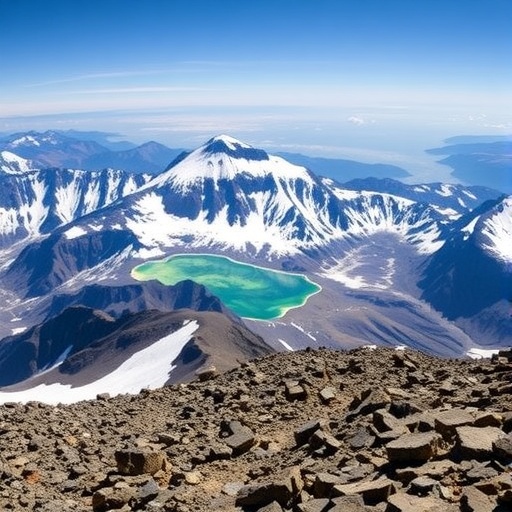
Researchers from Lanzhou University have uncovered a vast bacterial network linking the atmosphere, glaciers, rivers, lakes, and soils of the Tibetan Plateau. Their analysis, based on 16S rRNA gene sequences from 3,373 environmental samples, suggests that the plateau’s microbial life does not exist as a collection of isolated communities. Instead, its bacteria form a contemporary, climate-sensitive metacommunity spread across multiple Earth spheres and connected by air, water, ice, and soil.
The findings offer a new microbial perspective on one of the planet’s most environmentally significant regions. Known as the “Asian Water Tower,” the Tibetan Plateau stores enormous quantities of freshwater in glaciers, snowfields, lakes, and permafrost and supplies water to billions of people downstream. Its high-altitude ecosystems are already being transformed by warming temperatures, glacier retreat, changing precipitation, and shifting patterns of atmospheric deposition. Because microorganisms respond rapidly to environmental change, the researchers argue that bacterial communities could provide an early warning system for ecological disruption across the plateau.
To investigate the region’s microbial structure, the team compared bacterial communities from five broad ecosystem types and nine distinct habitats. The samples represented environments that are physically separated but connected by natural transport processes, including atmospheric aerosols, glaciers, rivers, lakes, and terrestrial soils. The researchers analyzed nearly 800,000 bacterial operational taxonomic units, or OTUs. In microbial ecology, an OTU is a sequence-based grouping used to approximate a bacterial taxon when organisms cannot be identified or classified completely through conventional methods. Together, the sequence data provided an unusually broad picture of bacterial distribution across the plateau.
The scale of microbial sharing was striking. Approximately 94.2 percent of the bacterial OTUs detected in the study occurred in at least two ecosystem types, demonstrating that many microorganisms cross environmental boundaries. A further 46,305 OTUs were found in all five major ecosystem categories. Such widespread distribution is unlikely to reflect a series of entirely independent microbial communities. Instead, it points to a single, interconnected metacommunity in which bacteria are repeatedly dispersed, filtered, and reassembled as they move through the plateau’s linked habitats.
Atmospheric aerosols appear to play a particularly important role in this process. Winds can lift microbial cells and fragments of biological material from soils, vegetation, water surfaces, and other environments, allowing them to travel over long distances before being deposited by dry settling or precipitation. The researchers’ results indicate that airborne particles are a major source of microorganisms reaching glaciers. This finding expands the role of the atmosphere in high-altitude ecology: it is not merely transporting dust and chemical pollutants, but also delivering living microbial passengers to some of the most remote ecosystems on Earth.
The study further identifies glaciers as ecological transfer hubs. Once microorganisms arrive on glacier surfaces, meltwater and ice movement can help redistribute them into downstream rivers and lakes. Some bacteria associated with both atmospheric aerosols and glacier environments were also detected in aquatic systems and soils. This pattern suggests that glaciers may function as biological way stations between the atmosphere and downstream landscapes, collecting microorganisms from the air and releasing them as ice melts. As glacier retreat accelerates, the timing, volume, and composition of this microbial export could change, potentially altering the biological character of downstream ecosystems.
Precipitation emerged as the strongest climatic factor shaping bacterial community composition, but its influence was not uniform. In most habitats, increased rainfall made microbial communities more similar to one another. This may occur because precipitation enhances the movement of cells and nutrients between nearby environments, reduces some local environmental differences, or increases the frequency with which communities are reseeded from shared sources. Rain and snowfall can therefore strengthen microbial connectivity by acting as a transport mechanism that repeatedly mixes bacteria across the landscape.
Glaciers showed the opposite response. On glacier surfaces, greater precipitation was associated with more distinct bacterial communities from one glacier to another. The researchers suggest that precipitation may intensify local environmental filtering in these frozen habitats rather than simply homogenizing them. Differences in snowfall, surface chemistry, nutrient availability, melt patterns, elevation, and exposure could create highly specific conditions for microbial growth. In this context, precipitation may act less like a connector and more like a force that sharpens the ecological identity of individual glaciers.
The results provide a framework for understanding how climate change could reorganize microbial life across the Tibetan Plateau. Warming may alter atmospheric circulation, precipitation regimes, glacier mass balance, meltwater production, and the timing of microbial transport. A shift in any one of these processes could influence the entire network because the ecosystems are connected through repeated exchanges of organisms. The loss of glacier ice, for example, could reduce some habitats while increasing short-term microbial export into rivers and lakes. Changes in rainfall could also produce contrasting outcomes, increasing similarity in some environments while making glacier communities more distinctive.
The researchers describe the plateau as a vast microbial network in which the atmosphere delivers biological material, glaciers serve as transfer stations, and rivers and lakes carry microorganisms onward. Their findings suggest that microbial monitoring should become part of broader ecological security assessments for the region. Tracking bacterial communities through long-term sampling could help scientists detect changes in ecosystem connectivity, glacier function, water quality, and climate response before larger biological effects become visible. At a time when the Tibetan Plateau is undergoing rapid environmental change, its microscopic inhabitants may reveal how quickly the region’s interconnected Earth systems are being reshaped.
Web References: https://doi.org/10.1093/nsr/nwag463
References: National Science Review, DOI: 10.1093/nsr/nwag463
Cite Scienmag News
Morgan Morrow. (August 17, 2026). Climate Links Hidden Microbial Networks Across the World’s Highest Plateau. Scienmag. https://scienmag.com/climate-links-hidden-microbial-networks-across-the-worlds-highest-plateau/
Morgan Morrow. "Climate Links Hidden Microbial Networks Across the World’s Highest Plateau." Scienmag, 17 August 2026, https://scienmag.com/climate-links-hidden-microbial-networks-across-the-worlds-highest-plateau/. Accessed 4 September 2026.
Morgan Morrow. "Climate Links Hidden Microbial Networks Across the World’s Highest Plateau." Scienmag. August 17, 2026. https://scienmag.com/climate-links-hidden-microbial-networks-across-the-worlds-highest-plateau/


