


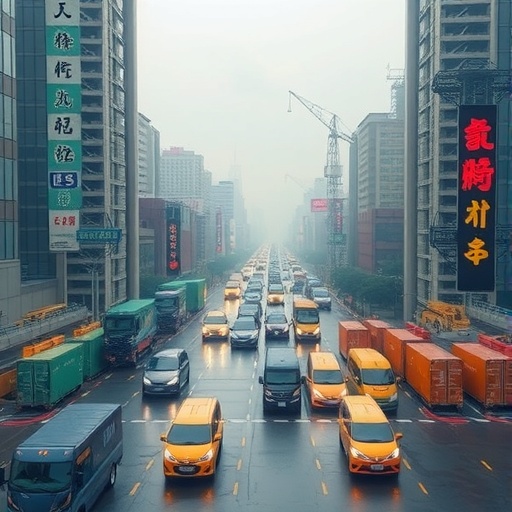
In a groundbreaking study set to reshape our understanding of urban sustainability in the age of rapid digitalization, researchers have revealed that China’s efforts in supply chain digitalization are yielding remarkable benefits in terms of environmental conservation. The study, conducted by Feng and colleagues, investigates the intricate relationship between digital logistics and urban pollution levels, particularly with respect to carbon dioxide emissions that contribute significantly to climate change. This complex intertwining of technology and ecological responsibility signifies a transformative approach to managing urban environments.
As urban centers continue to burgeon, the challenges surrounding pollution have escalated to critical levels. Cities are often marked by a concentration of industrial activities, enhanced vehicle emissions, and a high demand for energy consumption. These factors collectively contribute to the deterioration of air quality and the rise of greenhouse gas emissions. In such a context, the adoption of cutting-edge technologies in supply chain management demonstrates potential not just for improved efficiencies but also for fostering a greener future.
The core of this research unveils that the digitalization of supply chains in urban China correlates with a significant reduction in locally emitted pollutants. By leveraging advanced technologies such as artificial intelligence, big data analytics, and the Internet of Things (IoT), cities are now able to optimize their logistics networks. Improved route planning, inventory management, and demand forecasting allow for a decrease in redundant transport activities, which in turn lowers emissions. This study elucidates how these technological applications are not merely conveniences but are vital components in the quest for cleaner urban living.
The innovative use of data analytics plays a pivotal role in streamlining supply chains. In practice, this means that fleets can be managed more efficiently, reducing fuel consumption while simultaneously improving delivery times. The study highlights specific case scenarios within several Chinese metropolitan areas, showcasing how companies that adopted digital solutions witnessed a marked departure from conventional practices that were historically reliant on inefficient, pollution-heavy logistics. The findings demonstrate that integrating technology within supply chains can foster a robust approach to mitigating the urban pollution crisis.
A close examination reveals that reduced carbon emissions are not merely a byproduct but a direct outcome of the digital interventions implemented in these supply chains. As manufacturers and distributors embrace these digital tools, they not only optimize their operational performances but also take tangible steps toward achieving compliance with stricter environmental regulations. The ramifications of these changes extend well beyond immediate business benefits, potentially setting a precedent for other cities grappling with similar pollution challenges around the world.
Furthermore, the research points to an interesting paradox: as supply chains become more digital and data-driven, the energy requirements for operations can initially increase due to the technology itself. However, the study argues that the long-term advantages outweigh these initial costs, leading to net reductions in emissions. This insight reinforces the position that strategic, informed investments in digital capabilities lead to sustainable solutions over time. Thus, while the pathway to digitalization may be fraught with challenges, it ultimately leads cities toward a cleaner, more sustainable future.
The researchers also emphasize the importance of collaboration across different sectors. Successful digitalization in supply chains is not possible in isolation; it necessitates robust partnerships among industries, government bodies, and technology providers. To amplify the positive impacts witnessed in urban environments, stakeholders must engage in continuous dialogue to share best practices, foster innovation, and push for unified standards. Such collaboration is critical in catalyzing broader changes that can ripple through the urban landscape, amplifying the effects of individual efforts.
Moreover, the study underscores the urgency of implementing these solutions in light of the escalating climate crisis. Urban pollution is not just a local issue; it contributes significantly to global warming and its pervasive consequences. As researchers like Feng et al. suggest, the digital transformation of supply chains could emerge as a pivotal strategy in the fight against climate change. By curbing emissions at their source, cities can play an instrumental role in global efforts to limit temperature rises and safeguard future generations.
Public awareness and education also emerge as critical components of this transition. As supply chains become more digital, there is a pressing need to inform citizens about the benefits of these changes. Understanding the connection between digital logistics and improved air quality can galvanize community support for policies that encourage green technology adoption. This grassroots awareness is essential, as local governance looks to implement more rigorous environmental policies and standards that align with digital advancements.
In conclusion, the research conducted by Feng and colleagues offers a robust foundation for understanding how China’s supply chain digitalization can serve as a blueprint for other urban centers grappling with pollution and emissions challenges. By harnessing technology, cities can substantially reduce their carbon footprints while promoting enhanced operational efficiencies. The implications of these findings encourage a reevaluation of how urban environments approach sustainability in an ever-evolving technological landscape. This paradigm shift could ultimately redefine the relationship between industry, urbanity, and ecology, paving the way for a healthier planet.
The insights gained from this study have the potential to influence policymakers, industry leaders, and scholars alike as they navigate the complexities of environmental responsibility in urban settings. As cities continue to expand and evolve, the integration of advanced supply chain digitalization presents an unprecedented opportunity to address some of the most pressing environmental challenges of our time. With the right strategies in place, urban areas can not only survive but thrive in a sustainable manner, setting a remarkable example for the rest of the world.
Moreover, the evidence strongly suggests that investment in digital technologies should be viewed not merely as an operational improvement but as a fundamental change toward environmental stewardship. The long-term sustainability of cities will hinge on their ability to adapt and embrace these technological advancements while remaining committed to reducing their environmental impact. Ultimately, this study signifies not just a moment of discovery but a clarion call for action, urging the global community to unify in the quest for cleaner, smarter urban landscapes.
Feng, L., Hu, J., Huang, M. et al. China’s supply chain digitalization reduces urban pollutants and carbon dioxide emissions locally.
Commun Earth Environ (2025). https://doi.org/10.1038/s43247-025-03139-7
Cite Scienmag News
Violet Maxwell. (December 31, 2025). China’s Digital Supply Chains Cut Urban Pollution and Emissions. Scienmag. https://scienmag.com/chinas-digital-supply-chains-cut-urban-pollution-and-emissions/
Violet Maxwell. "China’s Digital Supply Chains Cut Urban Pollution and Emissions." Scienmag, 31 December 2025, https://scienmag.com/chinas-digital-supply-chains-cut-urban-pollution-and-emissions/. Accessed 3 September 2026.
Violet Maxwell. "China’s Digital Supply Chains Cut Urban Pollution and Emissions." Scienmag. December 31, 2025. https://scienmag.com/chinas-digital-supply-chains-cut-urban-pollution-and-emissions/


