


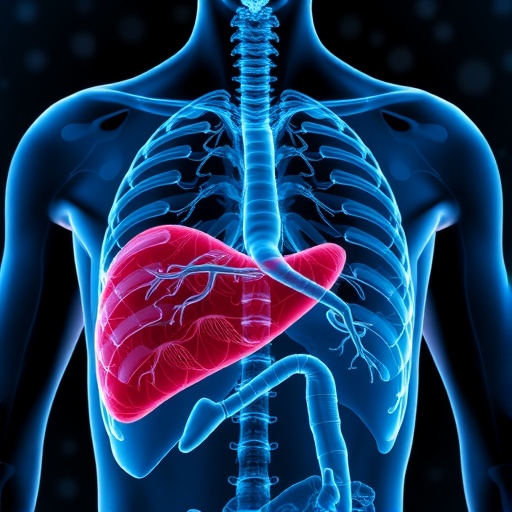
A study published in Nature Communications has identified a pathogenic immune pathway that links chronic Clonorchis sinensis infection to liver fibrosis, while also pointing toward blood-based biomarkers that could help monitor disease progression. The research by Du, Li, Wang and colleagues focuses on the interaction between tissue-resident memory CD8⁺ T cells and chemokines—signaling proteins that direct immune-cell movement through tissues. The findings place this cellular communication network at the center of the long-term liver damage associated with clonorchiasis, a parasitic disease affecting millions of people in regions where raw or undercooked freshwater fish is consumed.
Clonorchis sinensis, commonly known as the Chinese liver fluke, establishes infection in the bile ducts after its larval stages are ingested. Adult parasites can persist for years, repeatedly irritating the epithelial lining and provoking chronic inflammation. Although the infection may initially produce few or nonspecific symptoms, sustained injury can lead to bile-duct abnormalities, periductal fibrosis and impaired liver function. Chronic infection is also a recognized risk factor for cholangiocarcinoma, a cancer arising from the bile-duct epithelium. Understanding how immune responses shift from parasite control to tissue destruction is therefore important for both infectious-disease treatment and cancer prevention.
The new work highlights CD8⁺ tissue-resident memory T cells, or CD8⁺ T_RM cells, as a potentially decisive population in this process. Unlike circulating T cells, tissue-resident memory cells remain positioned within organs after an immune response and can react rapidly when they encounter danger signals. Their ability to provide local immune surveillance is normally protective. However, when stimulation persists, as it can during a chronic parasitic infection, these cells may sustain inflammatory programs that damage surrounding tissue. In the liver, their activity could intensify communication between infected or injured bile-duct regions and other immune and stromal cells involved in scar formation.
The researchers describe this process as a CD8⁺ T_RM–chemokine axis. Chemokines are small secreted molecules that act as molecular traffic signals, guiding immune cells toward sites of infection or injury. A persistent chemokine signal can create a self-reinforcing inflammatory niche: resident T cells release or induce mediators that attract additional immune populations, while incoming cells amplify local tissue stress. Such signaling can activate hepatic stellate cells and other fibrogenic pathways. Once activated, stellate cells produce excessive extracellular matrix proteins, including collagen, gradually replacing flexible liver architecture with scar tissue. Fibrosis is therefore not simply a passive consequence of infection; it is an organized biological response that can become pathological when inflammation does not resolve.
The significance of the study lies in connecting a defined immune-cell state with the structural remodeling of the infected liver. Rather than viewing fibrosis only as a generalized response to parasite damage, the findings suggest that particular T-cell populations and their chemokine signals may help determine whether inflammation remains controlled or progresses toward scarring. This distinction matters because immune cells are potentially more accessible therapeutic targets than established fibrosis itself. Interrupting the relevant signaling pathway could, in principle, reduce the recruitment or activation of damaging cells without eliminating all immune protection against the parasite.
The study also addresses a major clinical challenge: liver fibrosis can advance silently, and conventional assessment may depend on imaging, invasive sampling or indirect measures of organ injury. The reported circulating biomarkers could offer a less invasive way to identify patients undergoing active fibrotic change. Biomarkers linked to the CD8⁺ T_RM–chemokine pathway might help distinguish persistent inflammatory activity from residual damage, monitor responses to antiparasitic treatment and identify individuals who remain at elevated risk after infection. The researchers’ report does not merely frame these molecules as diagnostic signals; it positions them as measurable reflections of the immune mechanisms operating inside the liver.
For translational medicine, the findings raise the possibility of combining parasite clearance with immune and antifibrotic monitoring. Antiparasitic therapy remains essential, but eliminating the organism may not immediately reverse the cellular programs established during prolonged infection. Patients could continue to experience inflammation or fibrosis even after parasite burden falls. A blood test reflecting pathogenic T_RM activity or chemokine signaling might allow clinicians to follow that post-treatment risk more closely. Before such an approach enters routine care, however, candidate biomarkers will need validation in larger and more diverse patient groups, including people with different infection durations, disease severities and coexisting liver conditions.
The work also expands the broader understanding of tissue-resident immunity in chronic disease. T_RM cells are widely studied in viral infections, cancer and autoimmune disorders because they can respond quickly and remain embedded in organs for long periods. The findings in clonorchiasis suggest that the same long-lived surveillance system can become harmful when an infectious stimulus persists in a confined anatomical environment such as the bile duct. By revealing how resident T cells and chemokines may orchestrate fibrosis, the study offers a framework for investigating similar immune circuits in other chronic infections. It also underscores the importance of early diagnosis and prevention in endemic regions, where reducing repeated exposure to contaminated food remains a central public-health strategy.
The report ultimately presents liver fibrosis as the outcome of a dynamic conversation between parasite persistence, resident immune memory and chemokine-driven cell recruitment. Its proposed biomarkers could provide a window into that conversation through a simple blood sample, while the identified axis may offer new targets for therapies designed to protect the liver without broadly suppressing immunity. As researchers work to confirm the pathway in clinical cohorts and determine which signals most accurately predict disease progression, the study adds a significant immunological dimension to the medical understanding of chronic Clonorchis sinensis infection.
Cite Scienmag News
Kristina Jarvis. (July 31, 2026). CD8⁺ TRM–chemokine axis drives liver fibrosis, reveals biomarkers in chronic Clonorchis infection. Scienmag. https://scienmag.com/cd8%e2%81%ba-trm-chemokine-axis-drives-liver-fibrosis-reveals-biomarkers-in-chronic-clonorchis-infection/
Kristina Jarvis. "CD8⁺ TRM–chemokine axis drives liver fibrosis, reveals biomarkers in chronic Clonorchis infection." Scienmag, 31 July 2026, https://scienmag.com/cd8%e2%81%ba-trm-chemokine-axis-drives-liver-fibrosis-reveals-biomarkers-in-chronic-clonorchis-infection/. Accessed 4 September 2026.
Kristina Jarvis. "CD8⁺ TRM–chemokine axis drives liver fibrosis, reveals biomarkers in chronic Clonorchis infection." Scienmag. July 31, 2026. https://scienmag.com/cd8%e2%81%ba-trm-chemokine-axis-drives-liver-fibrosis-reveals-biomarkers-in-chronic-clonorchis-infection/


