


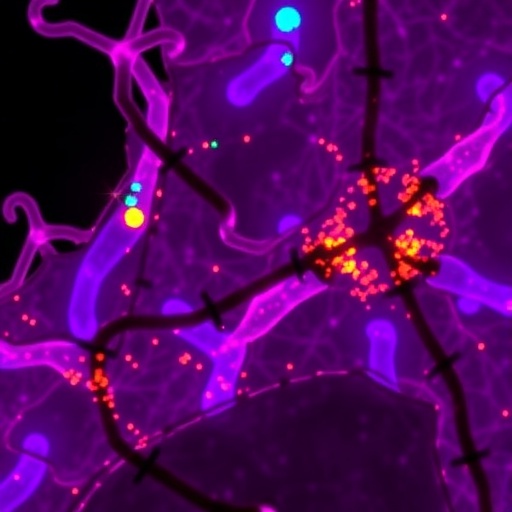
In a groundbreaking study set to redefine our understanding of renal fibrosis, researchers have identified a novel mechanosensory role for the protein CD248 in fibroblast subpopulations, unraveling how distinct pathological niches are established within the fibrotic kidney microenvironment. This discovery not only sheds light on the complex cellular mechanisms driving fibrosis but also opens promising therapeutic avenues for chronic kidney disease (CKD), a condition affecting millions worldwide and characterized by progressive scarring that disrupts kidney function.
Renal fibrosis is the hallmark of CKD progression, where excessive extracellular matrix (ECM) deposition leads to tissue stiffening, loss of organ architecture, and ultimately failure. Fibroblasts, the primary ECM producers, have long been recognized as central players in fibrosis. However, the heterogeneity among fibroblast populations and how they respond to physical cues within the microenvironment has remained elusive. The present study addresses this critical gap by revealing CD248 as a molecular switch that senses mechanical changes and directs fibroblast behavior towards distinct pathological roles.
CD248, also known as endosialin or tumor endothelial marker 1 (TEM1), is a transmembrane glycoprotein previously implicated in tumor angiogenesis and stromal remodeling. Its expression in fibrotic tissues and involvement in mechanotransduction signaling pathways suggested it might serve as a conduit for converting mechanical stimuli into cellular responses. The investigation led by Xu, Liu, Zhou, and colleagues employed advanced single-cell RNA sequencing, biomechanical assays, and in vivo models to dissect the functional diversity of fibroblast subsets expressing CD248 in fibrotic kidneys.
The researchers discovered that CD248 expression delineates a subset of fibroblasts uniquely equipped to sense mechanical stiffness changes characteristic of fibrotic progression. Under increasing tissue rigidity, CD248-positive fibroblasts activate intracellular pathways, notably involving focal adhesion kinase (FAK) and Rho-associated protein kinase (ROCK), promoting cytoskeletal reorganization and ECM production. This mechanosensory capability enables these fibroblasts to adapt to, and reinforce, the stiffened microenvironment, creating a feed-forward loop exacerbating fibrosis.
Intriguingly, the study revealed spatial partitioning of fibroblast subsets within the fibrotic kidney. CD248-positive fibroblasts preferentially localize in regions experiencing higher mechanical stress, such as areas adjacent to injured tubules and vasculature, establishing pathological niches with distinct molecular signatures. These niches display unique ECM composition, inflammatory profiles, and reparative versus maladaptive signaling dynamics, underscoring the complexity of fibrotic tissue architecture.
Beyond identification, the functional interrogation of CD248 demonstrated that genetic or pharmacological inhibition of this protein significantly attenuates fibroblast activation and ECM deposition in experimental fibrosis models. Such findings highlight CD248 as not merely a passive marker but an active driver of fibrosis, positioning it as a compelling target for drug development. By disrupting the mechanotransduction axis mediated by CD248, it might be feasible to halt or even reverse fibrotic remodeling in CKD.
The team employed single-cell transcriptomics to map fibroblast heterogeneity in unprecedented detail, revealing that CD248-high fibroblasts co-express profibrotic genes including alpha-smooth muscle actin (α-SMA), collagen types I and III, and lysyl oxidase (LOX), an enzyme crucial for collagen cross-linking and matrix stiffening. Furthermore, these fibroblasts exhibit elevated expression of mechanosensitive transcription factors such as Yes-associated protein (YAP) and TAZ, suggesting a coordinated molecular program driving pathological differentiation.
Mechanistically, CD248 appears to function as a sensor that transduces extrinsic mechanical cues from altered ECM stiffness into intracellular biochemical signals. The extracellular domain of CD248 interacts with ECM components, while its cytoplasmic tail engages with signaling mediators that regulate actin dynamics and gene expression. This coupling facilitates dynamic feedback between biomechanical stimuli and fibroblast phenotypic modulation, amplifying the fibrotic response.
The pathological niches orchestrated by CD248-expressing fibroblasts have distinct physiological consequences. In fibrotic kidneys, these regions demonstrate compromised oxygenation, heightened inflammatory cell infiltration, and altered epithelial cell behavior, collectively fostering a microenvironment conducive to fibrosis perpetuation and renal function decline. Such niche formation diverges from previously held notions that fibrosis is a uniform and homogeneous process.
Importantly, this study challenges the traditional view that fibrosis is predominantly driven by soluble factors like transforming growth factor-beta (TGF-β), by underscoring the significance of mechanical signaling in shaping fibroblast fate and tissue remodeling. The integration of mechanobiology with fibrotic pathophysiology offers a more comprehensive framework for understanding disease progression and introduces novel intervention strategies targeting biomechanical pathways.
Extending beyond kidney disease, the implications of CD248-mediated mechanosensation may apply to fibrosis in other organs such as the lung, liver, and heart, where similar pathological ECM remodeling occurs. The conserved role of CD248 in stromal cell subsets across tissues suggests a universal mechanosensory switch mechanism governing fibrotic niche establishment and progression.
Future research prospects include the development of selective CD248 inhibitors and mechanotransduction modulators capable of altering fibroblast behavior without systemic toxicity. Additionally, advanced imaging and biomechanical mapping technologies could enable real-time monitoring of fibroblast mechanosensitivity and niche dynamics in vivo, providing valuable insights into treatment responses and disease staging.
Moreover, there is emerging interest in exploring how mechanical forces intersect with immune signaling within these pathological niches. Since fibroblasts modulate immune cell recruitment and activation, understanding CD248’s role in immune-fibroblast crosstalk could unveil new dimensions of fibrosis biology and therapeutic targeting opportunities.
Clinically, this research holds promise for precision medicine approaches in CKD management. Biomarkers reflecting CD248 activity or fibroblast niche status could aid in patient stratification, early fibrosis detection, and tailoring antifibrotic therapies. Such advances would markedly improve prognostic accuracy and therapeutic outcomes for affected individuals.
In conclusion, the study by Xu and colleagues represents a paradigm-shifting advance in fibrosis research by defining CD248 as a critical mechanosensory switch driving fibroblast heterogeneity and pathological niche formation in renal fibrosis. This work exemplifies the power of integrating molecular biology, biomechanics, and systems-level analyses to uncover fundamental mechanisms driving chronic disease and opens exciting new horizons for combating fibrotic disorders that currently lack effective treatments.
Cite Scienmag News
Jerry Hayes. (May 6, 2026). CD248 Controls Fibroblast Mechanosensing in Kidney Fibrosis. Scienmag. https://scienmag.com/cd248-controls-fibroblast-mechanosensing-in-kidney-fibrosis/
Jerry Hayes. "CD248 Controls Fibroblast Mechanosensing in Kidney Fibrosis." Scienmag, 6 May 2026, https://scienmag.com/cd248-controls-fibroblast-mechanosensing-in-kidney-fibrosis/. Accessed 4 September 2026.
Jerry Hayes. "CD248 Controls Fibroblast Mechanosensing in Kidney Fibrosis." Scienmag. May 6, 2026. https://scienmag.com/cd248-controls-fibroblast-mechanosensing-in-kidney-fibrosis/


