


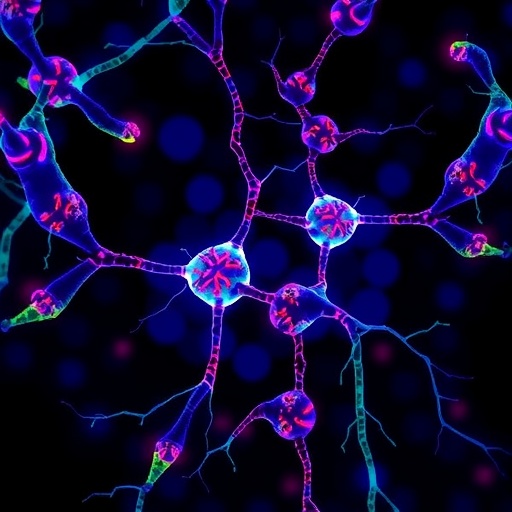
In a groundbreaking study published in Nature Metabolism, researchers have unveiled a novel dimension to the role of hypothalamic POMC neurons, revealing that glycogen metabolism within these neurons is pivotal for their sensory activation by food-related cues. This discovery elevates our understanding of how the brain integrates sensory perception of food with metabolic control, offering profound implications for the pathophysiology of metabolic disorders such as obesity and diabetes.
Pro-opiomelanocortin (POMC) neurons in the hypothalamus have long been recognized as key regulators of systemic energy balance and glucose homeostasis, responding to hormonal and nutrient signals to modulate feeding behavior and metabolic processes. Traditionally, their activation has been understood to occur primarily through internal nutritional state indicators. However, the new data significantly expand this paradigm by illustrating that POMC neurons are also directly engaged by the sensory perception of food independent of ingestion, bridging external sensory input with central metabolic regulation.
At the heart of this phenomenon is glycogen, a polymeric storage form of glucose traditionally associated with liver and muscle tissue energy reserves. This study reveals that glycogen metabolism within POMC neurons functions as an essential fuel source, facilitating the rapid neuronal activation required upon sensory detection of food-related stimuli. The authors embarked on an incisive genetic depletion approach, ablating glycogen synthesis pathways specifically in POMC neurons, thereby providing an elegant model to dissect the functional relevance of neuronal glycogen.
Remarkably, the glycogen-depleted POMC neurons exhibited a profound unresponsiveness to sensory food cues, which had cascading effects on both behavior and physiology. This loss of sensory-driven neuronal activation impaired consummatory behavior, disrupting the delicate balance of homeostatic feeding mechanisms. Detailed analyses showed altered hepatic metabolic responses and a blunted cephalic-phase insulin release, a critical early insulin secretion triggered by sensory inputs before nutrient absorption.
These impairments bore striking clinical resemblance to prediabetic states, marked by impaired glucose handling and insulin resistance. Moreover, when subjected to a high-calorie diet or the process of natural aging, the glycogen-deficient mice developed overt overweight and type 2 diabetes-like symptoms. This progression underscores the centrality of glycogen-driven neuronal activation in maintaining metabolic homeostasis over the lifespan and under nutritional challenges.
The discovery positions glycogen beyond a mere energy reserve, identifying it as a decisive metabolic substrate that meets the acute energetic demands of sensory-driven neuronal activation. The researchers posit that sensing the presence or anticipation of food requires rapid and energetically expensive neuronal firing patterns, which are sustained in part by glycogenolysis within POMC neurons. This mechanistic insight redefines glycogen’s biological role and emphasizes the metabolic sophistication of the hypothalamic circuits governing feeding.
The physiological relevance of cephalic-phase insulin secretion, often portrayed as an elusive phenomenon, is firmly contextualized here. The impaired sensory signaling in glycogen-depleted POMC neurons resulted in diminished insulin release ahead of nutrient influx, compromising glucose homeostasis immediately upon feeding. Such findings provide compelling evidence that neuronal glycogen metabolism is indispensable for the anticipatory endocrine responses essential to metabolic regulation.
This study further contributes to the emerging narrative that the sensory perception of food is not a passive event but an active metabolic signal that engages hypothalamic circuits to prepare the body for nutrient assimilation and energy management. The cross-talk between sensory inputs and internal metabolic state sensing orchestrated by POMC neurons forms a sophisticated neuro-metabolic interface integrating behavior and physiology.
From a translational perspective, the elucidation of neuronal glycogen’s role invites new therapeutic considerations. Targeting glycogen metabolism pathways in hypothalamic neurons may open avenues to enhance sensory-driven neuronal activation, potentially correcting dysfunctional feeding behaviors and early metabolic dysregulation. Such strategies could be invaluable in combating the escalating global burden of metabolic syndrome and type 2 diabetes.
Moreover, this research challenges the field to reconsider the metabolic heterogeneity of brain energy substrates. While glucose uptake and oxidation are well-documented, the temporal dynamics of glycogen as an immediate energy reserve for neuronal function deserve renewed attention. The POMC neuron model may be emblematic of broader neurobiological roles for glycogen in sensory processing and neuronal excitability.
In the context of aging and dietary excess, the study’s findings highlight vulnerability points within hypothalamic metabolic sensing circuits. The diminution of glycogen-dependent neuronal activation may contribute to the common metabolic derailments observed in elderly populations and those exposed chronically to nutrient surfeit. Addressing these deficits could be a key to enhancing metabolic resilience.
It is also notable how this research situates sensory activation within the framework of systemic metabolic adaptations. The behavioral shifts and hepatic metabolic changes observed following POMC neuronal glycogen depletion underscore the integrative nature of central and peripheral metabolic regulation. This synergy is paramount for maintaining energy balance under fluctuating environmental and internal conditions.
The methodological rigor, including the use of genetic models, precise metabolic phenotyping, and behavioral assays, lends robustness to the conclusions drawn. Future studies are warranted to elucidate the detailed molecular mechanisms linking glycogen metabolism to the electrophysiological properties of POMC neurons and to explore whether similar processes operate in other brain regions implicated in energy homeostasis.
Finally, the study enriches our appreciation of the sensory experience of food as a biological imperative transcending mere gustatory pleasure. Through glycogen-dependent activation of POMC neurons, sensory cues prime the body’s metabolic machinery, ensuring that the anticipation and perception of food are coupled with appropriate physiological preparations. This coupling could be a keystone evolutionary adaptation safeguarding organismal energy balance and survival.
Cite Scienmag News
Daisy Hatcher. (May 27, 2026). Glycogen Fuels Sensory Activation of POMC Neurons. Scienmag. https://scienmag.com/glycogen-fuels-sensory-activation-of-pomc-neurons/
Daisy Hatcher. "Glycogen Fuels Sensory Activation of POMC Neurons." Scienmag, 27 May 2026, https://scienmag.com/glycogen-fuels-sensory-activation-of-pomc-neurons/. Accessed 5 September 2026.
Daisy Hatcher. "Glycogen Fuels Sensory Activation of POMC Neurons." Scienmag. May 27, 2026. https://scienmag.com/glycogen-fuels-sensory-activation-of-pomc-neurons/


