


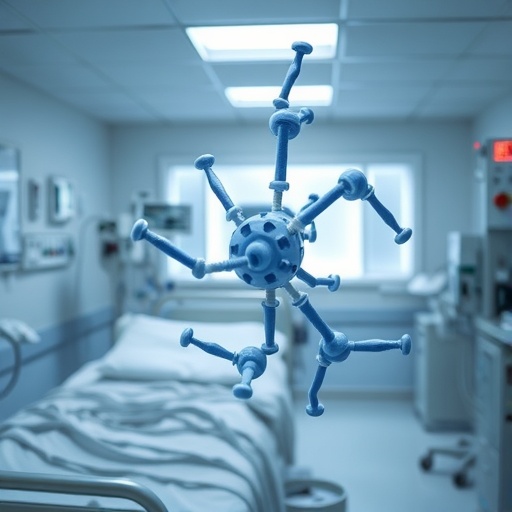
In a groundbreaking study that underscores the escalating global threat of antimicrobial resistance, researchers have reported a worrying surge in carbapenemase-producing carbapenem-resistant Enterobacterales (CRE) among patients in the surgical intensive care unit (SICU) of a tertiary hospital in India. This revelation, published recently in Nature Communications, throws a harsh spotlight on the challenges faced by healthcare systems worldwide in managing multidrug-resistant pathogens, especially in high-risk hospital settings. The findings not only highlight the dire consequences of unchecked antibiotic resistance but also emphasize the urgent need for innovative strategies to combat these formidable bacterial adversaries.
Carbapenem-resistant Enterobacterales (CRE) represent a class of bacteria that have evolved to withstand the effects of carbapenems, which are considered last-resort antibiotics for many severe infections. Among these, carbapenemase-producing variants are especially pernicious due to their ability to break down carbapenems enzymatically, rendering these crucial drugs ineffective. The study conducted by Hall, Benedict, Edathadathil, and colleagues meticulously documented the prevalence and characteristics of these organisms in a SICU environment, offering valuable insights into their epidemiology, molecular mechanisms, and clinical impact.
The SICU setting is a particularly vulnerable microenvironment, where patients often have compromised immunity, invasive devices, and prolonged hospital stays, factors which converge to create an ideal niche for resistant pathogens to flourish. By employing rigorous microbiological techniques, including culture isolation, antimicrobial susceptibility testing, and whole-genome sequencing, the researchers established a comprehensive portrait of the resistant strains circulating within this critical care unit. Their results indicate a disturbing prevalence rate, suggesting that the existing infection control measures may be insufficient to stem the tide of these multidrug-resistant organisms.
Delving deeper into the molecular attributes of the isolates, the team identified multiple variants of carbapenemase genes, including the notorious blaNDM, blaOXA-48-like, and blaKPC genes, which encode enzymes capable of hydrolyzing carbapenem antibiotics. The co-existence of these carbapenemase genes, often on mobile genetic elements such as plasmids, facilitates horizontal gene transfer between different bacterial species, thereby accelerating the spread of resistance within the hospital. This genetic plasticity poses significant challenges for treatment, as it can lead to the emergence of strains resistant to an ever-expanding array of antibiotics.
This research further sheds light on the alarming multidrug resistance profiles displayed by these CRE isolates, many of which are impervious not only to carbapenems but also to extended-spectrum cephalosporins, fluoroquinolones, and aminoglycosides. The therapeutic implications are profound, as clinicians are left with very limited options, often resorting to older, more toxic, or less effective agents. The study underscores the urgency of antimicrobial stewardship programs that prioritize the judicious use of antibiotics, alongside robust surveillance to detect and respond to resistance patterns rapidly.
Understanding the clinical trajectory of patients harboring these resistant strains, the authors noted increased morbidity and mortality rates, prolonged durations of mechanical ventilation, and lengthier hospital stays. These factors not only exacerbate patient outcomes but also contribute to an overwhelming burden on healthcare resources. Hospitals, particularly in low- and middle-income countries where resource constraints are common, face an uphill battle in providing optimal care without amplifying resistance through inappropriate antibiotic use.
The epidemiological dimension of this study presents a lucid portrait of nosocomial transmission dynamics. By mapping patient contact networks and environmental sampling, the investigators revealed potential reservoirs and transmission routes for carbapenemase-producing CRE within the SICU. Contaminated surfaces, shared medical equipment, and healthcare personnel may act as vectors, underscoring the pivotal role of rigorous infection control practices, including hand hygiene, environmental decontamination, and proper use of personal protective equipment.
From a microbiological perspective, the study’s application of whole-genome sequencing allowed for precise phylogenetic analyses, identifying clonal clusters indicative of outbreak scenarios. The ability to trace the evolution and spread of specific high-risk clones within the hospital provides a powerful tool for targeted intervention. Moreover, sequencing data have illuminated the mosaic nature of resistance determinants, revealing complex assemblies of resistance genes and virulence factors that enhance pathogenicity and survival.
This new understanding necessitates broader public health measures, including integrated surveillance systems that connect hospital networks and regional health authorities to track emerging threats proactively. The convergence of molecular epidemiology and clinical data can inform policy decisions and resource allocation, critical for mounting effective countermeasures against CRE propagation.
Notably, the emergence of carbapenemase-producing CRE in high-acuity units such as SICUs signals a possible paradigm shift in hospital-acquired infections, where previously manageable infections may now transform into intractable complications. This shift demands a reevaluation of infection prevention protocols and the development of rapid diagnostic platforms capable of detecting resistance enzymes at the bedside, enabling timely therapeutic adjustments.
The researchers also emphasize the potential role of novel therapeutics, including beta-lactamase inhibitors combined with existing antibiotics, phage therapy, and antimicrobial peptides, as part of a multifaceted approach to curb CRE-associated infections. The path ahead calls for robust clinical trials to assess the safety and efficacy of these innovative strategies within real-world settings.
Moreover, the study highlights the importance of global collaboration since the threat of carbapenemase-producing CRE transcends national borders. International data sharing, joint research initiatives, and harmonized guidelines are imperative in confronting this silent pandemic. Lessons learned from settings like the Indian tertiary hospital can inform global strategies tailored to diverse healthcare infrastructures and epidemiological landscapes.
In conclusion, the study by Hall and colleagues paints a sobering picture of the current state of carbapenemase-producing CRE in vulnerable hospital populations. The convergence of high prevalence, genetic adaptability, and multidrug resistance creates a formidable challenge that demands coordinated action from clinicians, microbiologists, policymakers, and the global health community. The battle against carbapenemase-producing CRE is emblematic of the broader antimicrobial resistance crisis, a silent storm threatening to upend modern medicine if urgent, innovative, and sustained efforts are not undertaken now.
Cite Scienmag News
Kristina Jarvis. (June 22, 2026). Carbapenemase-Producing Enterobacterales Threaten Indian ICU Patients. Scienmag. https://scienmag.com/carbapenemase-producing-enterobacterales-threaten-indian-icu-patients/
Kristina Jarvis. "Carbapenemase-Producing Enterobacterales Threaten Indian ICU Patients." Scienmag, 22 June 2026, https://scienmag.com/carbapenemase-producing-enterobacterales-threaten-indian-icu-patients/. Accessed 4 September 2026.
Kristina Jarvis. "Carbapenemase-Producing Enterobacterales Threaten Indian ICU Patients." Scienmag. June 22, 2026. https://scienmag.com/carbapenemase-producing-enterobacterales-threaten-indian-icu-patients/


