

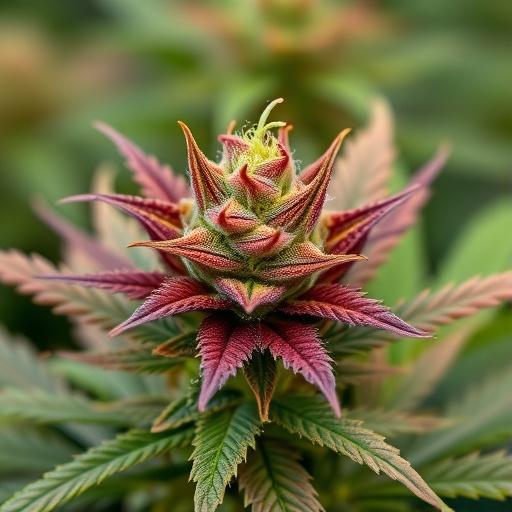
The hidden alchemy of cannabis aroma is only beginning to be understood. While consumers often obsess over levels of THC or CBD, a new study reveals that the volatile organic compounds (VOCs) responsible for the plant’s scent are exquisitely sensitive to how the flowers are dried and stored, ultimately dictating the entire sensory experience. The research, presented at the Society for Experimental Biology conference in Florence, Italy, demonstrates that the fate of these delicate aroma molecules is not sealed at harvest but is profoundly shaped by post-harvest handling.
Volatile organic compounds are the chemical messengers of the plant world, mediating interactions with pollinators, herbivores, and even neighboring plants. In Cannabis sativa, however, these compounds do double duty, also shaping the unmistakable olfactory fingerprint that guides human preference. Dr. Natasha Damiana Spadafora of the University of Ferrara and her team set out to map exactly how cultivar choice, drying technique, and storage container interact to sculpt the volatile bouquet that ultimately reaches a consumer’s nose.
To capture the ephemeral aroma clouds, the researchers placed cannabis samples in sealed containers and trapped the VOCs onto absorbent materials. Back in the laboratory, the real analytical horsepower came from thermal desorption coupled with comprehensive two-dimensional gas chromatography–mass spectrometry, or GC×GC-MS. Unlike conventional one-dimensional gas chromatography, this tandem technique sends the mixture through two columns with different separation mechanisms, effectively spreading overlapping peaks into a second dimension. “I could see which compounds were very important in creating the full experience of the aromas and explain some of their nuances,” Dr. Spadafora remarked. This high-resolution view allowed the team to identify and quantify a staggering chemical inventory: across six commercial cultivars, they detected 140 distinct VOCs and seven different cannabinoids, including a diverse cast of monoterpenes, sesquiterpenes, and oxygenated esters.
The drying experiments delivered a clear verdict. Freeze-drying, a method often touted for preserving heat-sensitive pharmaceuticals, proved a double-edged sword for cannabis. While it excelled at retaining the acidic cannabinoid forms such as CBDA and THCA, it essentially stripped away the volatile top notes, leaving behind a muted aroma. Tray-drying under more traditional, slower conditions, however, maintained a richer and more faithful VOC profile. The reason lies in the physics of volatilization: freeze-drying applies a high vacuum that can rapidly purge low-boiling monoterpenes, the very compounds that give cannabis its bright, citrusy, and fresh character, before the material locks in place.
Storage turned out to be just as decisive. Glass containers consistently retained a wider spectrum of VOCs compared to polyethylene bags or simple open-air conditions, effectively caging the aroma for longer. Yet glass triggered its own unintended chemistry. The team observed a measurable acceleration of the conversion of acidic cannabinoids into their neutral forms—CBDA into CBD, for example—a process known as decarboxylation that alters the pharmacological profile. This suggests that the seemingly inert storage jar participates actively in the slow maturation of cannabis, a chemical dialogue between terpenes, cannabinoid acids, and the microscopic environment trapped within.
To connect these chemical fingerprints directly to human perception, the team recruited a panel of more than 150 aroma assessors. Participants sniffed samples from different cultivar–drying–storage combinations and described what they smelled as well as what they preferred. The results aligned beautifully with the analytical chemistry. Clusters of samples dominated by monoterpenes were overwhelmingly described with descriptors like bright, fresh, herbal, and citrus. In contrast, sesquiterpene-rich profiles evoked woody, spicy, and earthy notes. This confirms that the nuanced language we use to describe cannabis aroma has a direct molecular basis that can be manipulated by processing choices.
For the commercial cannabis industry, these findings are immediately actionable. Cultivars are not static aromatic entities; the same genetic line can smell drastically different depending on whether it was tray-dried in a warm room or freeze-dried in a vacuum chamber, and whether it was then stored in glass or plastic. Dr. Spadafora has already translated her data into practical protocols for industry partners, enabling them to select drying and storage regimes that preserve the natural VOC architecture their customers find most appealing. In a market where aroma heavily influences purchasing decisions, such chemical fine-tuning is a powerful tool.
The broader significance of this work extends beyond commerce. It underscores that the psychotropic reputation of cannabis, fixated almost exclusively on a handful of cannabinoids, is a vast oversimplification. The full experience is a multisensory affair in which highly volatile, minor constituents orchestrate a complex perceptual symphony. Even small shifts in post-harvest methodology can rewrite that symphony’s score, muting certain instruments while amplifying others, and subtly altering the decarboxylation clock that ticks inside every stored flower. As the science deepens, cannabis is being revealed not as a botanical one-note, but as a remarkably plastic chemical system, whose final expression is co-authored by the farmer, the pharmacist, and the very air that surrounds it.
Subject of Research: The impact of drying and storage methods on the volatile organic compound profiles and human aroma perception of Cannabis sativa cultivars.
Article Title: The Hidden Chemistry of Cannabis Aroma: Drying and Storage Rewrite the Scent’s Identity.
News Publication Date:
Web References:
References:
Image Credits: Dr Natasha Damiana Spadafora
Keywords
Cannabis sativa, volatile organic compounds, GC×GC-MS, aroma perception, drying methods, storage, monoterpenes, sesquiterpenes, human sensory panel, decarboxylation, cultivar, post-harvest chemistry


