

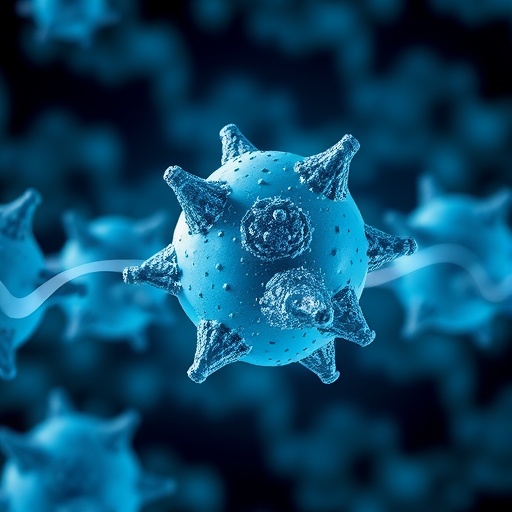
Scientists have long dreamed of building microscopic containers that can carry drugs through the bloodstream and release their cargo only when and where it is needed. Now a team in Germany has come remarkably close to that vision by using ordinary ultrasound to snap open self-assembled molecular cages. Their work, published in Nature Communications, demonstrates not only precise, mechanically triggered disassembly but also the ability to put the cages back together again, a feat that could transform how we think about smart materials and targeted therapies.
Supramolecular cages are three-dimensional hollow structures that form spontaneously when individual molecular building blocks find each other in solution. Think of them as nanoscopic geodesic domes assembled from metal ions and organic struts. The particular cages at the heart of this study are built around palladium atoms and belong to a family called PdₙL₂ₙ architectures, where multiple palladium nodes are linked by banana-shaped ligands into a closed shell. These constructs are intensely studied as reaction flasks, sensors, and potential drug-delivery vehicles, but while getting them to self-assemble is relatively straightforward, taking them apart on demand without destroying the cargo has remained a major challenge.
Chemists at Heinrich Heine University Düsseldorf, led by Dr Bernd M. Schmidt, approached the problem with a mechanochemical trick. They attached long, flexible polymer chains to the outside of the palladium cages, effectively tying molecular ropes to the framework. When an ultrasound probe is dipped into the solution, the collapsing cavitation bubbles generate intense shear fields that grab and stretch those polymers. The force travels along the polymer backbone, concentrating stress at the metal–ligand bonds where the polymers are anchored. If the energy is sufficient, specific palladium–nitrogen bonds rupture, and the cage pops open like a spring-loaded lid.
What makes the system so elegant is its selectivity. The ultrasound does not batter the cages indiscriminately; instead, the mechanical energy is channelled through the polymers exclusively to the connection points. This allows the researchers to break only the bonds they want, leaving the rest of the molecular structure intact. Even more striking, the process is partially reversible. When the ultrasound is switched off, the damaged cages can find their missing pieces in solution and spontaneously reassemble into the original architecture under appropriate conditions. Such reversible mechanochemical switching is rare and offers a glimpse of adaptive materials that can heal themselves.
The team wasted no time in demonstrating a real-world application. They loaded the anticancer drug cisplatin inside the cages and then irradiated the sample with ultrasound. Mechanical force opened the containers and liberated the cisplatin molecules, as confirmed by spectroscopic and chromatographic techniques. Cisplatin was chosen as a model cargo because of its clinical importance and the clear benefit of confining its toxicity until it reaches a tumour. While the current experiment was performed in a laboratory flask, the principle is exactly what one would need for an acoustically triggered drug-delivery platform deep inside the body.
Understanding why the disassembly works so predictably required a deep dive into molecular mechanics. The cages contain anywhere from a few hundred to over four thousand atoms when solvated, far too many for conventional quantum-chemical rupture simulations. Professor Jan Meisner’s group tackled this by training a machine-learning interatomic potential specifically on the metal–ligand interactions. This surrogate model mimics the accuracy of high-level quantum calculations but runs thousands of times faster, making it possible to simulate the entire cage being pulled apart by force. The simulations revealed the precise tension required to snap individual palladium–nitrogen bonds and mapped out the sequence of bond-breaking events that leads to full disassembly.
According to the computations, the force propagation is highly directional. Stress concentrates first at the outermost palladium nodes where the polymers are attached, then cascades inward along the edges of the polyhedral cage. This sequential unzipping mechanism matches the experimental kinetics and explains why the cages can open without fragmenting chaotically. Such mechanistic insight is vital for designing next-generation mechanoresponsive materials with predetermined failure points.
Tim David, the lead author of the study, sees broad implications. “We have shown that mechanical forces can be used to release molecular freight from inside supramolecular nanostructures in a targeted fashion,” he says. “This opens up interesting long-term perspectives for the development of intelligent transport systems.” Schmidt adds that ultrasound may become an extremely effective tool for controlling dynamic molecular assemblies, a domain that has so far lacked methods for nontrivial mechanical intervention.
From a materials-science perspective, the work bridges mechanochemistry and supramolecular chemistry in an unprecedented way. It demonstrates that self-assembled architectures, often considered too fragile to withstand force, can be engineered to respond to mechanical cues with exquisite precision. Potential applications extend well beyond medicine to include adaptive catalysts that activate only while being sonicated, self-healing coatings, and molecular actuators that reconfigure on command. With sound as a trigger, the dream of a fully controllable nanoscale toolbox feels closer than ever.
Subject of Research: Mechanochemically triggered disassembly and reassembly of polymer-decorated supramolecular palladium cages for controlled drug release
Article Title: Mechanochemical disassembly pathways of self-assembled polymer-decorated PdnL2n supramolecular architectures
News Publication Date: 19 June 2026
Web References: 10.1038/s41467-026-74561-4
References: Nature Communications, DOI: 10.1038/s41467-026-74561-4
Image Credits: HHU / Tim David
Keywords
supramolecular cages, mechanochemistry, ultrasound-triggered drug release, polymer mechanochemistry, palladium complexes, cisplatin delivery, machine-learning interatomic potentials, self-assembly, reversible disassembly, smart materials


