


In a groundbreaking study spanning the diverse climatic zones of Cameroon, researchers have unraveled the complex spatial and temporal variations of stable isotopes in precipitation. This work not only illuminates the intricate hydrological processes occurring in this Equatorial African country but also provides critical insight into the factors governing the isotopic composition of rainfall. The study, recently published in Environmental Earth Sciences, pioneers the establishment of the first Cameroon Meteoric Water Lines (CMWL), a vital tool for future hydrological and environmental research within the region.
Cameroon’s location straddling the equator, characterized by a mosaic of climatic regimes from humid coastal zones to arid northern savannahs, offers a unique natural laboratory for isotopic studies. Stable isotopes of oxygen (^18O) and hydrogen (^2H or deuterium) in precipitation serve as tracers that record atmospheric processes, moisture sources, and rain formation mechanisms. However, the spatial heterogeneity and temporal dynamics of these isotopes in Cameroon have remained largely underexplored due to challenges in consistent sampling and complex meteorological influences.
The research team employed a comprehensive network of sampling stations distributed across the country’s varying altitudes and climatic districts. This enabled the collection of precipitation samples over multiple seasons and years, capturing both the spatial gradients and seasonal fluctuations of isotopic ratios. The detailed dataset allowed for the distinction between local and regional controls on isotopic variability, an essential step toward understanding how global atmospheric circulation patterns are modulated by local geographic factors.
One of the study’s major achievements is the derivation of the first Cameroon Meteoric Water Lines, which represent the linear relationship between δ^2H and δ^18O in rainfall unique to the country’s varied climatic zones. These lines differ from the global meteoric water line (GMWL) and typical regional lines due to specific environmental influences such as evapotranspiration, moisture recycling, and continental effect. The CMWLs thus provide a new benchmark for interpreting isotopic data in hydrological studies, groundwater recharge assessments, and climate monitoring within Cameroon and adjacent areas.
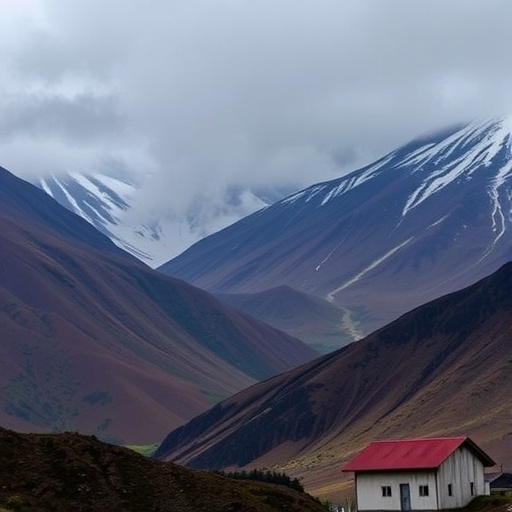
The spatial variability revealed a pronounced gradient influenced strongly by altitude and proximity to the Atlantic Ocean. Coastal regions featured more enriched isotopic signatures attributed to evaporation and moisture sourced directly from oceanic vapor. Conversely, inland and high-altitude stations exhibited more depleted isotope values, reflecting continental moisture recycling and orographic rainout effects. This gradient underscores the role of Cameroon’s topography in shaping regional atmospheric moisture fluxes and precipitation isotopic composition.
Temporal analysis indicated clear seasonal variations linked to the bimodal rainfall regime characteristic of Cameroon’s equatorial climate. The major rainy seasons corresponded to more depleted δ^18O and δ^2H values, coinciding with increased convection and rainfall intensity. Dry periods showed enriched isotopic values due to heightened evaporation and reduced precipitation volume. These seasonal patterns highlight the importance of considering temporal resolution in isotopic studies to disentangle climatic controls on precipitation chemistry.
A crucial aspect of the study involved identifying controlling factors beyond simple climatic zones. The researchers employed statistical models incorporating meteorological parameters such as temperature, relative humidity, and rainfall amount, as well as atmospheric circulation indices. These analyses confirmed that temperature and humidity play significant roles in modulating isotopic values, but rain amount effect, or the “amount effect,” often dominant in tropical regions, showed complex interactions influenced by local and regional circulation patterns.
Additionally, the study investigated the influence of moisture source origin through back-trajectory analyses. This approach traced air mass histories preceding precipitation events, revealing that Atlantic maritime air masses primarily influence coastal regions, while continental airflows dominate northern and highland zones. These findings align with the isotopic gradients and emphasize the necessity of combining isotopic data with atmospheric transport models to fully comprehend precipitation dynamics.
The implications of establishing the Cameroon Meteoric Water Lines extend beyond academic boundaries. They hold significant potential for water resource management, as isotopic signatures can distinguish between recent precipitation recharge and older groundwater, aiding sustainable extraction practices. Furthermore, understanding isotopic variations assists in climate change studies by providing proxies for past and present climatic conditions and helping forecast future hydrological responses.
This isotope-based hydroclimatic investigation also paves the way for improved interpretation of paleoenvironmental records such as speleothems, lake sediments, and ice cores within Cameroon and broader Central Africa. Since stable isotopes record environmental conditions at the time of precipitation, having local meteoric water lines allows scientists to reconstruct past climates with higher accuracy and resolution, addressing key questions about regional climate evolution and variability.
The research methodology is notable for its integration of isotope geochemistry, meteorology, and atmospheric science, exemplifying interdisciplinary collaboration crucial for advancing Earth system understanding. The use of state-of-the-art analytical instrumentation ensured high precision in isotope ratio measurements, while innovative spatial and temporal sampling strategies strengthened the robustness of conclusions drawn.
As global environmental challenges intensify, studies like this one underscore the importance of region-specific climatic and hydrological research. Cameroon’s complex climate and topography produce unique isotopic signatures that cannot be fully interpreted through global models alone. Hence, localized datasets and models such as the newly developed Cameroon Meteoric Water Lines are indispensable for accurate environmental assessment and planning.
Moreover, the research highlights how stable isotopes serve as a powerful lens into the interconnected processes governing the water cycle. From cloud microphysics and moisture source characterization to evapotranspiration and groundwater recharge, isotopic tools unravel processes otherwise hidden to conventional measurements, marking a paradigm shift in hydrological and climatological sciences.
The study’s findings are timely, given the vital role of Cameroon’s water resources in sustaining agriculture, biodiversity, and human populations across the region. With climate variability expected to impact precipitation patterns significantly, having a detailed isotopic baseline enables more nuanced vulnerability assessments and adaptation strategies tailored to local conditions.
In essence, this research represents a milestone in African isotope hydrology, providing the first comprehensive isotopic framework for Cameroon’s precipitation. It sets a precedent for similar studies across the continent where hydrological knowledge gaps hinder effective water resource management and climate change mitigation efforts.
Future research inspired by these findings may delve deeper into isotope-enabled climate modeling, disentangling the specific contributions of convective versus stratiform rainfall to isotopic signatures or exploring the influence of land use changes on isotope systematics. Continuous monitoring and expansion of the isotopic network will refine the Cameroon Meteoric Water Lines and enhance predictive capabilities.
In conclusion, the establishment of Cameroon’s meteorological water lines and elucidation of stable isotope spatial-temporal variability marks a transformative step in characterizing regional hydrology. This seminal study bridges fundamental science and practical application, equipping researchers, policymakers, and stakeholders with robust isotopic tools to better understand and steward Cameroon’s vital water resources amid evolving environmental challenges.
Cite Scienmag News
Violet Maxwell. (November 3, 2025). Cameroon’s Precipitation Isotopes Reveal Environmental Patterns. Scienmag. https://scienmag.com/cameroons-precipitation-isotopes-reveal-environmental-patterns/
Violet Maxwell. "Cameroon’s Precipitation Isotopes Reveal Environmental Patterns." Scienmag, 3 November 2025, https://scienmag.com/cameroons-precipitation-isotopes-reveal-environmental-patterns/. Accessed 4 September 2026.
Violet Maxwell. "Cameroon’s Precipitation Isotopes Reveal Environmental Patterns." Scienmag. November 3, 2025. https://scienmag.com/cameroons-precipitation-isotopes-reveal-environmental-patterns/


