A large-scale computational study has brought an unlikely candidate into the spotlight of cancer drug discovery: a natural compound found in buckwheat. Published in Volume 17 of the journal Oncotarget on October 12, 2026, the research by Ramjan Sheikh and colleagues, affiliated with the Plasma Cell Research Center and Hajee Mohammad Danesh Science and Technology University, combined an integrative pan-cancer analysis of the AKT1 gene with structure-based drug-design methods. The work examined AKT1 across 33 cancer types and identified fagopyrine, a naturally occurring buckwheat-derived phytochemical, as the strongest computationally predicted binder to the AKT1 protein. The authors are careful to stress that this is a starting point for drug design rather than evidence of an effective anticancer treatment, but the study offers a detailed framework for how large-scale cancer genomics and molecular modeling can converge on new therapeutic hypotheses.
AKT1 is a serine-threonine protein kinase that sits at the heart of one of the most heavily studied signaling networks in cancer biology: the PI3K/AKT/mTOR pathway. This pathway governs how cells respond to growth signals and shifting metabolic conditions, and when it becomes abnormally activated, it can drive uncontrolled cell proliferation, survival, altered metabolism, and resistance to therapy. Because of this central role, AKT1 has long been considered an attractive target for anticancer drugs, yet developing inhibitors that are both potent and safe has proven challenging. Understanding how AKT1 behaves differently across tumor types is therefore a critical step toward identifying biomarkers and therapeutic opportunities that are context-specific rather than universal.
To build that context, the researchers mined data from The Cancer Genome Atlas, covering 33 cancer types, and integrated information from multiple databases on gene expression, genetic alterations, DNA methylation, patient survival, immune-cell infiltration, and drug sensitivity. This multi-layered approach allowed them to examine both the shared functions of AKT1 and the ways its biological significance diverges across malignancies. The analysis revealed substantial variation in AKT1 expression between cancer types. Increased expression was observed in several malignancies, including breast, stomach, and endometrial cancers, while other tumor types displayed different patterns. Notably, AKT1 was also widely expressed in normal tissues, reflecting its essential role in cellular functions beyond cancer, a finding that underscores the difficulty of targeting it without collateral effects.
Survival analyses added further nuance. Higher AKT1 expression was associated with poorer overall and disease-free survival in liver hepatocellular carcinoma, lung adenocarcinoma, and breast cancer. In kidney renal clear cell carcinoma, however, the opposite pattern emerged, with higher expression linked to better outcomes. This variability means AKT1 expression cannot be interpreted as a universal prognostic indicator; its clinical meaning depends strongly on the biological context of each tumor. The researchers also probed the genetic and epigenetic mechanisms behind AKT1 dysregulation. Genomic profiling identified alterations in functionally important regions of the protein, including recurrent missense mutations, while DNA methylation analysis revealed reduced AKT1 promoter methylation in several cancers, including breast, kidney, liver, and lung malignancies, suggesting that both genetic and epigenetic changes may contribute to abnormal regulation of the gene.
The study then widened its lens to the tumor microenvironment. Single-cell expression data showed that AKT1 was present not only in malignant cells but also in immune and stromal populations, including macrophages, fibroblasts, and endothelial cells. Its expression was also associated with tumor mutational burden and microsatellite instability in a cancer-dependent manner. These associations may be relevant to tumor biology and to how patients respond to immunotherapy and other treatments, although the authors caution that their clinical significance remains to be established. Taken together, the pan-cancer profiling painted a picture of AKT1 as a versatile but context-dependent player in cancer, one whose usefulness as a biomarker or drug target varies considerably from one malignancy to another.
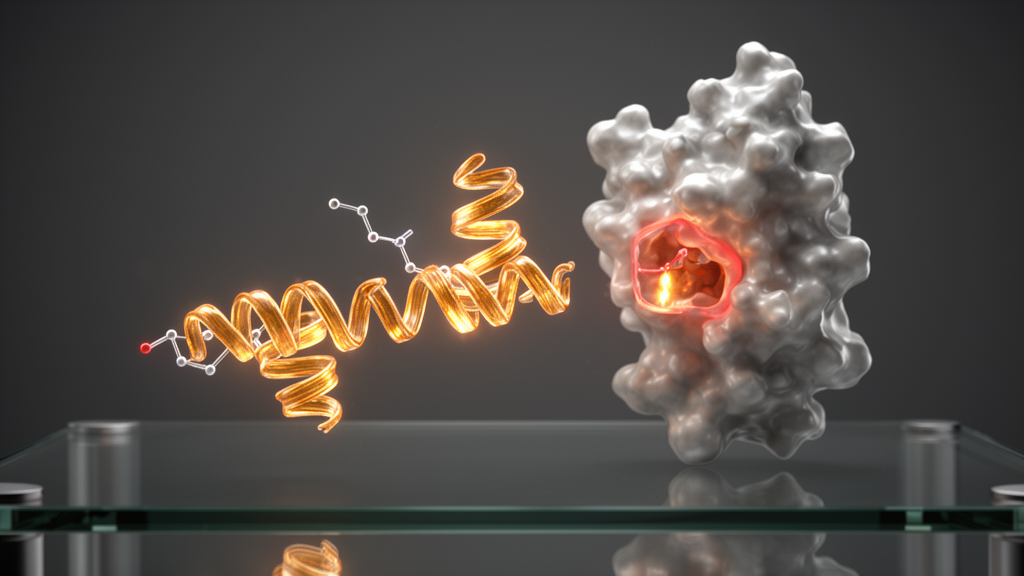
With this biological groundwork in place, the team turned to therapeutic possibilities, screening naturally occurring compounds derived from buckwheat. An initial collection of 97 phytochemicals was refined to 52 candidates suitable for computational screening against the AKT1 protein. Molecular docking was used to predict how these compounds might fit within AKT1’s binding region and to estimate the strength of their interactions. Among the screened compounds, fagopyrine showed the strongest predicted binding affinity, with a docking score of −15.45 kcal/mol. The computational analysis identified several hydrogen-bonding and hydrophobic interactions between fagopyrine and amino acid residues within the AKT1 binding pocket. Other buckwheat compounds, including quercetin, keracyanin, castasterone, and α-amyrin, also showed favorable predicted interactions, although their docking scores were less favorable than that of fagopyrine.
To test whether the predicted AKT1–fagopyrine complex would hold together under realistic physical conditions, the researchers performed molecular dynamics simulations over 100 nanoseconds. Throughout the simulation, the complex maintained a relatively stable structure, supported by analyses of molecular movement, protein flexibility, and hydrogen-bond interactions. Density functional theory calculations added a further layer of evidence about the compound’s electronic properties: the researchers observed relatively small changes in fagopyrine’s electronic structure during the simulation, alongside an increased energy gap between its highest occupied and lowest unoccupied molecular orbitals, which they interpreted as indicating favorable electronic stability within the modeled protein–ligand complex. These results strengthened the computational case that fagopyrine can engage AKT1, although the authors emphasize that simulation stability does not establish actual binding affinity or inhibition in living systems.
Important pharmacological caveats temper the enthusiasm. Predicted absorption and safety profiles revealed that fagopyrine shows only moderate gastrointestinal absorption and violates several commonly used drug-likeness criteria, including relatively high molecular weight and lipophilicity. Its known photosensitizing properties raise additional safety concerns, and a computational toxicity assessment flagged potential carcinogenicity. As the authors put it, some of the predicted drug-likeness restrictions and the reported phototoxicity of native fagopyrine suggest that it should be regarded as a promising lead scaffold rather than a clinically applicable drug candidate. In practical terms, this means chemists would need to modify the fagopyrine structure substantially, improving its pharmacological properties and reducing potential toxicity, before any related molecule could be considered for therapeutic development.
The study’s limitations are equally clear. Its conclusions rest on publicly available cancer datasets and computational modeling, without direct biochemical assays or cancer cell-line experiments confirming that fagopyrine inhibits AKT1. Docking scores and simulation stability cannot establish therapeutic efficacy, and predicted absorption or toxicity values cannot replace experimental safety assessments. Future investigations will need to test whether fagopyrine or optimized derivatives directly bind to and inhibit AKT1, affect downstream PI3K/AKT/mTOR signaling, and alter cancer-cell proliferation or survival, with additional pharmacokinetic, toxicity, and animal studies required before clinical development could even be contemplated. What the study does deliver is an integrated view of AKT1 across multiple cancer types and a computationally prioritized compound for further structure-based drug-design research, illustrating how pan-cancer molecular profiling and molecular modeling can work together to generate testable hypotheses in the ongoing search for new AKT1-targeting cancer therapies.
Subject of Research: Pan-cancer analysis of AKT1 and computational identification of the buckwheat-derived compound fagopyrine as a potential AKT1 drug-design candidate
Article Title: Pan-cancer analysis identifies buckwheat-derived compound as potential AKT1 drug-design candidate
Article References: Pan-cancer analysis identifies buckwheat-derived compound as potential AKT1 drug-design candidate. (n.d.). Original publication
Image Credits: AI Generated
DOI: Not provided
Keywords: AKT1, pan-cancer, fagopyrine, buckwheat, molecular docking, molecular dynamics, PI3K/AKT/mTOR, drug design, Oncotarget, TCGA, phytochemicals, cancer biomarkers
Cite Scienmag News
Nathaniel Bowman. (October 15, 2026). Buckwheat Compound Fagopyrine Emerges as Computational Lead for AKT1 Cancer Drug Design. Scienmag. https://scienmag.com/buckwheat-compound-fagopyrine-emerges-as-computational-lead-for-akt1-cancer-drug-design/
Nathaniel Bowman. "Buckwheat Compound Fagopyrine Emerges as Computational Lead for AKT1 Cancer Drug Design." Scienmag, 15 October 2026, https://scienmag.com/buckwheat-compound-fagopyrine-emerges-as-computational-lead-for-akt1-cancer-drug-design/. Accessed 15 October 2026.
Nathaniel Bowman. "Buckwheat Compound Fagopyrine Emerges as Computational Lead for AKT1 Cancer Drug Design." Scienmag. October 15, 2026. https://scienmag.com/buckwheat-compound-fagopyrine-emerges-as-computational-lead-for-akt1-cancer-drug-design/