


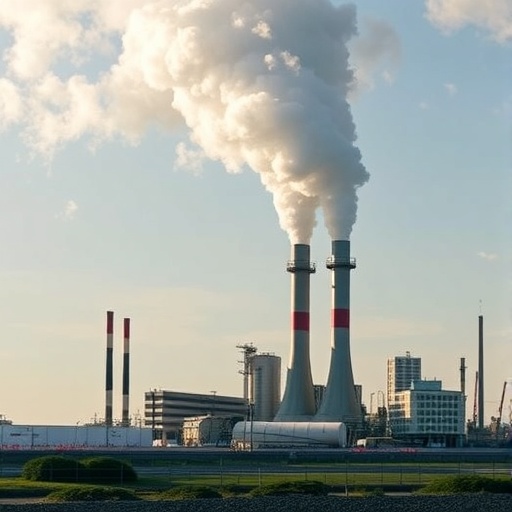
In a profound revelation, a recent study has illustrated a promising pathway for enhancing waste management practices in China through advanced strategies in pollutant control and resource recovery. Conducted by researchers Han et al., this comprehensive investigation underscores the critical need for sustainable waste incineration methods that not only tackle the growing concerns of pollution but also promote the recuperation of valuable resources from waste materials. The findings signal an urgent call to action for policymakers, industries, and communities alike, emphasizing that practical solutions can lead to substantial environmental benefits.
Central to the study is the acknowledgment of the challenges posed by waste management in urban environments across China. Rapid industrialization and urbanization have resulted in escalating waste generation rates, leading to alarming levels of pollution. Traditional incineration practices have been scrutinized for their contributions to atmospheric pollutant emissions, including harmful particulates and greenhouse gases. Recognizing these issues, the researchers argue that a paradigm shift is required—one that prioritizes sustainable practices and innovative technologies to mitigate environmental impact.
The study dives deep into the implications of inadequate pollutant control techniques commonly employed in waste incineration facilities. By analyzing data from various incineration operations across China, the researchers identified substantial discrepancies in emissions control effectiveness. Many facilities lack advanced filtration and scrubber technologies, leading to the release of significant quantities of dioxins, furans, and other toxic pollutants into the atmosphere. The repercussions of these emissions extend beyond local air quality, contributing to broader climate change challenges and posing health risks to nearby populations.
Moreover, the research emphasizes the vital importance of resource recovery from waste streams. Currently, a significant portion of recyclable materials is lost during the incineration process. The study advocates for integrating state-of-the-art sorting and recovery technologies that can capture metals, plastics, and other recyclable components prior to incineration. This shift not only decreases waste volume but also transforms waste into a potential resource pool for manufacturing and production, aligning with global sustainability goals.
Specific case studies highlighted within the research further illustrate the successful implementation of enhanced pollutant control measures and resource recovery systems in select Chinese cities. These examples reveal a dual benefit: reduced emissions and the repurposing of materials that would otherwise contribute to landfill waste. By adopting these best practices, municipalities can reduce their environmental footprint while simultaneously fostering a circular economy model that promotes sustainability and resource efficiency.
The study also raises critical discussions about regulatory frameworks surrounding waste incineration in China. Current policies may not fully encompass the complexities involved in modern waste management systems. The researchers argue that a reevaluation of existing regulations, coupled with stricter enforcement of pollution control measures, is essential for catalyzing a shift toward sustainable practices. Engaging stakeholders across sectors—from government to civil society—will be crucial in driving comprehensive change.
Education and community outreach are essential components of fostering a culture of sustainability in waste management. The researchers call for increased awareness and involvement from the public, urging communities to embrace recycling initiatives and participate in resource recovery programs. Through education, individuals can better understand their role in waste management and environmental stewardship, thus driving demand for more sustainable practices among local industries.
In conclusion, Han et al.’s study serves as a clarion call to transform waste incineration practices in China. By strengthening pollutant control and enhancing resource recovery, there lies an opportunity to not only tackle the pressing issue of waste management and pollution but also to pioneer a new era of sustainable environmental practices. As urban centers continue to grow, the imperative for effective solutions becomes more pronounced. This research not only highlights the issues at hand but also charts a path forward—one that embraces innovation and prioritizes the health of our planet and its inhabitants above all.
As policymakers and industry leaders deliberate on waste management strategies, the insights gleaned from this work must not be overlooked. Embracing the principles of sustainability, resource recovery, and effective pollutant control will undoubtedly lay the groundwork for a cleaner, healthier future for China and beyond. With the pressing need for action more urgent than ever, this research stands as a powerful testament to what can be achieved with commitment and innovation in the realm of waste management.
The implications of this study extend beyond the immediate scope of waste management in China. The lessons learned can serve as a blueprint for other nations grappling with similar challenges due to urbanization and industrialization. As the global community confronts the realities of climate change and environmental degradation, there is an increasing recognition that circular economy approaches and advanced waste management technologies are essential for sustainable development.
Harnessing these findings may lead to international collaborations and exchanges of knowledge, fostering a global dialogue on best practices in waste management. The researchers’ findings could pave the way for new industry standards and encourage partnerships that align with sustainability goals across borders, emphasizing the interconnectedness of environmental issues worldwide.
By prioritizing research-driven strategies, we can collectively work toward building resilient systems that safeguard both human health and the environment. This monumental study serves as a stepping stone toward a sustainable future, promoting a vital conversation on reimagining how we handle waste—not merely as a problem to be solved but as an opportunity for innovation, growth, and environmental restoration.
Through this discourse, it becomes increasingly clear that the journey toward sustainable waste management and pollution control is not just an isolated endeavor but rather a global responsibility that requires collaboration across disciplines, industries, and nations. As awareness grows and solutions are embraced, the aspiration for clean air, healthy ecosystems, and flourishing communities can evolve from a distant goal into a tangible reality.
Ultimately, we stand at a pivotal juncture in history—one where the choices made today will echo through generations to come. By embracing the tenets of effective pollutant control and resource recovery, we can safeguard our planet’s future while enhancing the quality of life for all its inhabitants. The torch has been passed to us; it is our responsibility to illuminate the path forward toward a sustainable tomorrow.
Han, Ql., Liu, Hq., Gong, Yy. et al. Strengthening pollutant control and resource recovery can enhance sustainable waste incineration in China.
Commun Earth Environ 6, 863 (2025). https://doi.org/10.1038/s43247-025-02859-0
Cite Scienmag News
Russell Cooper. (October 31, 2025). Boosting Pollution Control Enhances Sustainable Waste Incineration. Scienmag. https://scienmag.com/boosting-pollution-control-enhances-sustainable-waste-incineration/
Russell Cooper. "Boosting Pollution Control Enhances Sustainable Waste Incineration." Scienmag, 31 October 2025, https://scienmag.com/boosting-pollution-control-enhances-sustainable-waste-incineration/. Accessed 4 September 2026.
Russell Cooper. "Boosting Pollution Control Enhances Sustainable Waste Incineration." Scienmag. October 31, 2025. https://scienmag.com/boosting-pollution-control-enhances-sustainable-waste-incineration/


