


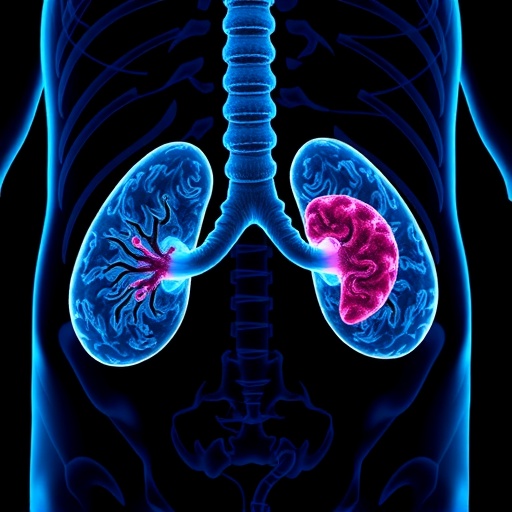
In a groundbreaking stride toward advancing cancer therapies, researchers have unveiled compelling new insights into Boron Neutron Capture Therapy (BNCT) and its application for treating experimental bladder cancer. This highly targeted form of radiation therapy holds transformative potential, particularly in determining the most efficacious method of delivering boron compounds to tumor sites—whether systemically or intravesically. The study meticulously compares these two administration routes, shedding light on which method optimizes therapeutic outcomes while minimizing damage to healthy tissue.
BNCT is a unique binary treatment modality that exploits the nuclear reaction between boron-10, a non-radioactive isotope enriched within cancer cells, and low-energy neutrons delivered externally. Upon neutron capture, boron undergoes fission, releasing high-energy alpha particles and lithium nuclei, which travel only a short distance—the diameter of a single cell. This confined damage spares much of the surrounding healthy tissue, making BNCT highly selective compared to conventional radiation therapy. However, a critical challenge has been ensuring sufficient boron accumulation specifically within tumor cells.
The innovative study presents a systematic analysis of boron delivery strategies, contrasting systemic administration—where boron compounds circulate throughout the body via intravenous injection—with intravesical instillation, a localized approach where boron agents are introduced directly into the bladder’s lumen. Both approaches strive to maximize boron uptake by bladder cancer cells, but the distribution and retention kinetics vary significantly, impacting therapeutic efficiency and side effect profiles.
Systemic delivery offers the advantage of being less invasive, with boron compounds traveling through the bloodstream to reach tumor tissues. Yet, this method risks dispersing boron throughout healthy organs and tissues, diluting the concentration at the tumor site and potentially causing off-target effects. Additionally, the vascular permeability and tumor microenvironmental factors influence boron uptake heterogeneity when administered systemically, which can lead to suboptimal therapeutic efficacy.
Conversely, intravesical delivery directly targets the bladder environment, allowing for higher local concentrations of boron compounds adjacent to or inside bladder tumors. This route capitalizes on the bladder’s accessibility, using catheterization to instill the therapeutic agent. The study highlights how this localized approach may enhance boron retention within the bladder lining and mucosal tumors, limiting systemic exposure and associated toxicities.
Critical to the evaluation was the use of preclinical experimental models of bladder cancer, enabling precise quantification of boron uptake and retention post-administration. Advanced imaging and analytical techniques measured boron levels at various time points, correlating these pharmacokinetic parameters with therapeutic response to neutron irradiation. The comprehensive data provides unprecedented clarity on the biodistribution profiles achieved by each method.
Findings suggest that intravesical administration achieves markedly higher boron concentrations in bladder tissues compared to systemic routes, translating into increased tumor cell kill upon neutron irradiation. Furthermore, the study documents diminished boron presence in non-target organs following local instillation, significantly reducing the risk of collateral damage. These observations underscore intravesical therapy’s promise for bladder-specific malignancies.
Nonetheless, systemic delivery presents some benefits, particularly for metastatic or diffusely infiltrative tumors beyond localized sites. The research delineates scenarios where systemic BNCT may still be preferred due to its ability to target disseminated cancer cells, highlighting that the two approaches could be complementary depending on disease staging and extent.
Equally crucial to the translational potential of this research is understanding the clinical feasibility and patient tolerability of each method. Intravesical BNCT, while minimally invasive, requires catheterization and repeated procedures, which may impact patient comfort and compliance. Meanwhile, systemic administration aligns with existing therapeutic paradigms but demands strategies to enhance tumor-selective boron delivery, such as optimizing compound design or exploiting tumor-specific transport mechanisms.
The study also addresses the technological aspects underpinning BNCT, including neutron source advancements and treatment planning. As BNCT depends on precise neutron irradiation, refining neutron flux delivery with minimal scatter remains vital. Integrating these improvements with optimized boron delivery could revolutionize bladder cancer treatment protocols.
Moreover, this research opens avenues for combining BNCT with other therapeutic modalities, such as immunotherapy or chemotherapy, to harness potential synergistic effects. The targeted nature of BNCT may complement systemic agents by reducing tumor burden and possibly sensitizing residual cells to subsequent treatments.
Challenges remain, notably in translating findings from animal models to human patients. Scaling up boron delivery while ensuring controlled dosimetry and minimizing toxicity is paramount. The study emphasizes ongoing clinical trials and the need for multidisciplinary efforts encompassing oncology, radiobiology, and medical physics to actualize BNCT’s full clinical potential.
In sum, the juxtaposition of systemic versus intravesical BNCT in experimental bladder cancer offers pivotal insights that could reshape treatment landscapes. Prioritizing local delivery emerges as particularly advantageous for bladder-confined disease, harnessing boron’s unique properties to inflict lethal damage with surgical precision. As research progresses, BNCT stands poised not only to augment existing therapeutic arsenals but also to redefine cancer radiotherapy paradigms fundamentally.
This work epitomizes the cutting edge of precision oncology, marrying nuclear physics and molecular targeting to confront one of medicine’s most challenging malignancies. Continued exploration and clinical validation will determine BNCT’s role in achieving durable bladder cancer control and improving patient outcomes worldwide. The confluence of innovative drug delivery, neutron technology, and tumor biology marks a new frontier in cancer treatment—one that may soon transcend experimental settings into standard care.
Cite Scienmag News
Nathaniel Bowman. (April 17, 2026). BNCT for Bladder Cancer: Systemic or Intravesical? Scienmag. https://scienmag.com/bnct-for-bladder-cancer-systemic-or-intravesical/
Nathaniel Bowman. "BNCT for Bladder Cancer: Systemic or Intravesical?" Scienmag, 17 April 2026, https://scienmag.com/bnct-for-bladder-cancer-systemic-or-intravesical/. Accessed 3 September 2026.
Nathaniel Bowman. "BNCT for Bladder Cancer: Systemic or Intravesical?" Scienmag. April 17, 2026. https://scienmag.com/bnct-for-bladder-cancer-systemic-or-intravesical/


