


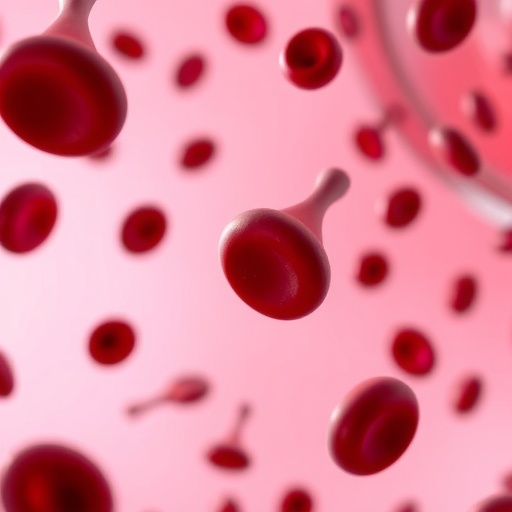
In the quest to unravel the mysteries of aging, blood has emerged not just as a biomarker reflecting the passage of time but as an active player capable of modulating the aging process itself. A groundbreaking study recently published in Experimental & Molecular Medicine sheds light on the intricate mechanisms by which blood influences aging and, more importantly, explores innovative rejuvenation strategies that could revolutionize medicine as we know it. This new understanding positions blood at the heart of aging research, transcending its traditional role as merely a readout of physiological states.
The study, conducted by Kim, Kang, and Yang, delves deep into the mechanistic underpinnings of how blood components influence aging at the cellular and systemic levels. Their research delineates how aging blood harbors specific molecular changes that do not just mirror the aging phenotype but actively propagate it. This conceptual shift opens up fascinating avenues where interventions targeting the blood’s molecular milieu could reverse or mitigate age-associated decline, thus fostering healthier lifespan extension.
Central to their findings is the dual role of blood: as a mirror reflecting the body’s internal aging status, and as a modulator that can exert systemic effects influencing various tissues. Blood carries a complex array of signaling molecules such as cytokines, growth factors, and extracellular vesicles which have the capacity to affect distant organs. The team demonstrated that age-related alterations in these circulating factors shift the balance from a regenerative, youthful state toward a pro-inflammatory, degenerative condition, commonly known as “inflammaging.”
The study highlights critical molecular signatures in the blood plasma of aged organisms, such as increased pro-inflammatory cytokines including IL-6 and TNF-alpha, alongside diminished levels of rejuvenation-promoting factors like GDF11 and klotho. These changes collectively impair stem cell function, reduce tissue repair capacity, and induce cellular senescence. The authors argue that restoring the youthful composition of blood has potent rejuvenative effects that could translate into amelioration of aging phenotypes.
Rejuvenation strategies tested within this framework are particularly compelling. The researchers discuss the therapeutic potential of plasma exchange, which involves replacing aged plasma with plasma from younger donors or with engineered plasma-like solutions rich in youth-associated factors. This method showed remarkable improvements in cognitive function, muscle regeneration, and metabolic profiles in aged animal models, suggesting translational promise for human aging interventions.
Moreover, the article examines the role of extracellular vesicles (EVs) as pivotal conveyors of systemic aging signals. EVs from young blood carry cargo that can reprogram aged cells and reset their metabolic and epigenetic clocks. The study also explores how manipulating EV content or administration could serve as cutting-edge therapeutics to deliver anti-aging factors efficiently and specifically to target tissues.
A significant portion of the research is devoted to the molecular pathways modulated by blood-borne factors. Key signaling cascades, including the insulin/IGF-1 pathway, mTOR, AMPK, and sirtuins, are intricately influenced by the aged blood environment. Disruptions in these pathways lead to elevated oxidative stress, mitochondrial dysfunction, and disrupted proteostasis, all hallmark features of cellular aging. By fine-tuning these pathways via blood interventions, the researchers posit a tailored approach to restoring cellular homeostasis.
Equally notable is the paper’s exploration of epigenetic remodeling triggered by circulatory factors. Aging blood was found to induce epigenetic drift in target cells, contributing to the loss of gene expression integrity and cellular identity. Conversely, exposure to young blood factors can partially reverse these epigenetic changes, restoring youthful gene expression patterns and improving cellular function.
The interdisciplinary nature of the study combines advanced proteomics, transcriptomics, and metabolomics to achieve a holistic view of age-related changes in blood. Such comprehensive analyses enable the identification of novel biomarkers for biological age as opposed to chronological age, offering a more precise metric for assessing the efficacy of anti-aging interventions in clinical settings.
Importantly, the research discusses challenges and ethical considerations surrounding blood-based rejuvenation therapies. Issues such as donor-recipient compatibility, long-term safety, and scalability remain formidable hurdles. However, the authors underscore ongoing advances in bioengineering approaches, such as creating synthetic plasma substitutes enriched with tailored factor cocktails, which may circumvent some ethical and logistical constraints.
Kim and colleagues’ findings elegantly underscore the concept that aging is not an inexorable decline but a modifiable biological process, largely orchestrated at the systemic level by the circulatory milieu. This paradigm shift encourages a proactive stance in developing therapeutics that leverage blood’s systemic regulatory power to enhance healthspan and resilience in humans.
The implications extend well beyond basic science, opening transformative possibilities for managing age-related diseases. Neurodegenerative disorders, sarcopenia, cardiovascular aging, and immune senescence may all be mitigated by strategies that recalibrate the signaling environment carried by blood, turning it from an aging messenger into a fountain of youth.
In the final analysis, this pioneering work positions blood as both a key indicator and an actionable target in aging research. By illuminating the molecular dialogues transmitted through blood, it paves the way for revolutionary therapies harnessing the systemic nature of aging to restore vitality and function in the elderly.
As the field evolves with innovative bioengineering, synthetic biology, and personalized medicine techniques, the vision of circulating youth factors delivered precisely and safely to rejuvenate whole organisms moves closer to reality. This heralds a new era in biomedicine where age reversal transcends fiction and becomes an attainable goal fueled by the systemic power of blood.
The future of healthy aging may indeed flow within our veins, offering hope that what once appeared as an irreversible decline could finally be rewired through scientifically guided blood interventions.
Cite Scienmag News
Beatrice Stafford. (April 17, 2026). Blood: Key to Aging and Rejuvenation Insights. Scienmag. https://scienmag.com/blood-key-to-aging-and-rejuvenation-insights/
Beatrice Stafford. "Blood: Key to Aging and Rejuvenation Insights." Scienmag, 17 April 2026, https://scienmag.com/blood-key-to-aging-and-rejuvenation-insights/. Accessed 5 September 2026.
Beatrice Stafford. "Blood: Key to Aging and Rejuvenation Insights." Scienmag. April 17, 2026. https://scienmag.com/blood-key-to-aging-and-rejuvenation-insights/


