


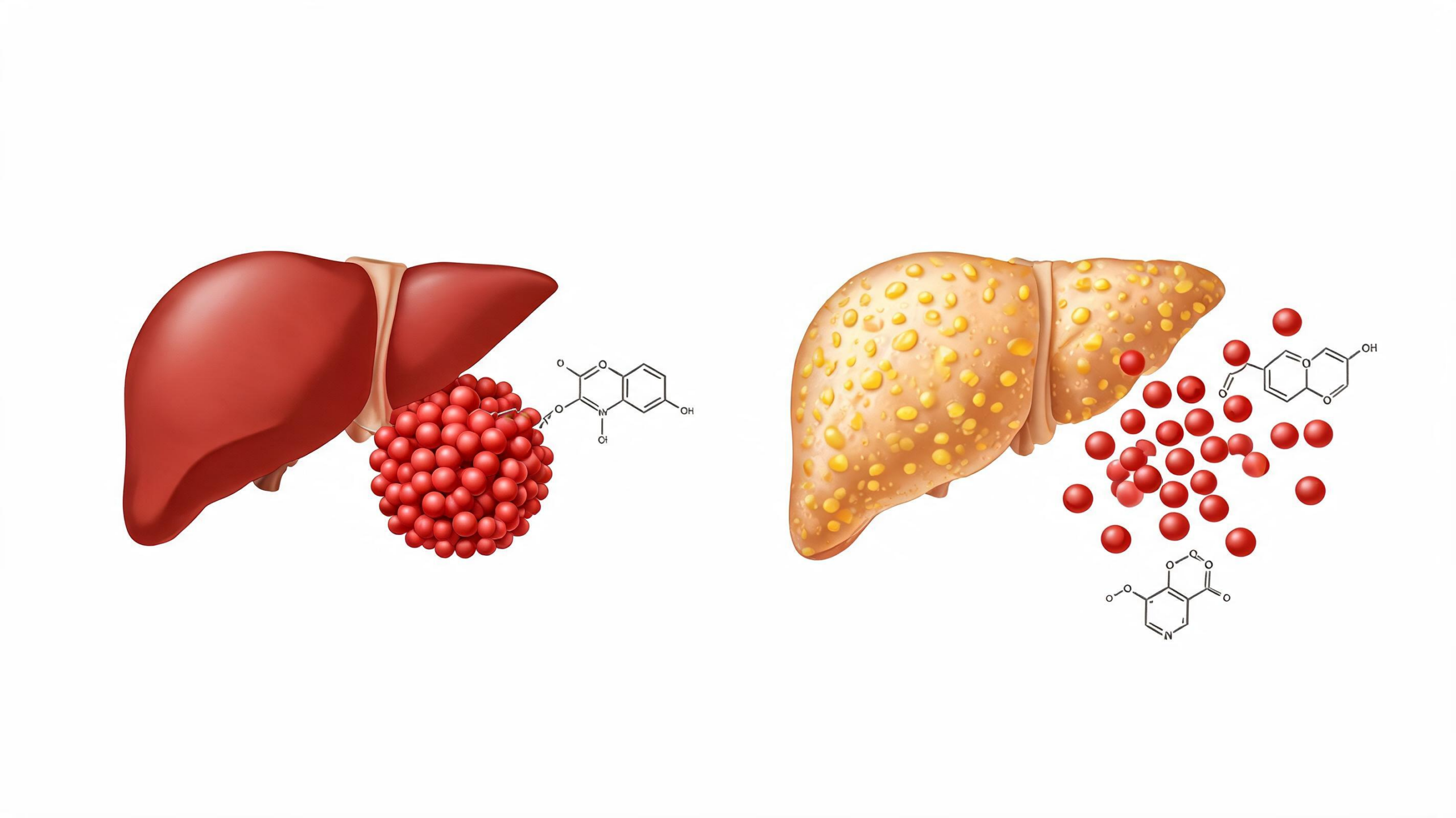
Everyday exposure to bisphenols may influence the development of metabolic dysfunction-associated steatotic liver disease by disturbing the body’s tightly regulated iron economy, according to a review of toxicological and metabolic evidence. The analysis presents a “pollutant-nutrient-disease” framework in which environmental chemicals interact with nutrition and metabolism rather than acting as isolated hazards. Its central proposal is that bisphenol A and related compounds can contribute to a distinctive imbalance: iron accumulates in the liver while the circulation and other tissues may experience functional iron deficiency. That combination could intensify oxidative stress, inflammation, abnormal fat storage and communication between the intestine and liver. The review, published in Discover Toxicology, does not report a new clinical trial or establish that bisphenol exposure causes liver disease in people. Instead, it integrates findings from human biomonitoring, animal experiments, cell studies and research on iron metabolism to identify a plausible biological pathway. The authors emphasize that direct evidence in human liver tissue remains limited, and that several proposed steps still require testing in well-designed longitudinal studies.
MASLD is characterized by excess fat in liver cells in association with metabolic risk factors such as obesity, insulin resistance or type 2 diabetes. It can progress from relatively simple steatosis to metabolic dysfunction-associated steatohepatitis, fibrosis, cirrhosis and liver cancer. The disease is usually discussed in relation to diet, body weight, glucose regulation and inherited susceptibility, but environmental exposures may modify these processes. Bisphenols are endocrine-disrupting chemicals used in plastics, food and beverage packaging, thermal paper and other materials. BPA is the best-known member of the group, while bisphenol F and bisphenol S are among the substitutes increasingly used in products marketed as BPA-free. Biomonitoring studies have detected BPA and its analogues in human urine and blood, indicating widespread exposure. In the United States, estimates based on earlier national survey data placed median daily BPA intake at roughly 30 to 70 nanograms per kilogram of body weight. Exposure patterns are changing: restrictions have reduced BPA in some regions, while use of replacement compounds such as BPS and BPF has increased. The review argues that chemical substitution does not automatically remove biological concerns, because structurally related compounds can interact with hormone-sensitive pathways.
Iron is essential for oxygen transport, mitochondrial energy production and many enzyme reactions, but both too little and too much can damage the liver. The hormone hepcidin acts as the principal systemic regulator. Produced mainly by the liver, hepcidin binds to the iron-export protein ferroportin and causes it to be internalized and degraded. This reduces iron release from intestinal cells, macrophages and storage cells into the bloodstream. The review describes how iron deficiency can impair mitochondrial electron transport and fatty-acid oxidation, causing reactive oxygen species to rise while fat accumulates inside liver cells. Deficiency also reduces the activity of iron-dependent antioxidant systems and can stabilize hypoxia-inducible factors, or HIF proteins. HIF-1α and HIF-2α then alter gene programs controlling glucose and lipid metabolism. In particular, HIF-2α may increase expression of lipogenic genes such as SCD-1, FASN and ACC while suppressing PPARα and CPT1A, key regulators of fatty-acid breakdown. These changes can promote the buildup of triglycerides, diacylglycerol, ceramides and other lipids that interfere with insulin signaling and fuel inflammation.
Iron excess creates a different but equally damaging route to liver injury. Ferrous iron can drive the Fenton reaction, generating highly reactive hydroxyl radicals that attack proteins, membranes and mitochondrial structures. The resulting lipid peroxidation produces compounds such as malondialdehyde and 4-hydroxynonenal, which can further inhibit enzymes required for fatty-acid oxidation. Oxidative stress also activates inflammatory pathways including NF-κB, MAPK and JNK, while weakening PPARα activity and depleting glutathione, a major cellular antioxidant. If glutathione peroxidase 4, or GPX4, is impaired, lipid peroxides can accumulate to levels that trigger ferroptosis, a form of regulated cell death driven by iron-dependent membrane damage. Dying hepatocytes can activate Kupffer cells, the liver’s resident macrophages, which release inflammatory and fibrogenic signals such as tumor necrosis factor alpha and transforming growth factor beta. Those signals stimulate hepatic stellate cells, the principal producers of scar tissue in the injured liver. The review therefore portrays iron overload not as a passive marker of MASLD, but as a potential amplifier of steatosis, hepatocyte death and fibrosis.
Bisphenols may connect these two iron-related states through hormone receptors and redox signaling. Evidence summarized in the review points particularly to the G protein-coupled estrogen receptor, or GPER, as a candidate mediator of BPA-induced liver toxicity. Activation of GPER may stimulate an EGFR–PI3K–AKT–mTORC1 signaling cascade, suppressing NRF2-dependent antioxidant defenses and reducing glutathione synthesis. At the same time, bisphenols may increase reactive oxygen species by disturbing mitochondria and activating NADPH oxidase. Loss of glutathione can inactivate GPX4, allowing lipid peroxides to accumulate. The review proposes that this oxidative environment may then increase expression of iron-import proteins such as transferrin receptor 1 and divalent metal transporter 1, drawing more iron into hepatocytes. The additional iron would intensify Fenton chemistry and create a self-reinforcing cycle of iron accumulation, oxidative injury and impaired lipid metabolism. Animal and cell studies support parts of this model, including links between BPA or BPS exposure, altered iron-regulatory genes, ferroptosis and hepatic fat accumulation. However, the authors stress that the complete sequence has not been demonstrated in exposed human livers.
Hepcidin may help explain the review’s proposed paradox of hepatic iron overload alongside systemic iron deficiency. Bisphenols could affect hepcidin differently in different tissues or at different stages of exposure. In the liver, inflammation induced by chemical stress may raise interleukin-6 and activate the JAK2–STAT3 pathway, increasing hepcidin transcription. Oxidative stress may also stimulate NRF2, which can influence hepcidin-related regulatory elements. Excess hepcidin would reduce ferroportin, trapping iron in hepatocytes and macrophages. At the same time, the estrogen-like activity of bisphenols may act through estrogen receptor alpha and potentially suppress hepcidin expression, based partly on evidence from estrogenic regulation of iron metabolism and related environmental chemicals. Lower systemic hepcidin would stabilize ferroportin in intestinal cells, increasing iron absorption and altering the distribution of iron between the gut, blood and liver. The balance between these opposing signals may depend on dose, exposure duration, chemical structure and receptor abundance in each tissue. The authors call this proposed mismatch “hepcidin dyssynchrony,” but identify it as a working hypothesis rather than a settled mechanism.
The intestine adds another layer to the possible interaction. Iron availability strongly shapes the gut microbiome. During iron deficiency, increased intestinal uptake can leave less iron for microbes, favoring organisms able to produce siderophores, molecules that capture iron efficiently. During iron excess, oxidative chemistry may harm sensitive beneficial bacteria while allowing more stress-resistant pathobionts to expand. In either setting, the review describes possible reductions in bacteria associated with beneficial metabolites and increases in members of the Enterobacteriaceae family. Changes in short-chain fatty acids, including acetate, propionate and butyrate, may weaken signals that normally activate AMPK, support fatty-acid oxidation and restrain SREBP1c-driven lipogenesis. Lower butyrate may also reduce support for intestinal tight-junction proteins such as ZO-1 and occludin. A leakier intestinal barrier could permit more lipopolysaccharide to reach the liver through the portal circulation, where it activates Toll-like receptor 4 and NF-κB inflammatory signaling. Altered bile-acid metabolism may compound the effect by disturbing the FXR–FGF19/15 pathway, a key regulator of lipid and bile-acid homeostasis. These links remain biologically plausible, but the direction of cause and effect between iron imbalance, microbiome changes and MASLD is not yet clear.
The evidence base has important limitations that shape what can reasonably be concluded. Some preclinical experiments cited in the review used BPA doses of about 5 milligrams per kilogram per day, far above estimated median population exposure. Such studies can reveal molecular pathways and potential adverse outcomes, but their results cannot be transferred directly to human risk. Low-dose endocrine-disrupting chemicals may also produce non-monotonic dose responses, meaning that biological effects do not necessarily increase in a simple straight line as exposure rises. The review notes that the CLARITY-BPA program reported biological effects at several lower doses, although interpretation of low-dose findings remains an active scientific debate. Human studies have mainly examined associations between urinary or circulating bisphenol measurements and liver or metabolic outcomes, which cannot by themselves prove causation. Exposure is also usually mixed, involving multiple bisphenols, dietary factors, air pollutants and medications. The authors recommend population cohorts that measure bisphenol metabolites together with hepcidin, ferroportin-related markers, iron stores, liver fat and inflammatory indicators over time. They also call for physiologically based pharmacokinetic modeling, stable-isotope iron tracing, multi-omics analysis and studies using controlled environmental concentrations.
If the proposed pathway is confirmed, it could broaden strategies for preventing or treating environmentally influenced MASLD. Possible research directions include blocking inappropriate GPER signaling, restoring antioxidant capacity, correcting iron distribution or modifying gut microbial metabolism. Iron chelation or supplementation would require particular caution because both deficiency and excess can worsen metabolic injury, and treatment would need to be guided by reliable measures of tissue and systemic iron rather than by a single blood value. Microbiome-directed approaches might focus on preserving short-chain-fatty-acid production and intestinal barrier function, but they remain experimental for this application. For now, the review’s main contribution is conceptual: it places iron homeostasis at the intersection of endocrine disruption, redox biology, lipid metabolism and the gut–liver axis. The authors do not claim that bisphenols alone explain MASLD, a disease with many interacting causes. Instead, they suggest that common environmental chemicals may act as metabolic modifiers whose effects are amplified by obesity, insulin resistance, diet or pre-existing inflammation. Establishing whether this mechanism operates at real-world exposure levels will require direct human evidence, but the proposed framework offers specific molecular and clinical markers that future studies can test.
Subject of Research: Bisphenol-related disruption of iron homeostasis in metabolic dysfunction-associated steatotic liver disease
Article Title: Bisphenols perturb systemic iron homeostasis and fuel the pathogenesis of metabolic dysfunction-associated steatotic liver disease
Article References: Xu, J., Xu, H., Qi, R., Li, Y., Zhou, Z., Wu, W., Tian, Z., & Tang, Z. (2026). Bisphenols perturb systemic iron homeostasis and fuel the pathogenesis of metabolic dysfunction-associated steatotic liver disease. Discover Toxicology, 3(1), Article 19. https://doi.org/10.1007/s44339-026-00065-x
Image Credits: AI Generated
DOI: 10.1007/s44339-026-00065-x
Keywords: Bisphenols, Iron homeostasis, MASLD, Hepcidin, Ferroptosis, Oxidative stress, Gut microbiome, Liver disease, perturb, systemic, iron, homeostasis
Cite Scienmag News
Sloane Callahan. (August 28, 2026). Bisphenols May Disrupt Iron Balance and Accelerate Fatty Liver Disease. Scienmag. https://scienmag.com/bisphenols-may-disrupt-iron-balance-and-accelerate-fatty-liver-disease/
Sloane Callahan. "Bisphenols May Disrupt Iron Balance and Accelerate Fatty Liver Disease." Scienmag, 28 August 2026, https://scienmag.com/bisphenols-may-disrupt-iron-balance-and-accelerate-fatty-liver-disease/. Accessed 5 October 2026.
Sloane Callahan. "Bisphenols May Disrupt Iron Balance and Accelerate Fatty Liver Disease." Scienmag. August 28, 2026. https://scienmag.com/bisphenols-may-disrupt-iron-balance-and-accelerate-fatty-liver-disease/


