


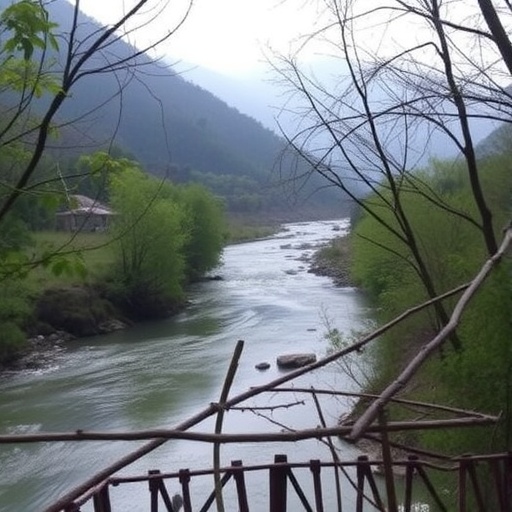
The Sitalakhya River, a vital waterway in Bangladesh, has garnered significant attention in recent years due to rising concerns over environmental contamination. Numerous studies have been conducted to assess the quality of this river, particularly in relation to chemical pollutants. A recent study delves deep into the occurrence, seasonal variation, and spatial distribution of bisphenol analogues (BPs) in both surface water and sediment of the Sitalakhya River. This research is crucial as BPs are known endocrine disruptors that pose risks to aquatic life and human health.
Bisphenol analogues, particularly those linked to industrial processes, have become ubiquitous in aquatic environments. The growing recognition of their potential harmful effects has necessitated investigations revealing not only their presence but also their concentrations throughout different seasons. The study from Dhaka, Bangladesh, specifically targets the Sitalakhya River, an area marked by extensive industrial activity, particularly textile manufacturing. This has resulted in heightened levels of pollution, prompting the need for more comprehensive environmental monitoring.
The research team comprised experts dedicated to understanding the implications of BPs on ecological and human health. They undertook a systematic survey to collect water and sediment samples across various locations of the Sitalakhya River. Each sample underwent rigorous analysis to quantify the levels of bisphenol compounds present. This meticulous methodology ensured that the data obtained was both reliable and actionable.
One of the key findings of the study was the significant seasonal variation in the concentration of BPs. This variation has been attributed to a multitude of environmental factors, including rainfall patterns, river flow rates, and temperature changes throughout the year. The researchers noted that during the monsoon season, the influx of rainwater leads to increased runoff from surrounding lands, which can exacerbate the contamination levels in the river. This insight is particularly alarming for policymakers and environmental scientists seeking sustainable solutions to combat water pollution.
Spatial distribution analysis revealed that certain areas of the river had markedly higher concentrations of bisphenols compared to others. Industrial discharge points emerged as critical hot spots for contamination. The data indicated a correlation between proximity to industrial zones and elevated levels of BPs in both sediment and water samples. Targeted measures are essential in these regions to curtail further environmental degradation and protect local ecosystems.
Interestingly, the differences in concentrations across various locations may reflect not only the intensity of industrial activity but also the effectiveness of waste management practices in those areas. Effective regulation and treatment of industrial effluents could lead to significant improvements in water quality. Unfortunately, many regions are still struggling with inadequate waste management systems, making comprehensive pollution control efforts imperative.
The presence of BPs is not only detrimental to aquatic organisms but also poses potential risks to human health. The river serves as a source of water for local communities, and their reliance on it heightens the importance of understanding the implications of BP contamination. If not addressed, the health risks may extend beyond environmental concerns, affecting the livelihoods and well-being of individuals who depend on the river for drinking water, fishing, and recreation.
Moreover, public awareness of the risks associated with chemical contaminants is critical. Educating local communities about the dangers of ingesting contaminated water and fish can help reduce health risks. In tandem with increased education, there is an urgent need for stricter regulations governing industrial discharges into water bodies. Policymakers must collaborate with environmental scientists to create a robust regulatory framework that holds industries accountable for their pollutive outputs.
The study also highlights the necessity for ongoing monitoring of bisphenol levels in not just the Sitalakhya River, but all water sources worldwide. There is an urgent need for comprehensive monitoring networks capable of capturing data on a range of contaminants, including BPs. The environmental implications of chemical pollution necessitate proactive, not just reactive, measures to safeguard ecological integrity.
Future research should aim to establish long-term monitoring programs to discern trends in bisphenol presence and explore the effectiveness of remedial measures implemented. Additionally, understanding the degradation rates of these compounds in the environment can provide insights into how long such pollutants may persist. Collaborative efforts between scientists, policymakers, and local communities can foster meaningful environmental improvements, ensuring a healthier ecosystem for generations to come.
In conclusion, the presence of bisphenol analogues in the Sitalakhya River serves as a powerful reminder of the interplay between industrialization and environmental health. As pollution levels continue to rise, the need for comprehensive research and targeted actions becomes increasingly critical. Strategies grounded in data-driven insights must pave the way for sustainable development, particularly in resource-rich regions like Bangladesh, where the health of local populations and ecosystems hangs in the balance.
By characterizing the seasonality and spatial distribution of bisphenol analogues, this study not only sheds light on a pressing environmental concern but also lays the groundwork for future investigations aimed at remedying pollution. As stakeholders come together to tackle this issue, the focus must remain on fostering responsible practices that prioritize both economic development and environmental stewardship.
As the findings of this research permeate through scientific circles and policy discussions, there is hope that it will inspire proactive measures to mitigate the impact of industrial pollution. The fate of the Sitalakhya River—and many other water systems around the world—depends on our collective commitment to protect and preserve these vital ecosystems.
Cite Scienmag News
Violet Maxwell. (December 17, 2025). Bisphenol Analogues in Sitalakhya River: Distribution Study. Scienmag. https://scienmag.com/bisphenol-analogues-in-sitalakhya-river-distribution-study/
Violet Maxwell. "Bisphenol Analogues in Sitalakhya River: Distribution Study." Scienmag, 17 December 2025, https://scienmag.com/bisphenol-analogues-in-sitalakhya-river-distribution-study/. Accessed 4 September 2026.
Violet Maxwell. "Bisphenol Analogues in Sitalakhya River: Distribution Study." Scienmag. December 17, 2025. https://scienmag.com/bisphenol-analogues-in-sitalakhya-river-distribution-study/


