


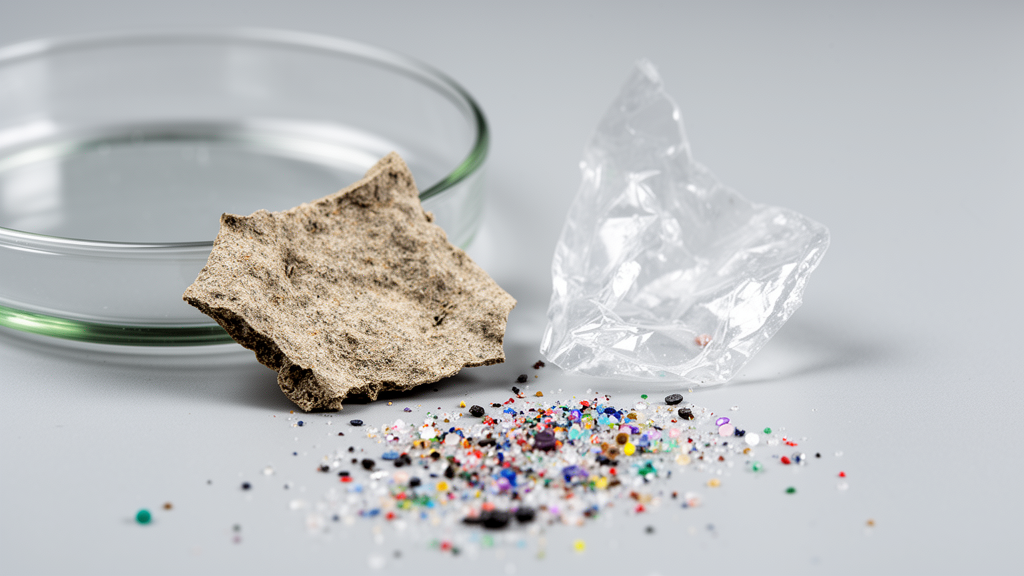
Biodegradable plastics have been marketed for years as the environmentally responsible choice, a way to enjoy the convenience of polymer materials without saddling the planet with centuries of persistent waste. But a new study from researchers at the University of Alicante in Spain suggests that the story is far more complicated than the label implies. Writing in Environmental Science and Pollution Research, Inés Oliver, Andrés Fullana and Juan Antonio Conesa report that, under realistic degradation conditions, some of the most common bioplastics can release as many microplastic particles as conventional fossil-based plastics, and in some cases considerably more.
The team set out to answer a deceptively simple question: when a plastic item begins to break down in the environment, does its biodegradable pedigree actually reduce the risk that it will shed microscopic fragments? The answer matters because biodegradation is a process that requires specific conditions, particular microbes, adequate temperature, sufficient moisture and time. In the open environment, whether at sea, on a beach or in a soil, those conditions are rarely met. Before a bioplastic ever fully mineralises, it may spend weeks, months or years in a limbo state, physically fragmenting into smaller and smaller pieces even as its chemistry slowly degrades.
To probe that limbo, the researchers compared five polymers: polylactic acid (PLA), polyhydroxybutyrate (PHB) and thermoplastic starch (TPS), all biodegradable bioplastics, alongside low-density polyethylene (LDPE) and polypropylene (PP), two of the most widely used conventional plastics. They exposed the materials to two distinct degradation pathways designed to mimic what plastics encounter in nature. The first was accelerated ultraviolet ageing in saline water, simulating the combined assault of sunlight and seawater that floating or beached debris endures. The second was mechanical abrasion with sand, reproducing the grinding action of waves tumbling debris across sediment in the swash zone of a shoreline.
Under the UV ageing regime, the bioplastics clearly suffered the most. PLA and PHB showed the strongest degradation of the four polymers tested in that pathway, exhibiting greater mass loss, more pronounced surface damage, larger colour changes and more severe deterioration of their mechanical properties than either LDPE or PP. This is chemically unsurprising: the ester bonds in PLA and PHB are susceptible to hydrolysis, and UV radiation accelerates oxidation reactions that scission polymer chains, embrittling the material. Polyethylene and polypropylene, with their backbone of stable carbon-carbon bonds, weather more slowly, which is precisely why they persist so notoriously in the ocean.
But faster degradation does not automatically mean a cleaner outcome. The study’s central and most provocative finding is that the biodegradable plastics evaluated did not necessarily present a lower risk of microplastic release than the conventional plastics tested under identical conditions. In fact, when degradation conditions and exposure time were matched, some of the biodegradable polymers generated even larger amounts of particulate material, indicating a higher potential for microplastic generation. The very reactivity that makes a bioplastic susceptible to biological breakdown also makes it fragile under physical weathering, and a brittle, cracking sheet of plastic sheds fragments far more readily than a tough, flexible one.
The abrasion experiments reinforced that picture from a different angle. When the samples were ground against sand, PHB and thermoplastic starch showed the highest mass loss, while LDPE and PP proved markedly more resistant. Mechanical fragmentation is now recognised as a major route by which plastics break apart in coastal environments, and the Alicante results suggest that softer, more hydrophilic biopolymers may be particularly vulnerable to it. TPS, derived from starch, and PHB, produced by bacterial fermentation, simply lack the toughness that decades of polymer engineering have built into commodity polyolefins.
Across both experimental pathways, one trend held without exception: microplastic generation increased with degradation time for every material examined. No polymer, biodegradable or conventional, was immune to fragmentation. What varied was the rate and the quantity, and those differences depended strongly on both the polymer type and the degradation route. A material that behaves well under sunlight may fare poorly under abrasion, and vice versa, which complicates any simple ranking of plastics by environmental friendliness.
The technical implications reach well beyond the laboratory. Microplastics, particles smaller than five millimetres, are now found from the deep sea to Arctic fjords, in agricultural soils, in garden compost and in human tissues. A growing body of literature documents that biodegradable microplastics are themselves contaminants: they can adsorb and transport antibiotics and other pollutants, affect soil ecosystems and plant growth, and persist longer than their labels suggest. Recent studies have even shown that municipal biowaste treatment plants release residues of biodegradable plastics with a putative persistence potential that may exceed expectations. Meanwhile, the bioplastics market continues to expand rapidly, driven by packaging demand and regulatory pressure, meaning that ever larger volumes of these materials are entering waste streams and open environments.
The Alicante team assessed degradation through a battery of complementary measurements, tracking mass loss, surface morphology, colour variation and mechanical properties, and quantifying the microplastic particles released. This multi-parameter approach matters because no single metric captures the full picture of how a polymer weathers. A sample might lose little mass while its surface crumbles into particles, or change colour dramatically while retaining its structural integrity. By combining these indicators with direct microplastic counts, the researchers could connect the chemistry of degradation to the physical reality of fragmentation, offering one of the more complete head-to-head comparisons of bioplastic and conventional plastic weathering published to date.
What should consumers and policymakers take away from these findings? The authors’ results do not suggest that bioplastics are worthless, and the study did not evaluate full biodegradation under controlled composting conditions, where materials like PLA and PHB can genuinely break down. Rather, the work highlights a critical gap between certification and reality: a product labelled compostable will only compost in a facility that provides the right conditions, and if it instead ends up in the ocean, on a roadside or in a landfill, it may fragment into microplastics just as readily as the conventional plastic it replaced, sometimes more so. As regulators weigh bans on single-use conventional plastics and incentives for bio-based alternatives, the message from this research is that end-of-life performance in the real world, not just the origin of the feedstock, must be the yardstick. Until biodegradable plastics reliably biodegrade wherever they end up, the microplastic problem may simply be changing its chemistry rather than shrinking.
Subject of Research: Microplastic release from biodegradable and conventional plastics during UV ageing and mechanical abrasion
Article Title: Microplastic formation during degradation: bioplastics vs conventional plastics
Article References: Oliver, I., Fullana, A., & Conesa, J. A. (2026). Microplastic formation during degradation: bioplastics vs conventional plastics. Environmental Science and Pollution Research, 33(30), 15618-15637. https://doi.org/10.1007/s11356-026-38204-x
Image Credits: AI Generated
DOI: 10.1007/s11356-026-38204-x
Keywords: bioplastics, microplastics, PLA, PHB, thermoplastic starch, polyethylene, polypropylene, UV degradation, mechanical abrasion, marine environment, polymer fragmentation, biodegradation
Cite Scienmag News
Violet Maxwell. (October 8, 2026). Biodegradable Plastics Can Shed More Microplastics Than Conventional Ones, Study Finds. Scienmag. https://scienmag.com/biodegradable-plastics-can-shed-more-microplastics-than-conventional-ones-study-finds/
Violet Maxwell. "Biodegradable Plastics Can Shed More Microplastics Than Conventional Ones, Study Finds." Scienmag, 8 October 2026, https://scienmag.com/biodegradable-plastics-can-shed-more-microplastics-than-conventional-ones-study-finds/. Accessed 8 October 2026.
Violet Maxwell. "Biodegradable Plastics Can Shed More Microplastics Than Conventional Ones, Study Finds." Scienmag. October 8, 2026. https://scienmag.com/biodegradable-plastics-can-shed-more-microplastics-than-conventional-ones-study-finds/


