


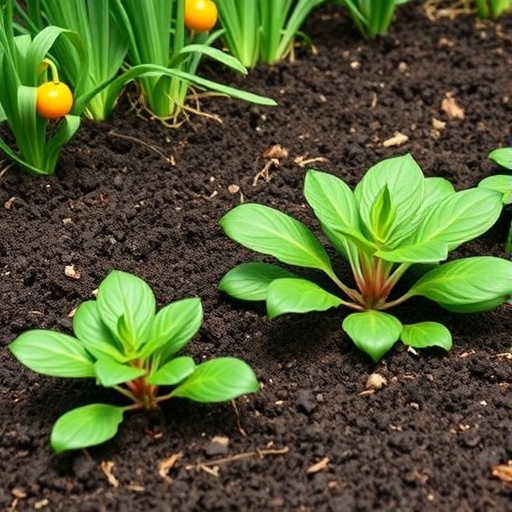
In the realm of modern vegetable agriculture, the practice of continuous cropping—planting the same crop repeatedly on the same soil—remains common. Despite its prevalence, this method poses significant challenges that threaten soil health, crop quality, and yields over time. A recent comprehensive review, appearing in the journal Biochar X, sheds new light on how biochar, a carbon-rich byproduct derived from pyrolyzing biomass under oxygen-limited conditions, offers a promising strategy for mitigating continuous cropping obstacles in solanaceous vegetables, including tomatoes, peppers, eggplants, and potatoes.
Solanaceous vegetables occupy a vital position globally, both nutritionally and economically. Their intensive cultivation has, however, precipitated a range of issues collectively termed as continuous cropping obstacles. These include nutrient imbalances within the soil, deterioration of soil structure, buildup of autotoxic compounds secreted by roots, and shifts in the microbial milieu that favor pathogenic organisms. As these factors compound, farmers face reduced harvest quality and diminished yield, underscoring the urgency for innovative solutions.
The complexity of continuous cropping challenges arises from multifactorial interactions between soil chemistry, plant metabolism, and soil microbial ecology. Unlike singular issues that can be addressed in isolation, continuous cropping obstacles demand multifaceted interventions. According to Chaochan Li, corresponding author of the review, biochar exhibits an exceptional capacity to influence multiple components of soil health simultaneously, positioning it uniquely compared to traditional approaches.
Conventional strategies to combat continuous cropping problems—such as crop rotation, aggressive fertilizer management, soil sterilization, grafting, and microbial remediation—are well practiced yet not universally effective. Many of these require long implementation periods, significant labor intensity, or careful application to avoid unintended environmental side effects. By contrast, biochar technology leverages its distinctive physicochemical properties to offer a more integrative and sustainable solution.
Biochar’s efficacy lies chiefly in its highly porous architecture and considerable surface area, which endow it with remarkable adsorption capacities. These physical features facilitate improvements in soil water retention and aggregation, creating a more stable and hospitable environment for root proliferation. Chemically, biochar enriches organic matter content and modulates soil pH and nutrient bioavailability, thereby promoting optimal conditions for plant growth and microbial activity within the rhizosphere, the critical zone surrounding plant roots.
A pivotal challenge in continuous cropping systems is allelopathic autotoxicity, caused by a suite of root-exuded phenolic and aromatic organic acids—including phenolic acids, cinnamic acid, benzoic acid, and vanillin—that accumulate deleteriously in soil over time. These compounds can stifle root elongation, disrupt hormone signaling pathways, and precipitate pathogenic microbial dominance. Biochar’s adsorptive capacity offers a mechanism to sequester or catalyze the degradation of these deleterious substances, thus alleviating their negative impact and fostering healthier crop development.
Beyond chemical amelioration, biochar profoundly reshapes microbial community dynamics in continuously cropped soils. Traditional continuous cultivation often results in diminished populations of beneficial bacteria alongside increased fungal pathogens, undermining the soil’s natural immunological defenses. Biochar supplies niches and nutrients conducive to beneficial microbiota, shifting the bacterial-to-fungal ratio favorably and suppressing the proliferation of soilborne diseases. Empirical findings outlined in the review highlight measurable improvements in biomass, yield, and disease resistance across multiple solanaceous cropping systems following biochar application.
The multifunctional role of biochar extends far beyond simple nutrient supplementation. As co-corresponding author Bing Wang emphasizes, the material acts synergistically on soil physical properties, microbial ecology, and chemical toxicity pathways. This integrative influence underscores biochar’s potential as an eco-friendly, cost-effective tool in sustainable vegetable production systems, facilitating a reduction in reliance on chemical fertilizers and soil fumigants that bear high environmental costs.
Nonetheless, the practical deployment of biochar must be nuanced and informed. Biochar characteristics, such as feedstock origin, pyrolysis temperature, and application rates, critically affect its interaction with specific soil types and crop species. Misapplication—overuse or inappropriate formulations—could exacerbate soil salinity, alter porosity detrimentally, or introduce nutrient imbalances, counteracting benefits. This circumspection underlines the pressing need for further longitudinal field studies and mechanistic research to tailor biochar use optimally.
Microscale investigations into biochar-soil-microbe interactions represent a frontier of inquiry. Decoding the biochemical and microbial pathways influenced by biochar is crucial for engineering composite amendments that maximize its beneficial effects while mitigating potential risks. Such research will drive the refinement of precision agricultural practices, integrating biochar strategically within complex cropping ecosystems adapted to specific environmental conditions.
This synthesis of soil science, plant physiology, and microbial ecology, encapsulated in the Biochar X review, provides a robust foundation for harnessing biochar’s capabilities in overcoming continuous cropping challenges. The evidence suggests that thoughtfully designed biochar applications can sustain soil productivity, enhance crop resilience, and reduce dependence on disruptive agrochemical interventions, heralding a transformative advance in solanaceous vegetable cultivation.
As the global demand for sustainable food production escalates, innovations like biochar underscore the necessity of reimagining soil management practices. By revitalizing the soil’s physical integrity, chemical balance, and biological networks, biochar offers a multifaceted instrument to secure the future of high-value vegetable farming amidst mounting environmental and economic pressures.
In concluding, the review posits that while biochar is no silver bullet, its versatility and multifunctionality render it an exciting frontier in agricultural science. Tailored applications informed by rigorous research could ultimately embed biochar as a cornerstone in sustainable horticulture, contributing meaningfully to food security and environmental stewardship.
News Publication Date: April 3, 2026.
Web References: DOI 10.48130/bchax-0026-0012
References: Luo Z, Wang A, Quan W, Li C, Wang B. 2026. Application of biochar for the prevention and control of soil continuous cropping obstacles in solanaceous vegetables: a review. Biochar X 2: e013
Cite Scienmag News
Morgan Morrow. (July 1, 2026). Biochar: A Sustainable Solution for Healthier Soils and Enhanced Vegetable Yields. Scienmag. https://scienmag.com/biochar-a-sustainable-solution-for-healthier-soils-and-enhanced-vegetable-yields/
Morgan Morrow. "Biochar: A Sustainable Solution for Healthier Soils and Enhanced Vegetable Yields." Scienmag, 1 July 2026, https://scienmag.com/biochar-a-sustainable-solution-for-healthier-soils-and-enhanced-vegetable-yields/. Accessed 3 September 2026.
Morgan Morrow. "Biochar: A Sustainable Solution for Healthier Soils and Enhanced Vegetable Yields." Scienmag. July 1, 2026. https://scienmag.com/biochar-a-sustainable-solution-for-healthier-soils-and-enhanced-vegetable-yields/


