


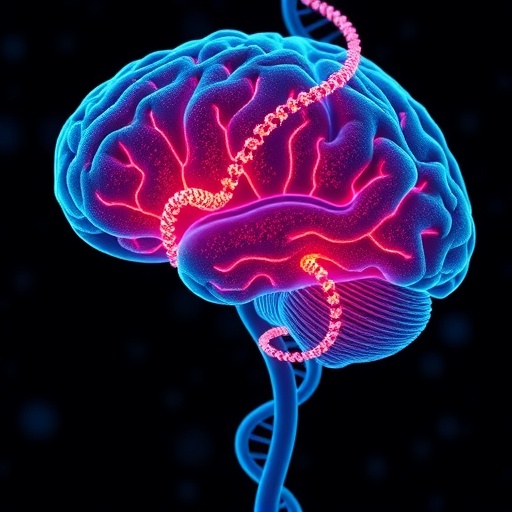
In a groundbreaking study published in Nucleic Acids Research, scientists at The University of Texas MD Anderson Cancer Center have unveiled a critical mechanism by which mutations in the ATRX gene drive glioma progression. This research sheds new light on the intricate interplay between genetic mutations and epigenomic remodeling, fundamentally altering our understanding of how certain brain tumors evolve and identifying promising new paths for targeted therapy.
ATRX, a gene notorious for its high mutation rate in gliomas, encodes a chromatin remodeling protein pivotal for maintaining DNA integrity and proper genomic organization. Despite the well-documented presence of ATRX mutations in gliomas, the molecular consequences had remained elusive. The researchers have now demonstrated that ATRX mutations disrupt the higher-order folding and architecture of chromatin, the complex of DNA wrapped around histones that forms chromosomes. This disorganization triggers downstream activation of oncogenic signaling pathways, effectively rewiring gene expression programs to favor malignant progression.
Chromatin’s three-dimensional conformation is known to regulate gene accessibility and function. Loss of ATRX alters these spatial chromatin contacts, leading to aberrant enhancer-promoter interactions and activation of genes not typically expressed in differentiated brain cells. Among these activated genes are members of the HOXA cluster—developmental regulators critical in embryonic brain patterning but usually silent in adult tissue. Their ectopic expression in tumors provides a malignant advantage, promoting proliferation, invasion, and therapy resistance.
Further examination revealed that ATRX-deficient gliomas also upregulate pathways such as WNT5A and SLITRK6. WNT5A is involved in cellular motility and developmental neurogenesis, while SLITRK6 plays a role in cell migration and has been implicated in various brain malignancies. The combined activation of several of these pathways appears to orchestrate the aggressive phenotype of ATRX-mutant tumors, underscoring how epigenetic reprogramming extends beyond isolated gene mutations to reshape the cellular ecosystem.
What sets this study apart is the extensive use of preclinical models both in vitro and in vivo to functionally validate these findings. By pharmacologically inhibiting HOXA signaling using the peptide HXR9, researchers observed marked induction of cancer cell apoptosis, significant reduction in tumor growth rates, and improved survival outcomes in animal models. This direct targeting of an aberrantly activated developmental transcriptional program signifies an innovative therapeutic avenue for what has historically been a treatment-resistant subset of gliomas.
The implications of this work are profound. It highlights that genetic alterations such as ATRX mutations must be interpreted within the broader context of their resultant epigenomic and chromatin architectural consequences. The study’s senior authors, Dr. Jason Huse and Dr. Kunal Rai, emphasize that future precision oncology efforts will increasingly depend on integrating genomic mutation profiles with epigenetic and three-dimensional genome mapping to tailor effective interventions.
Moreover, while the current findings focus on gliomas, ATRX mutations are prevalent in various other cancers, suggesting that similar epigenetic rewiring mechanisms might underpin malignancies beyond the brain. This raises the potential for wider applicability of HOXA-targeted therapies and chromatin-focused treatments, heralding a new era in cancer therapeutics.
Current glioma treatments remain limited and often ineffective due to the heterogeneous and infiltrative nature of these tumors. The discovery of HOXA pathway activation as a consequence of ATRX loss offers a specific vulnerability. By disrupting this developmental escape route hijacked by tumor cells, clinicians may develop drugs that more precisely halt progression, counteract resistance, and improve patient prognoses.
This research also advances the concept that tumors can hijack embryonic and developmental programs to their advantage, a phenomenon increasingly recognized across oncology. It showcases the dynamic plasticity of cancer cells, which can reshape their identity and behavior through epigenetic modifications, bypassing classical genetic paradigms of oncogenesis.
Finally, the study underscores the importance of multidisciplinary collaboration, combining expertise in anatomic pathology, genomic medicine, and molecular biology to unravel these complex processes. Supported by the Brockman Foundation, the Ivy Foundation, NIH, and institutional funding, the work represents a major step toward understanding and combating ATRX-mutant cancers through innovative molecular strategies.
Cite Scienmag News
Nathaniel Bowman. (July 1, 2026). Common Brain Cancer Mutation Alters DNA Structure to Promote Progression, Revealing New Therapeutic Target. Scienmag. https://scienmag.com/common-brain-cancer-mutation-alters-dna-structure-to-promote-progression-revealing-new-therapeutic-target/
Nathaniel Bowman. "Common Brain Cancer Mutation Alters DNA Structure to Promote Progression, Revealing New Therapeutic Target." Scienmag, 1 July 2026, https://scienmag.com/common-brain-cancer-mutation-alters-dna-structure-to-promote-progression-revealing-new-therapeutic-target/. Accessed 4 September 2026.
Nathaniel Bowman. "Common Brain Cancer Mutation Alters DNA Structure to Promote Progression, Revealing New Therapeutic Target." Scienmag. July 1, 2026. https://scienmag.com/common-brain-cancer-mutation-alters-dna-structure-to-promote-progression-revealing-new-therapeutic-target/


