


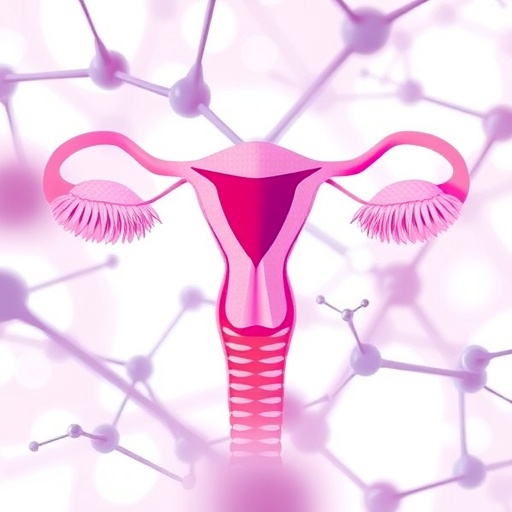
Endometrial cancer is increasingly being detected through a sample that is simple to collect, painless to obtain and potentially suitable for repeated testing: urine. A review published in the British Journal of Cancer examines how urinary biomarkers could transform the detection of cancers arising in the lining of the uterus, while also highlighting the scientific and clinical barriers that must be overcome before these tests can become part of routine care.
Endometrial cancer is the most common cancer of the female reproductive system in many high-income countries, and its incidence is rising in several regions. The disease is often diagnosed after symptoms such as abnormal uterine bleeding appear, which means that many patients already seek medical attention at a relatively early stage. However, symptoms can be mistaken for benign hormonal changes, particularly around menopause. Current diagnosis generally requires clinical assessment, imaging and tissue sampling from the uterus, procedures that can be uncomfortable, technically difficult or unsuitable for large-scale screening.
Urine offers an appealing alternative because it can be collected without surgery or specialized equipment. It contains a complex mixture of molecules filtered from the blood, released by cells lining the urinary tract and, in some cases, transported from distant tissues. Tumours can alter the concentration or structure of proteins, metabolites, nucleic acids and small membrane-bound particles in the body. Some of these cancer-associated signals may eventually reach the urine, where they could be measured using molecular assays.
The review by M. Dore, J. Cao, H. Baker-Rand and colleagues describes several classes of urinary biomarkers under investigation. Proteins are among the most extensively studied candidates. Tumour development can change the production of signalling proteins, enzymes and structural components, while inflammation around a tumour can alter the abundance of immune-related molecules. Measuring a single protein, however, is unlikely to provide sufficient accuracy on its own. Researchers are therefore exploring panels that combine multiple proteins and may distinguish cancer-associated patterns from changes caused by infection, kidney disease, menstruation or other conditions.
Another major area of research involves DNA and RNA. Cancer cells frequently acquire genetic mutations and chemical modifications known as epigenetic changes. One of the most promising signals is abnormal DNA methylation, in which chemical groups attach to DNA and alter gene activity without changing the underlying genetic sequence. Methylation patterns associated with endometrial cancer could potentially be detected in fragments of tumour-derived DNA found in urine. RNA molecules, including messenger RNA and regulatory microRNAs, may also reveal changes in gene expression. Because RNA is generally less stable than DNA, reliable collection and preservation methods are essential.
Urine also contains extracellular vesicles, microscopic membrane-enclosed particles released by cells. These vesicles can carry proteins, DNA fragments and RNA, protecting their contents from degradation as they travel through the body. Tumour-derived vesicles may contain molecular information that reflects the biology of the cancer more directly than freely circulating molecules. Researchers are developing methods to isolate and analyse them, but differences in laboratory protocols currently make results difficult to compare between studies. The small size and low abundance of some vesicles add further technical challenges.
Metabolomics provides a different route to detection. Tumours reprogramme their metabolism to support rapid growth, altering the way they process sugars, fats and amino acids. The resulting changes can produce distinctive patterns of small molecules in urine. Unlike a test aimed at one specific protein or mutation, metabolomic profiling can examine hundreds of chemical compounds simultaneously. Advanced mass spectrometry and nuclear magnetic resonance techniques have made this possible, although diet, medication, age, kidney function and the timing of collection can all influence the urinary metabolome.
The promise of urinary biomarkers lies not only in convenience but also in the possibility of combining different biological signals. A future test could integrate methylated DNA, proteins, metabolites and clinical information such as age, body mass index, bleeding patterns and genetic risk. Computational models, including machine-learning algorithms, may help identify combinations that are too subtle for conventional statistical analysis. Yet a highly accurate result in a small research cohort does not automatically translate into a dependable clinical test. Biomarkers must be validated in large, diverse populations that include people with benign uterine conditions and other cancers.
The review emphasizes that standardization will be crucial. Urine concentration varies substantially with hydration, and sample composition can change according to the time of day, collection method and interval between collection and processing. Laboratories may use different containers, preservatives, extraction techniques and detection platforms. Without agreed procedures, an apparent biomarker discovered in one study may fail to reproduce elsewhere. Researchers must also determine whether tests are intended to detect cancer in people with symptoms, identify individuals at elevated risk or monitor patients after treatment. Each purpose requires different levels of sensitivity, specificity and clinical evidence.
Urinary biomarkers are therefore not yet a replacement for tissue diagnosis, but they could become an important companion to existing approaches. A reliable urine test might help triage patients with abnormal bleeding, reduce unnecessary invasive procedures, support earlier referral and provide a practical method for monitoring recurrence. The field is moving toward multi-marker tests and more rigorous validation, but the decisive step will be demonstrating that these technologies improve patient outcomes in real-world healthcare. For now, urine-based detection remains a rapidly developing research strategy—one that could make endometrial cancer assessment more accessible if its biological complexity can be converted into a robust, clinically trustworthy signal.
Cite Scienmag News
Nathaniel Bowman. (August 11, 2026). New urinary biomarkers improve endometrial cancer detection. Scienmag. https://scienmag.com/new-urinary-biomarkers-improve-endometrial-cancer-detection/
Nathaniel Bowman. "New urinary biomarkers improve endometrial cancer detection." Scienmag, 11 August 2026, https://scienmag.com/new-urinary-biomarkers-improve-endometrial-cancer-detection/. Accessed 4 September 2026.
Nathaniel Bowman. "New urinary biomarkers improve endometrial cancer detection." Scienmag. August 11, 2026. https://scienmag.com/new-urinary-biomarkers-improve-endometrial-cancer-detection/


