


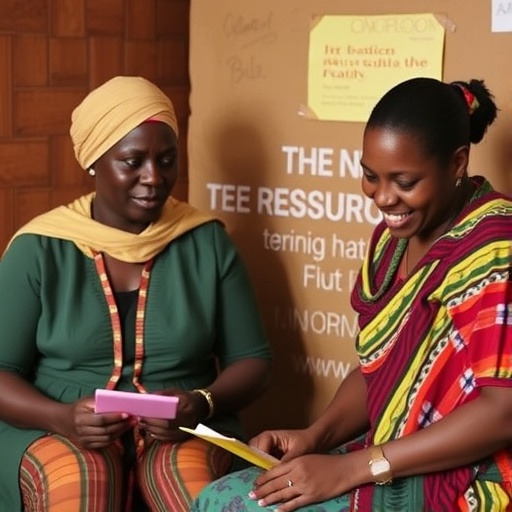
Kenya’s ambitious push toward universal health coverage is leaving most of its informal workforce behind, according to a new nationally representative study that provides the most detailed picture yet of who is—and is not—enrolling in the country’s national health insurance scheme. The research, published in Global Health Research and Policy, found that only 21.75 percent of informal sector workers in Kenya were enrolled in the national health insurance scheme as of December 2020, meaning roughly four out of five people in the sector that accounts for 84 percent of the country’s employment remain unprotected against the financial shocks of illness. More troubling still, the analysis revealed a stark pro-rich gradient in coverage, with a concentration index of 0.35 (95 percent CI 0.30–0.41), indicating that even within a population already defined by economic informality, the wealthiest workers are capturing the bulk of the benefits that public insurance is supposed to distribute equitably.
The phenomenon at the heart of the study is known in health financing circles as the “missing middle.” In many low- and middle-income countries adopting national health insurance (NHI), the poorest citizens are enrolled through government-subsidized premiums funded by taxation, while formal sector workers contribute through payroll deductions. Informal sector workers fall into a gap: their earnings are typically too high to qualify for subsidies but too low and too irregular to comfortably cover insurance premiums out of pocket. In Kenya at the time of the survey, informal workers were expected to pay a flat monthly premium of 500 Kenyan shillings (about USD 4.00) regardless of income—a sum that many households struggling with competing basic needs simply could not prioritize. Subsequent reforms shifted premiums to an income-based formula of 2.75 percent of income or household asset value, with a floor of KES 300, but the researchers caution this means-testing approach may push premiums even further beyond what many informal workers can afford.
The study drew on an unusually rich data source: a nationally representative cross-sectional household survey of 5,168 informal sector workers aged 18 and above, collected in December 2020 by the German Institute of Development and Sustainability in collaboration with the Friedrich-Ebert-Stiftung, the International Labour Organization, and the Institute for Development Studies at the University of Nairobi. The survey used a clustered, stratified, multi-stage probability design, randomly sampling 2,608 households across regions, counties, districts, and villages, with selection probabilities proportional to adult population size and allocated across the urban-rural divide. The timing is significant: the data were gathered during the post-COVID-19 recovery period and during Kenya’s transition from voluntary to mandatory enrolment, offering a rare real-world snapshot of the structural and economic forces shaping participation at a pivotal policy moment. Informal workers in the sample included small-scale traders, farmers, domestic workers, transport sector employees, and handicraft manufacturers.
The analytical approach was rigorous and multilayered. The researchers first described enrolment levels, then quantified socioeconomic inequality using concentration curves and the Wagstaff concentration index—a measure defined as twice the area between the concentration curve and the line of equality, ranging from −1 to +1, where positive values indicate concentration of enrolment among the rich. Because enrolment is a binary variable bounded between 0 and 1, the team used Wagstaff’s normalized index, which rescales the measure to permit valid comparisons. Finally, the researchers fitted a three-level mixed effects logistic regression model, nesting 5,168 individuals within 47 county clusters, to identify the determinants of enrolment while accounting for variability between geographic units. Four nested models were compared using Akaike’s Information Criterion, and multicollinearity was assessed with variance inflation factors, all of which fell below 2, with an overall VIF of 1.41, indicating no problematic collinearity among the twelve explanatory variables.
The inequality findings were unambiguous. Informal workers in the richest wealth quintile were more than four times as likely to be enrolled as those in the poorest quintile, a relative difference of 4.29, and even the second-richest quintile showed more than double the enrolment rate of the poorest. Education generated equally dramatic disparities: households headed by someone with tertiary or university education were three times as likely to have enrolled members as those with no basic education, an absolute difference of 23.72 percentage points. Workers in the non-agricultural sector were nearly twice as likely to be enrolled compared with the unemployed, with an absolute gap of 14.51 percentage points. Large households of more than six members were significantly less likely to enrol than small households of fewer than four members—a relative ratio of just 0.53—reflecting the reality that per capita income stretches thin across competing needs when a flat premium must be paid for coverage.
The multilevel regression confirmed and refined these patterns. Compared with workers aged 18 to 34, those aged 34 to 54 had 35 percent higher odds of enrolment (adjusted odds ratio 1.35; 95 percent CI 1.13–1.60), and those over 54 had 63 percent higher odds (AOR 1.63; 95 percent CI 1.29–2.07). Non-agricultural employment doubled the odds of enrolment (AOR 1.96; 95 percent CI 1.61–2.40), and household heads with advanced education more than doubled their households’ odds (AOR 2.52; 95 percent CI 2.01–3.15). Wealth showed the largest effect: workers in the wealthiest quintile had nearly four times the odds of enrolment compared with the poorest (AOR 3.87; 95 percent CI 2.97–5.05). Membership in informal microfinance institutions—rotational savings and credit associations and accumulated savings and credit associations—raised the odds of enrolment by 41 to 44 percent, suggesting these community-based financial structures could serve as practical onboarding channels for insurance schemes. Notably, sex showed no significant association with enrolment, and roughly 13 percent of the variation in enrolment was attributable to differences between county clusters.
Perhaps the most intriguing finding concerns the behavioral spillover of healthcare experience. Workers from households in which at least one member reported a positive experience at their most recent health facility visit—assessed across reception, staff competency, ease of accessing services, and waiting time—were about 45 to 49 percent more likely to be enrolled than those from households reporting negative experiences (AOR 1.49; 95 percent CI 1.22–1.73). The researchers argue that positive encounters with the health system, whether through insured or uninsured channels, build trust and enhance the perceived value of financial protection in household discussions about whether premiums are worth paying. This interpretation aligns with experimental evidence from Ghana, where a randomized trial demonstrated that improving service quality increased insurance enrolment among initially uninsured households. People, in short, invest in insurance only to the extent that they trust the return on that investment, making health system quality itself a determinant of insurance uptake.
The study also examined Kenya’s “Afya Care” pilot, a one-year free healthcare policy launched in December 2018 that removed user fees in four counties. Concentration curves suggested the pilot improved equity in enrolment among the poorest 20 percent of informal workers, with the curve for exposed workers even crossing the line of equality at the lowest quintile—though this effect was not statistically significant overall (CIX 0.20, p = 0.341). The regression found a positive but nonsignificant association between exposure to the free care policy and enrolment (AOR 1.75; 95 percent CI 0.88–3.46), possibly because premium subsidies for poor households were introduced in pilot counties before national scale-up. The researchers place these results in a global context, noting that targeted subsidies have proven effective elsewhere: Ghana exempts elderly people, children under 18, and pregnant women; Rwanda subsidizes community-based insurance through formal sector contributions; Gabon created a dedicated fund for the poor; and several Asian countries, including Thailand, Vietnam, and Indonesia, have implemented subsidized coverage arrangements for informal and vulnerable populations.
The authors are careful to acknowledge limitations. The cross-sectional design precludes causal inference, and the 2020 data predate subsequent economic shifts, including inflation and evolving labor dynamics. Questions on health service utilization were asked only as follow-ups to illness episodes, limiting their analytical use. Nevertheless, given the absence of more recent datasets specifically targeting informal workers, the team argues the findings remain highly relevant, particularly since structural characteristics—employment informality, information access, trust—are likely to persist regardless of macroeconomic conditions. They call for future research on retention and the stability of enrolment, which are critical to the sustainability of insurance pools, and on the feasibility of leveraging community health volunteers and microfinance institutions as awareness and enrolment channels.
The implications extend well beyond Kenya. With informal workers forming the overwhelming majority of employment across much of sub-Saharan Africa, and with countries from Tanzania to Zambia struggling with the same enrolment gaps—rates ranging from under 10 percent in Tanzania to 57 percent in Ghana—the “missing middle” represents one of the central obstacles to achieving Sustainable Development Goal Target 3.8 by 2030. The researchers recommend differential premium levels, expanded targeted subsidies reaching beyond the ultra-poor, and awareness campaigns delivered through nontraditional channels such as community health volunteers and microfinance groups. They also flag the demographic challenge posed by adverse selection: with more than half of informal workers under 35, schemes must find innovative ways—such as digital applications combining education and enrolment—to attract younger, healthier members and balance the risk pool. Without such measures, they warn, the transition to mandatory national health insurance risks formalizing a system that, on paper promises universal protection, but in practice continues to concentrate coverage among those who need it least.
Cite Scienmag News
Courtney Benton. (September 4, 2026). Gaps in Kenya’s health insurance coverage among informal sector workers revealed. Scienmag. https://scienmag.com/gaps-in-kenyas-health-insurance-coverage-among-informal-sector-workers-revealed/
Courtney Benton. "Gaps in Kenya’s health insurance coverage among informal sector workers revealed." Scienmag, 4 September 2026, https://scienmag.com/gaps-in-kenyas-health-insurance-coverage-among-informal-sector-workers-revealed/. Accessed 4 September 2026.
Courtney Benton. "Gaps in Kenya’s health insurance coverage among informal sector workers revealed." Scienmag. September 4, 2026. https://scienmag.com/gaps-in-kenyas-health-insurance-coverage-among-informal-sector-workers-revealed/


