


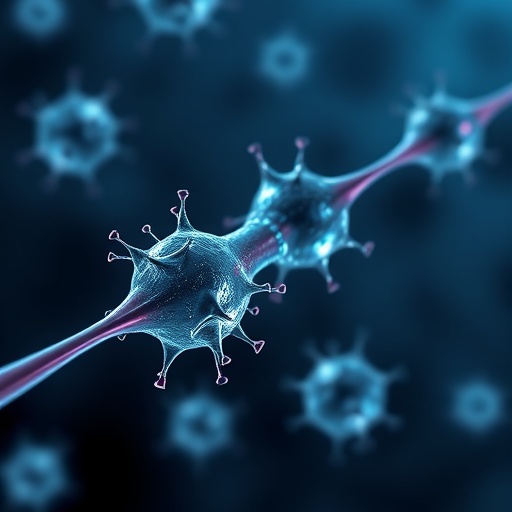
Bacteria may soon do more than cause infection: they could help doctors detect, target and treat cancer. A new review in Biomedical Technology examines bacterial extracellular vesicles, or BEVs, as emerging tools for precision oncology. These microscopic membrane-bound particles are naturally released by bacteria and carry a complex mixture of proteins, lipids, DNA, RNA and metabolites. Because they can transport biological material between cells, researchers are investigating whether BEVs can be redesigned as cancer medicines, tumor-seeking delivery systems and liquid-biopsy markers.
The appeal of BEVs begins with their biological origin. Bacteria can be cultivated under controlled laboratory conditions, genetically modified and selected to produce vesicles with specific properties. Scientists can also alter the vesicles after they are released, attaching targeting molecules to their surfaces or loading them with therapeutic cargo. This combination of biological programmability and chemical flexibility gives BEVs several potential advantages over conventional nanoparticles, whose composition and behavior may be more difficult to adjust.
One proposed application is targeted drug delivery. Researchers could engineer BEVs to display molecules that recognize proteins abundant on tumor cells or within the tumor microenvironment. Once equipped with these molecular addresses, the vesicles might deliver anticancer drugs directly to malignant tissue while limiting exposure to healthy cells. Their natural membranes may help protect fragile cargo during transport, including small interfering RNA, messenger RNA or other therapeutic nucleic acids capable of switching cancer-related genes on or off.
BEVs also possess a feature that distinguishes them from many synthetic delivery systems: their bacterial components can stimulate the immune system. Molecules found in or on the vesicles may activate immune cells and help turn an otherwise poorly visible tumor into a stronger target. This raises the possibility of using BEVs as cancer vaccines or as immune-enhancing treatments alongside checkpoint inhibitors and other immunotherapies. In theory, a single engineered vesicle could carry a drug while simultaneously providing an immune signal that amplifies the treatment response.
The same molecular complexity that makes BEVs biologically powerful could also make them useful for diagnosis. Because vesicles contain information reflecting the physiology of the bacteria that produced them, and because their contents can be modified or analyzed in detail, researchers are exploring their potential as sources of biomarkers. In cancer medicine, vesicle-based signals could eventually support liquid biopsies, help identify disease-associated molecular changes or provide clues about how a tumor is responding to therapy without requiring repeated invasive tissue sampling.
The review follows the BEV research process from isolation and purification to molecular characterization, engineering and early evaluation in cancer models. It compares bacterial vesicles with mammalian extracellular vesicles and conventional nanocarriers, while highlighting advances in synthetic biology, microfluidic separation, surface modification and multiomics. Microfluidic technologies may make it possible to isolate vesicles more efficiently in small volumes, while multiomics approaches can reveal the combined protein, lipid, nucleic-acid and metabolite profiles that determine how a vesicle behaves in the body.
However, the path from promising laboratory platform to clinical treatment remains difficult. BEV production is highly sensitive to the bacterial strain, growth medium, temperature, culture time and purification procedure. Small changes in these conditions can alter vesicle size, yield, surface composition and biological activity. Low production levels may limit scalability, while differences between batches could make it difficult to reproduce experimental results or establish reliable dosing standards for patients.
Safety is an even more serious concern. Bacterial vesicles can retain harmful components, including inflammatory molecules derived from the bacterial membrane. The immune activation that might help attack a tumor could, if poorly controlled, cause damaging inflammation or other toxic effects. Purification methods must therefore remove unwanted bacterial material without destroying the vesicles’ therapeutic properties. Researchers will also need rigorous tests for sterility, identity, potency, contaminants, biodistribution and long-term effects before BEV-based products can be considered for human trials.
The authors argue that future progress will depend on standardized manufacturing, strict batch-by-batch quality control and safer engineering strategies. Researchers must determine how BEVs interact with chemotherapy, radiotherapy and immune checkpoint inhibitors, and whether their benefits outweigh the risks associated with their bacterial origin. If those challenges can be solved, BEVs could become a versatile platform linking drug delivery, cancer vaccination, immunotherapy and tumor monitoring. For now, they remain an experimental technology, but their unusual ability to combine targeted transport with immune stimulation is pushing bacterial vesicles toward the center of precision cancer research.
Web References: https://doi.org/10.1016/j.bmt.2026.100138
References: Biomedical Technology, DOI: 10.1016/j.bmt.2026.100138
Cite Scienmag News
Nathaniel Bowman. (August 11, 2026). Tiny bacterial vesicles may enable more precise cancer treatments. Scienmag. https://scienmag.com/tiny-bacterial-vesicles-may-enable-more-precise-cancer-treatments/
Nathaniel Bowman. "Tiny bacterial vesicles may enable more precise cancer treatments." Scienmag, 11 August 2026, https://scienmag.com/tiny-bacterial-vesicles-may-enable-more-precise-cancer-treatments/. Accessed 3 September 2026.
Nathaniel Bowman. "Tiny bacterial vesicles may enable more precise cancer treatments." Scienmag. August 11, 2026. https://scienmag.com/tiny-bacterial-vesicles-may-enable-more-precise-cancer-treatments/


